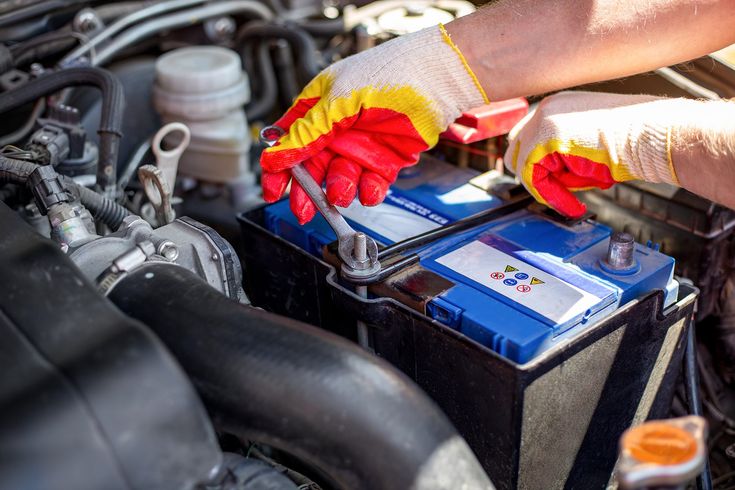
In 2014, AAA responded to more than 29 million roadside calls in the U.S., and 17 million of those were tied to battery failure, flat tires, and keys locked inside vehicles. That tells you how quickly a simple starting problem can turn into a long day!
Now here is the part that frustrates people most. You fit a new battery, turn the key, and nothing changes. I hear the same line all the time: "I changed the battery, so why won’t it start?" Fair question. The answer is usually simple, though it is rarely the battery alone. If the car still will not start, I look at four areas first. And I look there fast.
Start with the connection you touched
This is the first place I check because it causes more repeat no start complaints than people expect. A new battery solves nothing if the cable clamps are loose, the terminals are dirty, or corrosion is still sitting inside the connector where you cannot see it at a glance. A poor connection can leave you with dash lights, a click, or no crank at all. Firestone and Advance Auto both point to loose clamps, corrosion, wrong polarity, and poor cable condition as common reasons a car still will not start after battery replacement.
Here is the practical move. Grab each terminal and try to move it by hand. It should feel solid. No twist. No wiggle. Then inspect the cable itself, especially the negative cable and its ground point. I have seen plenty of cars get a new battery when the real problem was hidden corrosion in the cable or a weak ground path. People say, "It started fine yesterday." Sure. A failing connection often gives you that exact pattern.
Make sure the new battery is actually the right one
This sounds basic. It matters. Batteries are not universal, and the wrong size, wrong terminal layout, or low cranking capacity can leave you with a fresh battery that still cannot spin the starter properly. I'd stress checking the owner’s manual and confirming the battery matches the vehicle’s size and power requirements before buying.
I also never assume a new battery is fully ready because it is new. It should be tested. I recommend checking output voltage with a multimeter and, better yet, doing a load test. That matters because a defective new battery is rare, though it happens, and a battery that sat on a shelf too long can waste your time fast.
If power was connected wrong, check the fuse before anything else
This one catches people out. Reversed polarity can blow fuses, damage fusible links, and take out relays in seconds. I have heard known automotive expert warn that connecting the positive and negative cables to the wrong posts can damage major electrical components and commonly blows fuses. Pilcan Automotives says the same, and also notes that a blown starter fuse or relay alone can stop the car from starting.
So if the battery swap was rushed, or someone says "I’m sure I hooked it up right" with a little too much confidence, go straight to the fuse box and the main battery fuse. This check takes minutes. It can save hours. If the starter relay matches another known good relay in the box, swap them and test again. That simple step is often enough to expose the fault.
Sometimes the battery was never the real problem
This is the part many drivers do not want to hear. The battery may have been a symptom, not the cause. A failing starter can sound like a dead battery. A weak alternator can leave the old battery undercharged, then do the same thing to the new one. A parasitic draw can drain the replacement battery after a few hours or overnight. Most dealerships identify bad starters, alternator faults, and parasitic draw as common reasons a vehicle still will not start after a battery replacement.
Here is how I separate them quickly. If the lights and dash come on strong and you get a single heavy click, I suspect the starter or its circuit. If the car starts with a jump and then dies again later, I start thinking charging system or electrical drain. If the battery keeps going flat after sitting, I think parasitic draw until proven otherwise. That is when I hear, "I know my vehicle." Good. Then trust the pattern it is giving you.
The smart way to diagnose it
Keep this part simple. Simple wins.
First, confirm the terminals are tight and clean. Second, verify the battery is the correct type for the vehicle. Third, test the battery instead of guessing. Fourth, inspect the starter fuse, relay, and main battery fuse. Fifth, if the engine still will not crank, test the starter circuit and charging system. If the battery goes flat again after parking, check for parasitic draw. That order saves time because it starts with the faults most likely to show up right after battery replacement.
A new battery should improve the situation. If it changes nothing, do not keep throwing parts at the car. Check the work, check the power path, check the protection circuits, then move to the starter and alternator. That is how professionals keep this problem from turning into three new parts and the same old no start.
Because the line "It has a new battery, so it should start" sounds logical. In the workshop, logic follows testing. Always.
Comments (0)
Please login to join the discussion
Be the first to comment on this article!
Share your thoughts and start the discussion