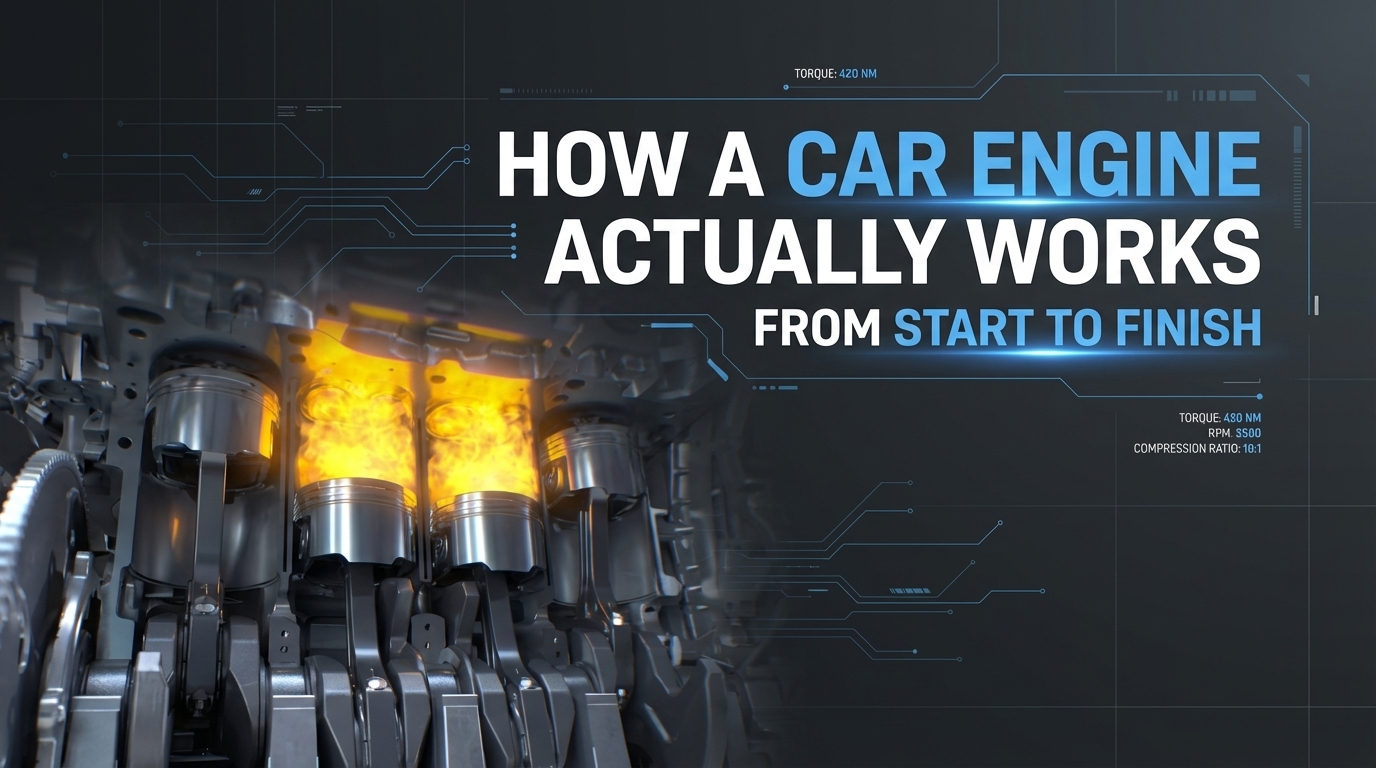
Modern car engines are a symphony of controlled explosions. Every single time you turn the key, a precisely timed sequence of events converts a drop of fuel into forward motion. It happens thousands of times a minute, and most drivers never think about it. I hear it all the time in the shop: "As long as it starts, I'm happy." But understanding the journey from a silent block of metal to a running engine is the first step to diagnosing problems, performing proper maintenance, and truly appreciating the machine you rely on. Let's walk through it, from the moment you turn the key to the steady hu
The Four-Stroke Cycle The Heartbeat of Power
Nearly every gasoline engine on the road uses the four-stroke Otto cycle. It's the fundamental process that creates power, and it happens in each cylinder. The name comes from the four movements of the piston: intake, compression, power, and exhaust. This cycle repeats continuously while the engine runs. Think of it as the engine breathing in, squeezing, exploding, and breathing out.
Stroke 1 Intake
The journey begins with the piston at the top of the cylinder. The intake valve opens. As the piston moves down, it creates a vacuum, sucking a precise mixture of air and atomized fuel from the intake manifold into the cylinder. This is the engine's inhalation. By the time the piston reaches the bottom of its travel, the cylinder is filled with this combustible air-fuel mixture, and the intake valve snaps shut.
Stroke 2 Compression
Now both valves are closed. The piston begins its upward travel, compressing the air-fuel mixture into the small space at the top of the cylinder known as the combustion chamber. This compression is critical. It makes the mixture more volatile and concentrates its energy, setting the stage for a powerful and efficient burn. The higher the compression, the more potential power, which is why high-performance engines have higher compression ratios.
Stroke 3 Power
This is the only stroke that actually produces work. At the peak of compression, the spark plug fires. It doesn't just ignite the mixture; it creates a controlled burn that spreads rapidly across the chamber. The burning fuel expands violently, creating immense pressure that forces the piston back down with great force. This force is transferred through the connecting rod to the crankshaft, which is what ultimately turns your wheels. This single explosion powers the other three strokes and everything else the engine needs to do.
Stroke 4 Exhaust
The piston reaches the bottom of the power stroke, its job done. The exhaust valve opens. As the piston moves back up, it acts like a plunger, pushing the spent combustion gases out of the cylinder and into the exhaust manifold. This clears the chamber, making room for a fresh charge of air and fuel. As the piston reaches the top, the exhaust valve closes, the intake valve opens, and the entire four-stroke cycle begins again. In a multi-cylinder engine, these cycles are staggered so that a power stroke is always happening, keeping the crankshaft spinning smoothly.
The Supporting Cast Making the Cycle Possible
The four-stroke cycle is the core, but it cannot happen without a team of perfectly synchronized systems. These systems manage air, fuel, spark, and exhaust, and they all activate the moment you initiate a start.
Getting It All Started
You turn the key to "start." This simple action activates the starter motor, which engages a small gear with the engine's flywheel. The starter motor spins, forcibly turning the crankshaft. This initial rotation is what begins the intake and compression strokes in the cylinders for the very first time. Simultaneously, the engine control unit (ECU) powers up. It reads data from sensors, primes the fuel pump, and calculates the precise moment for ignition. Once the ECU detects the engine is running on its own power, it signals the starter to disengage. That's the "click" you hear after a successful start.
Fuel and Air The Recipe for Combustion
For combustion to occur, you need the right mix. The air intake system, monitored by the Mass Air Flow (MAF) sensor, delivers clean air. The fuel system, comprising the pump, injectors, and pressure regulator, delivers a fine mist of gasoline directly into the intake port or cylinder. The ECU uses sensor data to calculate the exact amount of fuel needed for the incoming air mass, aiming for the ideal stoichiometric ratio of about 14.7 parts air to 1 part fuel. This balance is crucial for power, efficiency, and clean emissions. As Car and Driver explains, modern direct and port fuel injection systems provide this precise control.
Ignition Lighting the Fire
Compressed fuel and air won't burn on their own. They need a spark. At the exact millisecond determined by the ECU, the ignition system sends a high-voltage pulse from the ignition coil to the spark plug. This pulse jumps the gap at the plug's tip, creating the spark that initiates the burn in the power stroke. In modern engines, the timing of this spark is constantly adjusted for conditions like engine load and fuel quality to maximize power and prevent damaging knock.
Exhaust and Emissions Cleaning Up the Mess
The story doesn't end with the exhaust stroke. The hot, dirty gases leaving the cylinder must be managed. They first travel through the exhaust manifold, then through a series of pipes and key components. The catalytic converter uses precious metals to trigger chemical reactions that convert harmful carbon monoxide, unburned hydrocarbons, and nitrogen oxides into less harmful carbon dioxide, water vapor, and nitrogen. The oxygen sensors before and after the cat provide feedback to the ECU, allowing it to fine-tune the air-fuel mixture in real-time. This closed-loop system is essential for meeting modern emissions standards.
Putting It All Together From Key Turn to Idle
So, let's run the complete sequence for a typical morning start. You insert the key and turn it. The starter motor groans, spinning the crankshaft. The camshaft, driven by the crankshaft, begins opening and closing valves. Pistons move, drawing in air. The ECU wakes up, reads the engine temperature and throttle position, and commands the fuel injectors to spray. The ignition coil fires the spark plug at the right moment. One cylinder fires, then another. The crankshaft gains momentum. Within a second or two, the engine is running under its own power. The ECU takes over, adjusting idle speed via the idle air control valve, monitoring everything, and keeping that symphony of explosions perfectly in time. It's a marvel of mechanical and electrical engineering that we take for granted every single day.
When you understand this process, the odd noise or hesitation becomes a clue, not a mystery. You know that a rough idle points to an issue with air, fuel, or spark in the cycle. A loss of power suggests a compression or exhaust restriction problem. It transforms your relationship with the vehicle. Because "it just needs to start" is a low bar. Knowing *how* it starts is real knowledge.
Comments (0)
Please login to join the discussion
Be the first to comment on this article!
Share your thoughts and start the discussion