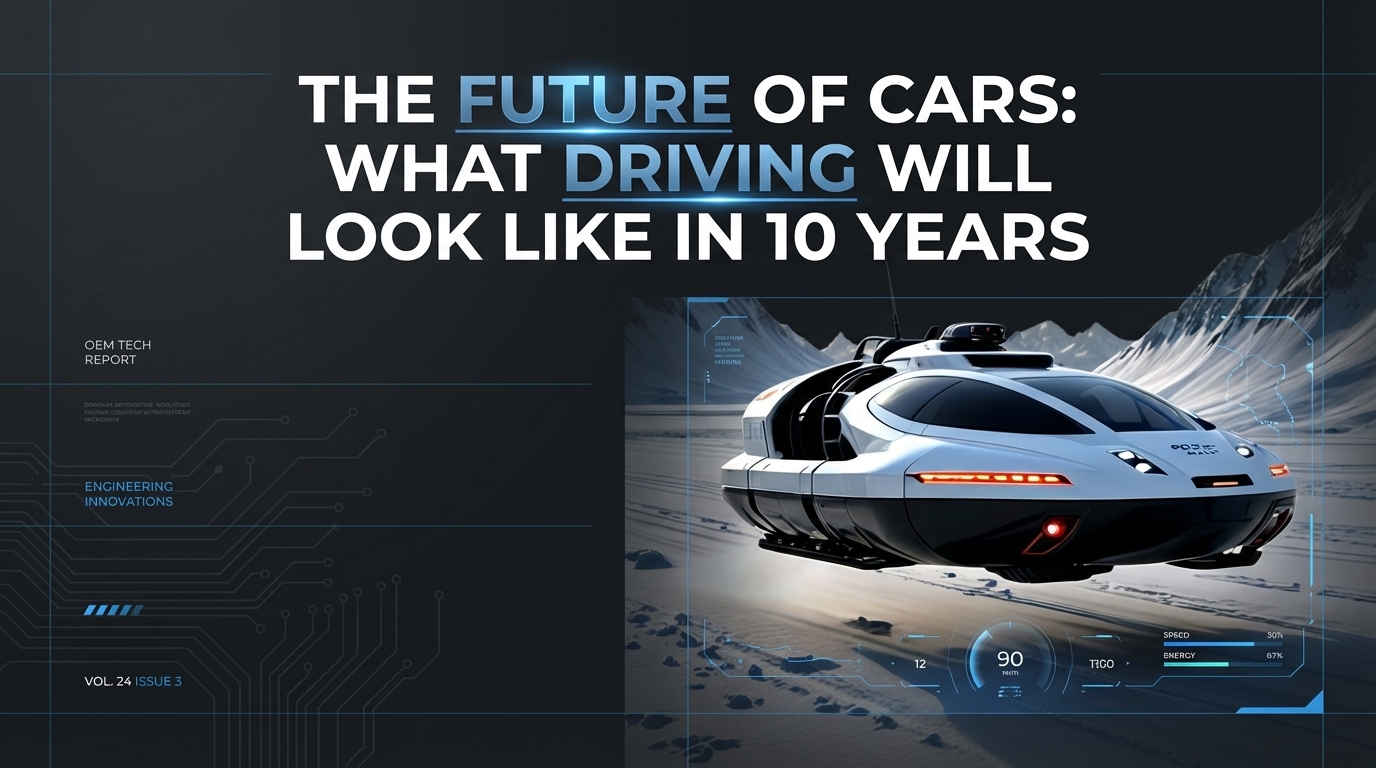
By 2036, analysts at McKinsey predict that up to 15% of all new cars sold could be fully autonomous. That's not a distant sci-fi dream. It's a decade away. The car you drive in 2036 will be fundamentally different from the one in your driveway today. The shift is already happening beneath the sheet metal, and it's moving faster than most people realize. I hear drivers say, "I'll always want to control my car," with the same certainty they once said they'd never need a smartphone. The future has a way of changing our minds. The next ten years will redefine not just our vehicles, but our entire
The End of the Driver's Seat as We Know It
Autonomy is coming, but not with a bang. It will arrive in waves, steadily taking over more of the driving task. Forget about Level 5 full autonomy everywhere. The real story for the next decade is the refinement and expansion of Level 3 and Level 4 systems. These are the cars that can handle the highway for you, manage stop-and-go traffic, and even navigate city streets under specific conditions. The core technology enabling this is a sensor fusion system that makes human senses look primitive. It combines lidar, radar, and advanced cameras to create a 360-degree, real-time model of the world that doesn't get tired or distracted.
This isn't about adding more gadgets. It's about building a new kind of vehicle nervous system. The CAN Bus networks in today's cars will evolve into high-speed data superhighways, processing terabytes of information every hour to make split-second decisions. The car won't just assist you. It will often be the primary driver. This transition creates fascinating new dilemmas. Who is liable when a car makes a decision? Can you override it? The conversation is already starting, as seen in debates around self-driving cars and legal responsibility.
Deep Dive: Tech Behind Autonomous Cars: Sensors, AI, and Self-Driving Features
The Electric Pulse Becomes the Standard
The internal combustion engine's century-long reign is entering its final chapter. In ten years, the majority of new passenger vehicles in major markets will be electric. This isn't merely a powertrain swap. It's a complete re-engineering of the vehicle platform. Without a large engine block, transmission tunnel, or fuel tank, designers gain unprecedented freedom. Cabins become more spacious. The classic "front-end" design disappears, replaced by more aerodynamic and functional shapes. The driving experience transforms, too. Instant torque, near-silent operation, and one-pedal driving will become the new normal, making today's EVs feel like prototypes.
But the real game-changer is the battery itself. We're moving beyond incremental improvements in lithium-ion. Solid-state batteries are the next frontier, promising higher energy density, faster charging, and improved safety. Companies are investing billions to bring them to market. When they arrive, range anxiety will truly become a thing of the past. Imagine a 500-mile range that charges in 10 minutes. That's the 2036 target. Furthermore, radical concepts like nuclear diamond batteries hint at a future where energy storage is measured in decades, not miles per charge. The supporting infrastructure will evolve just as dramatically. Wireless inductive charging built into parking spots and even roadways will begin to appear, making plugging in a secondary option.
Your Car Becomes a Living Software Platform
This is the most underappreciated shift. The car is becoming a smartphone on wheels. The value is increasingly in the software, not the hardware. Over-the-air (OTA) updates, common in Teslas today, will be universal. Your car's performance, safety features, and infotainment will improve overnight, without a visit to the dealership. This creates a continuous relationship with the manufacturer. It also means your car will have a software lifecycle, with new features and services unlocked via subscriptions. Expect a battle for the digital dashboard, with tech giants and automakers vying to control the interface and the data it generates.
This connectivity enables a new level of predictive maintenance. The vehicle's network of sensors will constantly monitor the health of everything from the brake pads to the battery cells. It won't just tell you something is wrong. It will predict a failure weeks in advance, schedule service at a convenient time, and even order the necessary part. The era of being surprised by a breakdown is ending. This software-defined nature also raises critical questions about cybersecurity and data privacy. Your car will know your habits, routes, and preferences intimately. Protecting that data will be as important as protecting the mechanical integrity of the vehicle.
Related Reading: The Hidden Tech Inside Modern Cars Most Drivers Don’t Understand
Radical New Materials and Forms
The cars of 2036 will look and feel different because they will be built from different materials. Lightweight composites, advanced aluminum alloys, and even graphene-enhanced polymers will be standard to offset heavy battery packs and increase efficiency. Airless tires will finally move from concept to consumer reality, eliminating flats and simplifying maintenance. Glass will become a dynamic surface, with smart windows that can tint electronically or display information.
Perhaps the most visible change will be in vehicle interiors. With the driving task increasingly handled by the machine, the cabin transforms into a living or workspace. Steering wheels and pedals may retract. Seats may swivel to face each other. The entire dashboard becomes a wraparound digital display for entertainment, video calls, or productivity. The car is no longer a cockpit. It's a mobile room. This evolution is part of a broader set of automotive industry trends focused on experience over pure transportation.
Final Word
The next decade will be the most transformative period in automotive history since the Model T. We are moving from mechanical machines to intelligent, connected, and electric platforms. The core skills for mechanics will shift from wrenches to code diagnostics, as outlined in perspectives on the future of mechanics. For drivers, the relationship with their car will become more digital and service-oriented. Some will mourn the loss of direct control. Others will embrace the safety, convenience, and reclaimed time. One thing is certain. The car of 2036 won't just be a better version of what we have today. It will be something entirely new. And it's closer than you think.
Comments (0)
Please login to join the discussion
Be the first to comment on this article!
Share your thoughts and start the discussion