Sixty-four percent of American drivers are currently aware of a maintenance issue on their vehicle and choosing to do nothing about it.
That's roughly 165 million people riding around with a problem they know exists, quietly letting a small repair grow into something far more expensive. The math never works in your favor when you wait.
I've seen it happen hundreds of times in my career. A driver finally brings their car in after months of telling themselves "it's not making any noise, so it should be fine." Then they're staring at a repair bill that's four or five times what it would have been. And here's the brutal truth: 51% of drivers have already admitted to paying for a repair they believe could have been avoided entirely, according to a FinanceBuzz survey. They learned the hard way. You don't have to.
Car repair costs have risen over 33% since 2021, averaging $838 per repair nationally according to Kelley Blue Book data. Delaying is no longer a neutral decision. It is an expensive one.
The Brake Pad Trap That Catches Everyone
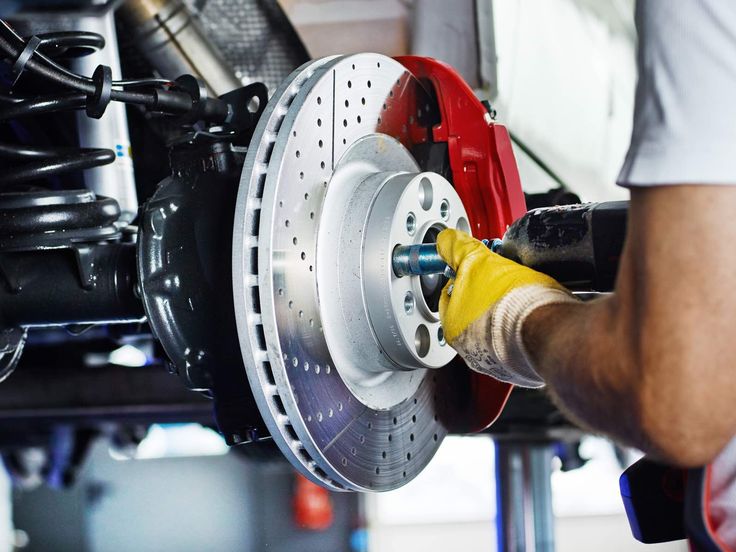
Brake pads are one of the most straightforward repairs on any vehicle. Replace them on time, and you'll spend roughly $150 to $300 per axle. That's it. Done.
Ignore them, and the story changes dramatically.
Once the pad material wears through completely, bare metal contacts your brake rotors. Every rotation scores and damages the rotor surface. What was a pad replacement is now a pad-and-rotor job, running $400 to $900 per axle. Continue driving on destroyed rotors and the excessive heat and pressure can cause your caliper pistons to seize or start leaking. Caliper replacement adds several hundred dollars more per corner. A repair that started at $250 can cross $1,500 without a single unusual event.
The warning sign is always there first. A faint squealing sound when braking is the wear indicator doing its job. "The car still stops fine, I'll sort it out after the holidays" is the sentence that turns a routine service into a financial emergency.
Small Leaks, Enormous Consequences
A minor oil or coolant leak sounds harmless. It is not. A small oil leak, often traced to a failing gasket or worn seal, costs between $100 and $500 to repair early, according to JD Power and independent repair data.
Drive on a progressively dropping oil level long enough, and the engine runs without adequate lubrication. Metal grinds on metal at operating temperature. The result is engine seizure, and a replacement engine for a standard four-cylinder sedan runs $4,000 to $6,000 installed. That is the same car. The same driver. A completely avoidable outcome.
Coolant leaks follow the same pattern. An early fix runs $150 to $400 on average. Ignore a slow coolant loss and the engine overheats. A single severe overheating event can crack the head gasket, warp the cylinder head, or destroy the engine block entirely. Repair costs for that level of damage range from $3,000 to $8,000 or more, as documented by automotive repair specialists at Trusted Local Auto. "It's a tiny drip, I'll top it up and deal with it later" is one of the most expensive sentences in automotive ownership.
AAA data reinforces this starkly. The organisation towed over two million vehicles for engine-related failures in a single year, most of which were directly linked to deferred basic maintenance.
The pattern across every one of these scenarios is identical. A minor issue exists. The driver notices it. The driver delays. The issue escalates silently. The bill arrives at full force.
Your car communicates constantly through sounds, smells, warning lights, and fluid levels. Responding early is not being overcautious. It's the most financially sound decision you can make as a vehicle owner. The repair you book today is almost always cheaper than the one that books itself.
Comments (0)
Please login to join the discussion
Be the first to comment on this article!
Share your thoughts and start the discussion