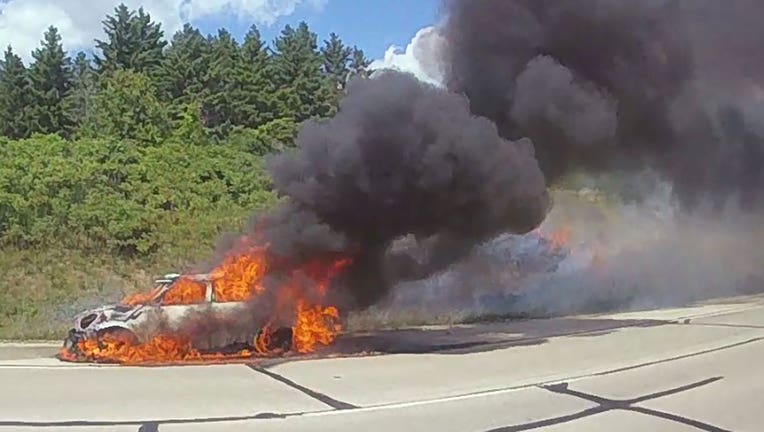
Modern cars are built with lightweight materials and complex systems packed into tight engine bays. That is good for fuel economy. It is bad when a collision, even a slow one, shifts things out of place. The risk comes from two main sources: fuel lines and electrical systems. When a car is struck from the front or side, the engine can twist on its mounts. That twist can pull a fuel line away from its connector or pinch it against a sharp bracket. A tiny split in that line is all it takes. You might not see it. You might not smell it right away. But the moment a spark from a damaged wire or a hot exhaust manifold touches that fuel vapour, you have a fire.
In 2024, the National Highway Traffic Safety Administration reported that vehicle fires accounted for nearly 200,000 highway incidents in the United States, with a growing number tied to seemingly minor collisions. That statistic should stop you cold. Because a small fender bender should not leave your car engulfed in flames. Yet I have seen it happen. I have walked into a shop and heard a driver say, "It was just a tap in the parking lot. I don't understand why it caught fire." That line is more common than you think. The real reason has nothing to do with the severity of the crash. It has everything to do with what happens under the bonnet when components that were already compromised finally meet their breaking point.
Where The Real Danger Lives
The same is true for the high voltage systems in hybrid and electric vehicles. Those batteries and cables carry enough current to arc violently if the insulation is breached. A low speed impact can crush a battery pack or sever a main cable. The resulting short circuit generates heat that ignites surrounding materials. This is not a theory. This is what I have seen in workshop reports and manufacturer bulletins.
The Hidden Weakness In Plastic Fuel Lines
Older cars used metal fuel lines that could bend and deform without breaking. Many modern cars use plastic or nylon fuel lines. They are lighter and cheaper to produce. They are also less forgiving when twisted or crushed. A collision that would have dented a metal line can crack a plastic one. That crack might not leak at idle. Under driving pressure, it opens up. Fuel sprays onto a hot manifold or a glowing catalytic converter. The fire starts before you have time to react.
I remember a case where a driver came in after a minor rear end collision. The car drove fine. No warning lights. They said, "I drove it home with no issues." The next morning the car was a shell. A crushed fuel line near the tank had been weeping fuel overnight. A neighbour's cigarette or a parking heater ignition provided the spark. That is how fast it happens.
The Electrical Short That Becomes A Torch
Every car built after the early 2000s has dozens of electronic control units, sensors, and wiring harnesses running through the cabin and engine bay. A small collision can pinch a wire against the chassis or pull a connector loose. When the insulation wears through and the live wire touches metal, you get a direct short circuit. That short can heat a wire to red hot in seconds. It can melt the plastic conduit around it and ignite nearby carpet, sound deadening, or plastic trim. The hidden tech inside modern cars most drivers don’t understand is part of the problem. More complexity means more potential failure points.
Battery terminals are another common ignition source. In a side impact, the battery can shift. The positive terminal can contact the metal bonnet or a bracket. That creates a dead short. The current does not blow a fuse fast enough to stop the arc. The heat from that arc can melt the battery case and ignite the hydrogen gas that batteries naturally vent. That explosion is violent. I have seen batteries launch through a bonnet.
How To Protect Yourself After A Minor Collision
Here is what I tell every driver who asks. After any collision, even one that looks like nothing, do not assume the car is safe to drive. Turn the engine off immediately. Do not restart it. Get out and inspect the area around the vehicle. Look for fluid puddles underneath. Smell for fuel or sweet coolant. Listen for any hissing sounds. If you see smoke or smell anything burning, move away and call emergency services.
If the car appears safe, have it inspected by a professional before driving it again. The inspection should include a visual check of all fuel lines, the battery and its mounting, main wiring harnesses, and the exhaust system. Engineers reveal why most car doors are designed to rip apart in certain crashes for occupant safety. The same engineering logic applies to the engine bay. Components are designed to deform in crashes, but that deformation can create fire hazards.
The Real Culprit Is Often Neglect Before The Crash
This is the part that frustrates me. A car that is well maintained is far less likely to catch fire after a collision. A car with a leaking valve cover gasket has oil sitting on the exhaust manifold. A tap that shifts the engine can turn that slow leak into a pour. A car with a frayed wire from an amateur stereo installation has a short waiting to happen. The crash is just the trigger. The real cause is the ignored maintenance.
I hear drivers say all the time, "I never saw that coming." But the signs were there. A small oil smell. A flickering interior light. A battery that was not tied down properly. This one habit most drivers repeat is quietly destroying their cars and increasing the risk of post collision fire. That habit is ignoring small leaks and loose components because they seem harmless.
What Every Driver Should Check Today
Open your bonnet and look at the battery. Can you move it by hand? If yes, the hold down is loose. Tighten it. Look at the fuel lines running along the top of the engine. Are they dry and free of cracks? Check the wiring near the battery and around the fuse box. Is the insulation intact? Look for any oil or fluid residue on the exhaust manifold. If you see any, find the source. Experts reveal the dangerous truth about cheap brake pads sold at local shops but the same logic applies to cheap replacement parts. Use quality components. A cheap fuel line or a bargain bin battery terminal is not worth the risk.
If you have ever had a car repaired after a collision, ask the shop if they replaced the fuel line and inspected the main harness. Many shops focus on bodywork and miss the hidden damage. That hidden damage is what kills the car later. I have seen cars burn to the ground weeks after a repair was signed off as complete.
Final Word
A small collision should not be a death sentence for your car or a danger to your safety. The difference between driving home and watching your car burn often comes down to a few inches of damaged fuel line or a single broken wire. Do not trust that the car is fine because it looks fine. Trust the inspection. Trust the maintenance. And if someone tells you "I only bumped the curb," treat it like a real event. Understanding why cars shut off while driving and ensuring safety on the road is one thing. Understanding why they catch fire after a small bump is another. Both start with paying attention to what is actually happening under the metal.
Because the line "It was just a low speed hit" is not a guarantee of safety. It never was.
Pro Tip: This Overlooked Factor In Car Engines Might Be The Real Reason For Sudden Failure

Comments (0)
Please login to join the discussion
Be the first to comment on this article!
Share your thoughts and start the discussion