Interactive Explorer
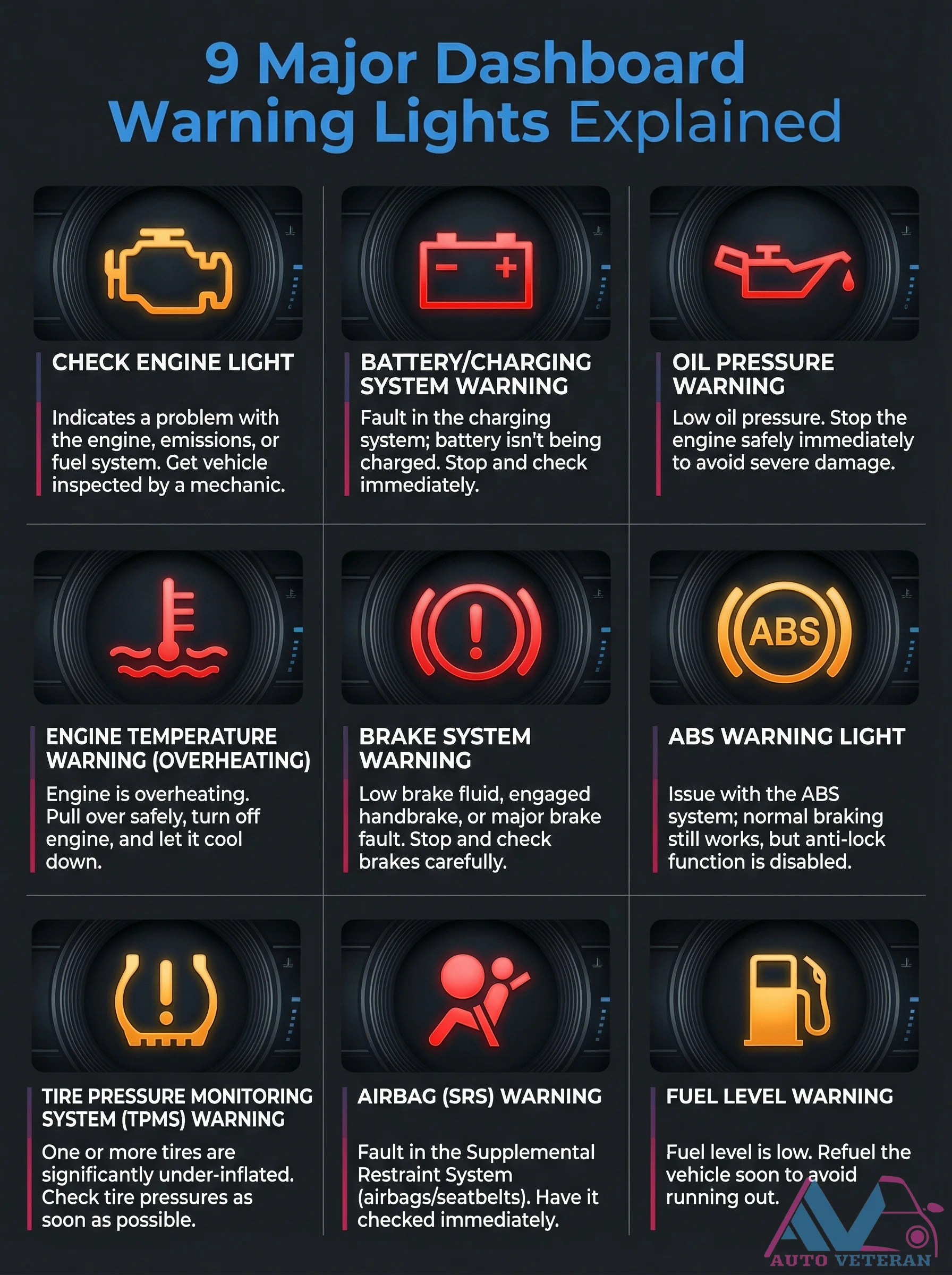
9 Major Dashboard Warning Lights Explained
Understanding your vehicle's dashboard warning lights is crucial for safe driving and preventing costly repairs. The check engine light signals issues with the engine, emissions, or fuel system requiring mechanic inspection. The battery or charging warning indicates a fault where the battery isn't being charged, necessitating immediate attention. The oil pressure warning means dangerously low oil pressure; stop the engine safely to avoid severe damage. The ABS warning light shows a problem with the anti-lock braking system, though normal braking still functions. The engine temperature warning signals overheating; pull over safely, turn off the engine, and let it cool down. The brake system warning indicates low brake fluid, an engaged handbrake, or a major brake fault requiring careful checking. The tire pressure monitoring system alerts when one or more tires are significantly under inflated; check pressures as soon as possible. The airbag or SRS warning means a fault in the supplemental restraint system, including airbags and seatbelts, needing immediate checking. The fuel level warning simply indicates low fuel; refuel the vehicle soon to avoid running out. Each light serves as a vital communication tool between your car and you, ensuring timely responses to maintain safety and vehicle health.