Interactive Explorer
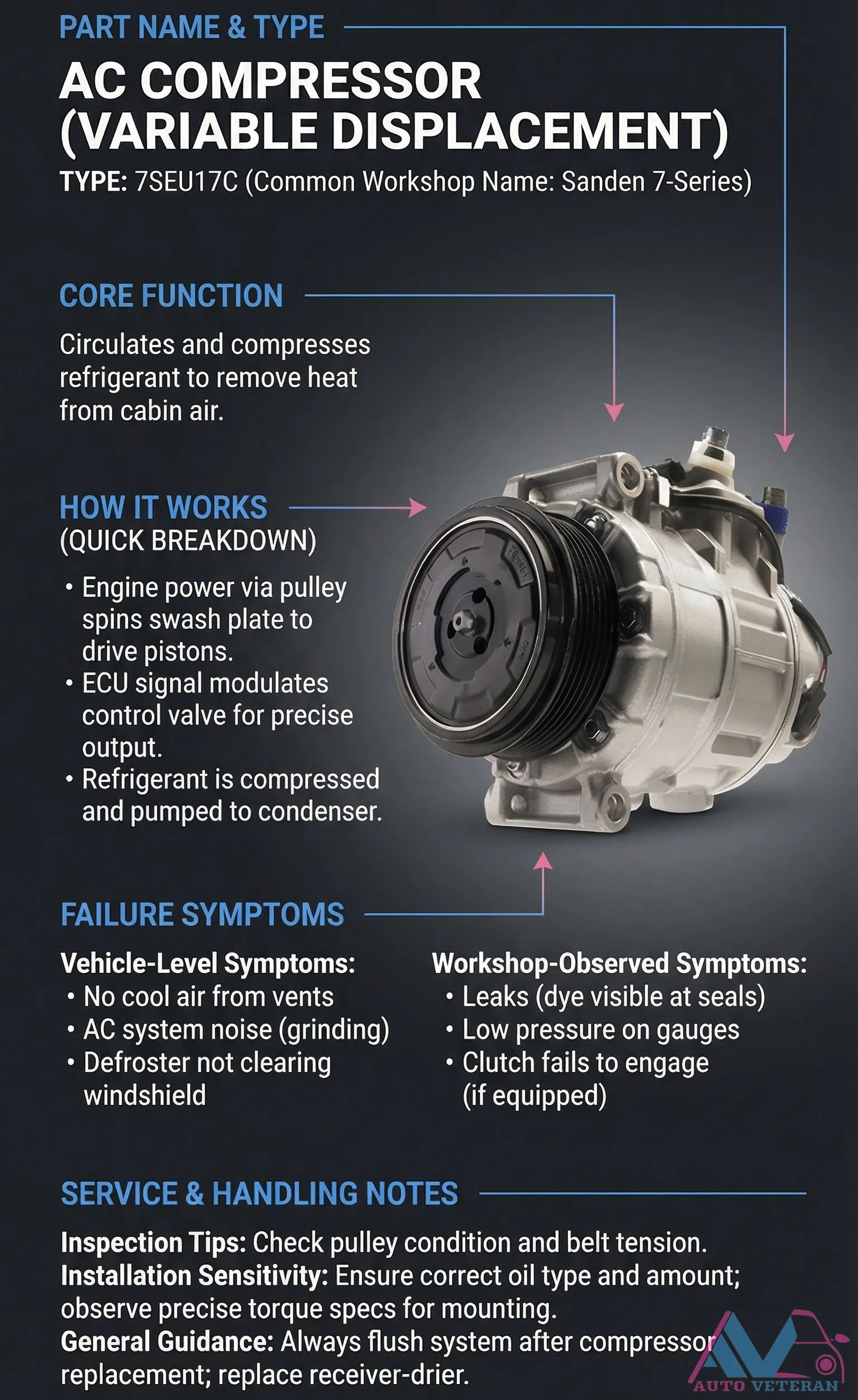
Variable Displacement AC Compressor Sanden 7-Series
The variable displacement AC compressor, specifically the Sanden 7-Series model ZSEU1ZC, operates by using engine power to spin a swash plate that drives pistons; an ECU signal modulates a control valve for precise refrigerant output, compressing and pumping it to the condenser to remove heat from cabin air. Common failure symptoms include no cool air from vents, visible dye leaks at seals, grinding noise from the AC system, low pressure readings on gauges, ineffective windshield defrosting, and clutch engagement failures. For service, always check pulley condition and belt tension during inspection; during installation, use the correct oil type and amount while observing precise torque specifications for mounting; additionally, flush the entire system after compressor replacement and replace the receiver-drier to ensure optimal performance.
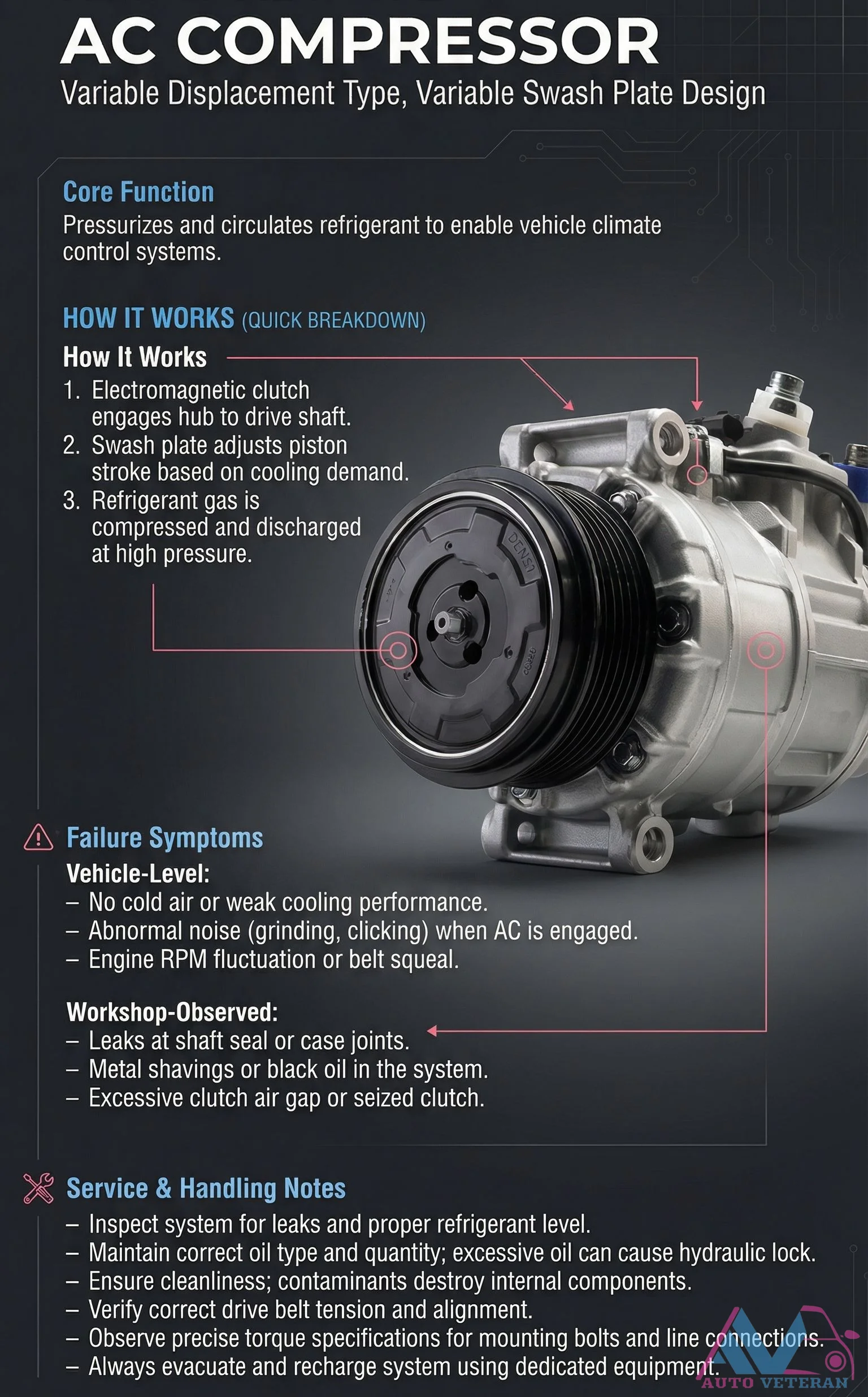
Variable Swash Plate AC Compressor Operation and Service
The variable displacement AC compressor uses an electromagnetic clutch to engage the drive shaft, while its swash plate adjusts piston stroke based on cooling demand to compress refrigerant gas efficiently. Common failure symptoms include no cold air output, abnormal grinding or clicking noises during engagement, and engine RPM fluctuations. Workshop observations often reveal leaks at shaft seals or case joints, metal shavings or black oil contamination in the system, and excessive clutch air gap issues. Proper service requires inspecting for leaks, maintaining correct oil type and quantity to prevent hydraulic lock, ensuring system cleanliness to avoid component destruction, verifying drive belt tension and alignment, and following precise torque specifications for mounting bolts and line connections. Always evacuate and recharge the system using dedicated equipment for optimal performance.
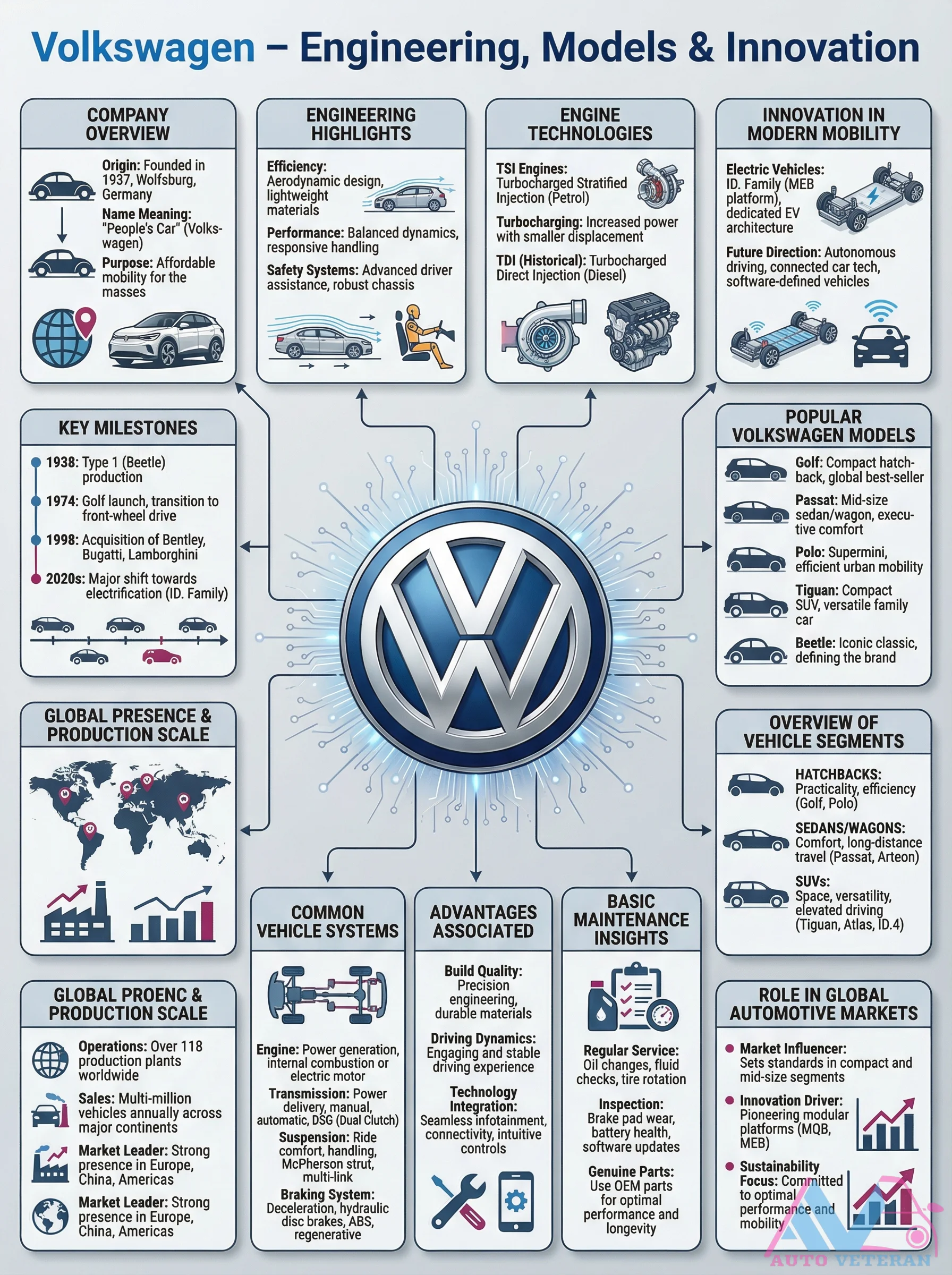
Volkswagen Engineering and Innovation Overview
Volkswagen, founded in 1937 in Wolfsburg, Germany, embodies the 'People's Car' ethos with a focus on affordable mobility. The brand showcases engineering excellence through technologies like TSI turbocharged stratified injection petrol engines, TDI turbocharged direct injection diesel engines, and the MEB dedicated electric vehicle platform. Key models include the iconic Beetle, the best-selling Golf, the versatile Tiguan SUV, and the executive Passat. Volkswagen operates over 118 production plants worldwide, delivering millions of vehicles annually with a commitment to build quality, advanced safety systems, and a shift toward electrification and autonomous driving. The company leverages modular platforms such as MQB and MEB, integrates seamless infotainment, and emphasizes sustainability through efficient materials and aerodynamic design.
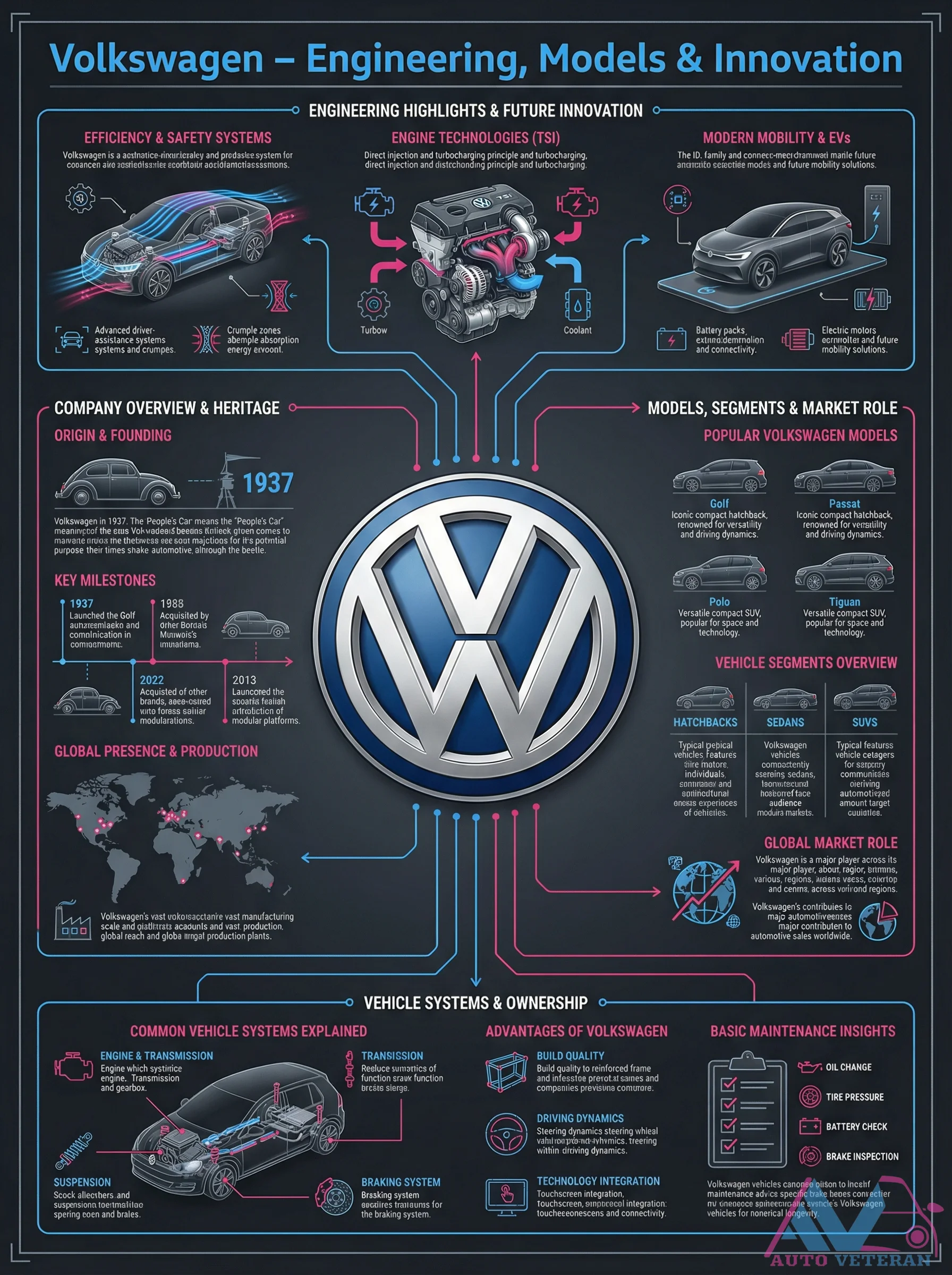
Volkswagen Engineering Highlights TSI and EVs
Volkswagen's engineering excellence centers on TSI engine technologies and modern electric mobility, integrating efficiency and safety systems that define the brand's innovation. The company's heritage, from its 1937 founding to current global market leadership, supports a diverse vehicle portfolio including hatchbacks, sedans, and SUVs. Key milestones and production insights reveal how Volkswagen combines quality, driving dynamics, and technology integration to maintain its competitive edge.
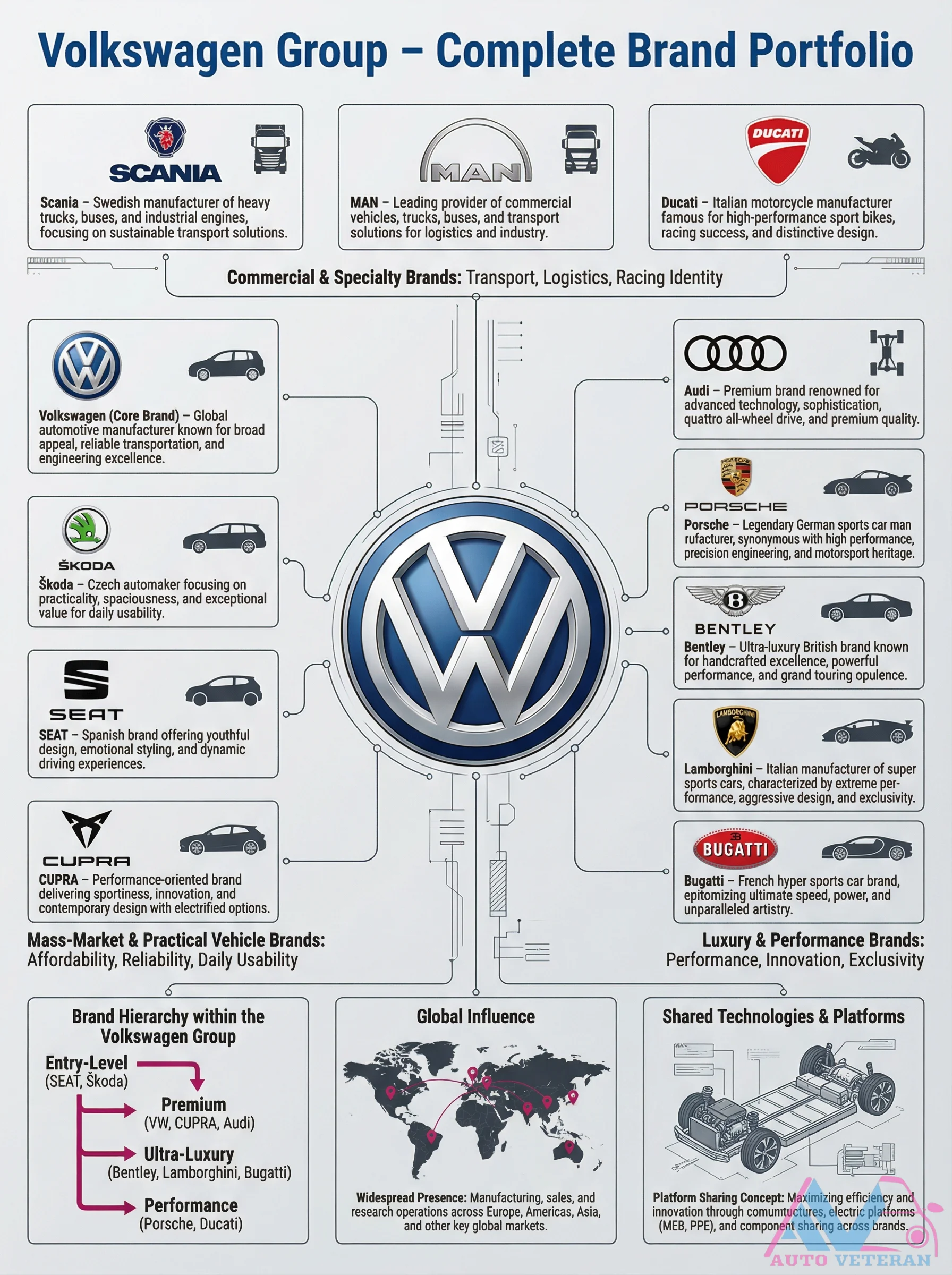
Volkswagen Group Brand Portfolio and Hierarchy
The Volkswagen Group organizes its diverse automotive brands into a strategic hierarchy, from mass market to ultra luxury. At the entry level, SEAT and Skoda focus on affordability, reliability, and daily usability. The premium tier includes Volkswagen, CUPRA, and Audi, known for advanced technology and engineering excellence. The ultra luxury segment features Bentley, Lamborghini, and Bugatti, delivering handcrafted excellence, extreme performance, and exclusivity. This structure enables platform sharing, such as electric platforms MEB and PPE, across brands to maximize efficiency while maintaining distinct brand identities.
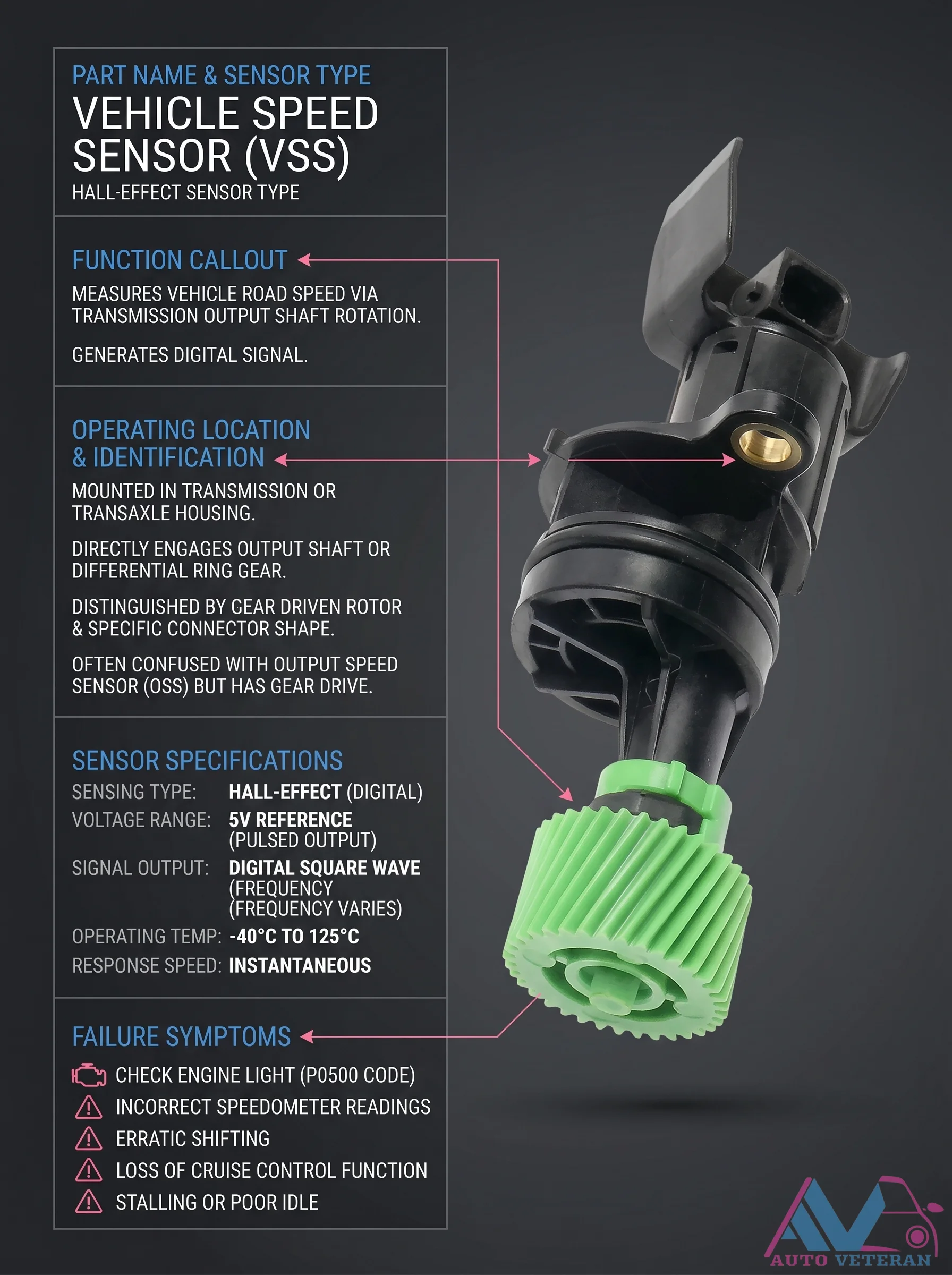
VSS Hall-Effect Sensor With Gear Drive
This Vehicle Speed Sensor uses a Hall-effect element to generate a digital square wave signal proportional to transmission output shaft rotation. Unlike the Output Speed Sensor, it features a gear driven rotor that engages directly with the output shaft or differential ring gear. Mounted in the transmission or transaxle housing, it operates on a 5V reference and produces a frequency varying digital output. Key failure symptoms include a P0500 code, incorrect speedometer readings, erratic shifting, loss of cruise control, and stalling or poor idle.
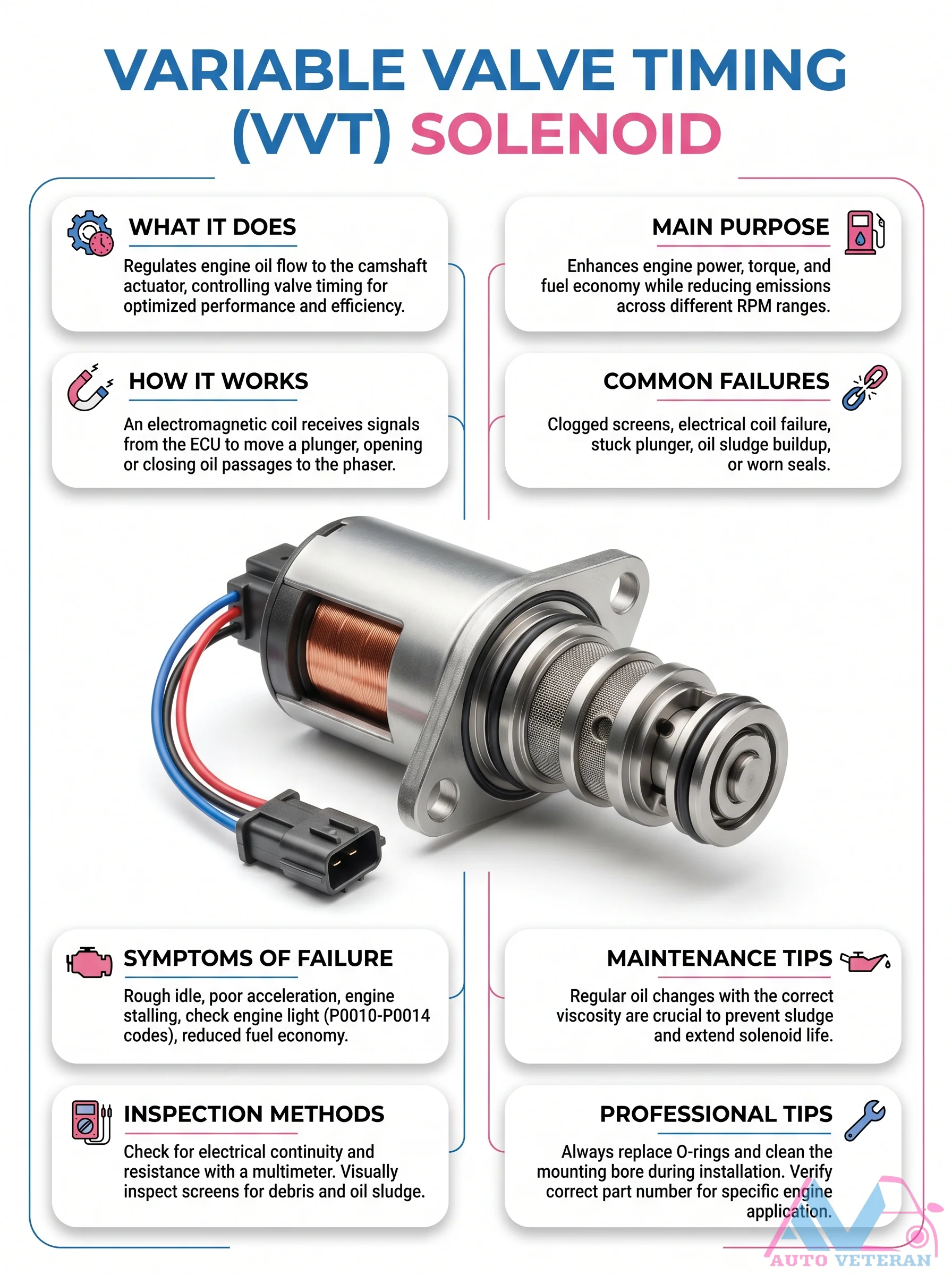
VVT Solenoid Function and Failure Guide
The variable valve timing solenoid is a small electromagnetic valve that controls oil flow to the camshaft phaser, allowing the ECU to adjust valve timing for better power, torque, fuel economy, and lower emissions across different RPM ranges. It works by receiving electrical signals to move a plunger, opening or closing oil passages. Common failures include clogged screens, coil failure, stuck plunger, oil sludge buildup, or worn seals. Symptoms of failure include rough idle, poor acceleration, engine stalling, check engine light with codes P0010 to P0014, and reduced fuel economy. Regular oil changes with correct viscosity prevent sludge and extend solenoid life. When inspecting, check electrical continuity and resistance with a multimeter, and visually inspect screens for debris. Always replace O-rings and clean the mounting bore during installation; verify the correct part number for your specific engine.