Interactive Explorer
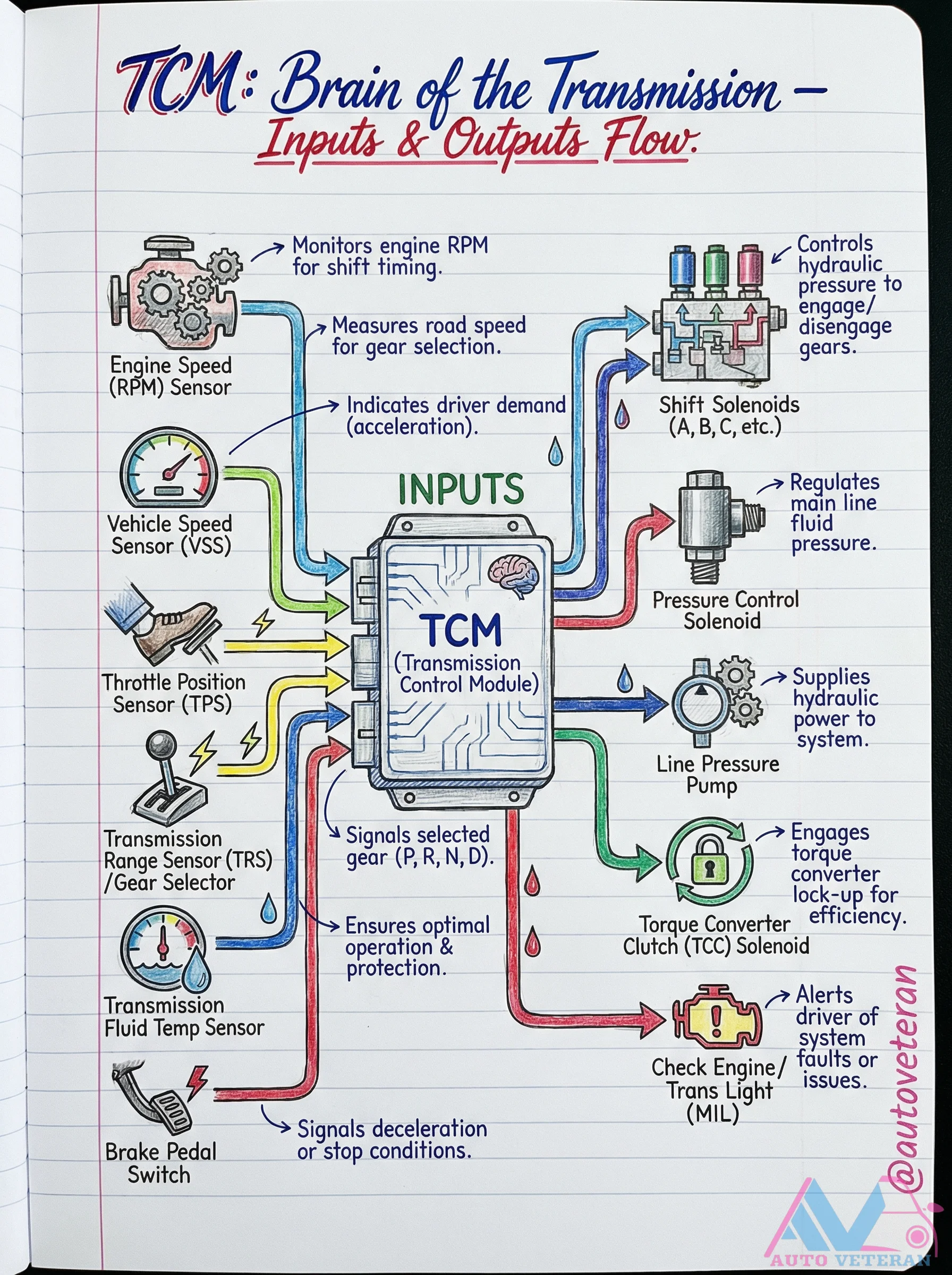
TCM Inputs, Outputs, and Control Functions
The Transmission Control Module serves as the central processing unit for automatic transmissions, continuously monitoring critical inputs like engine RPM, vehicle speed, throttle position, and transmission fluid temperature. It processes these signals to precisely control outputs including shift solenoids for gear selection, pressure control solenoids for hydraulic regulation, and torque converter clutch operation. This sophisticated coordination ensures optimal shift timing, protects transmission components, and alerts drivers to system faults through warning lights.
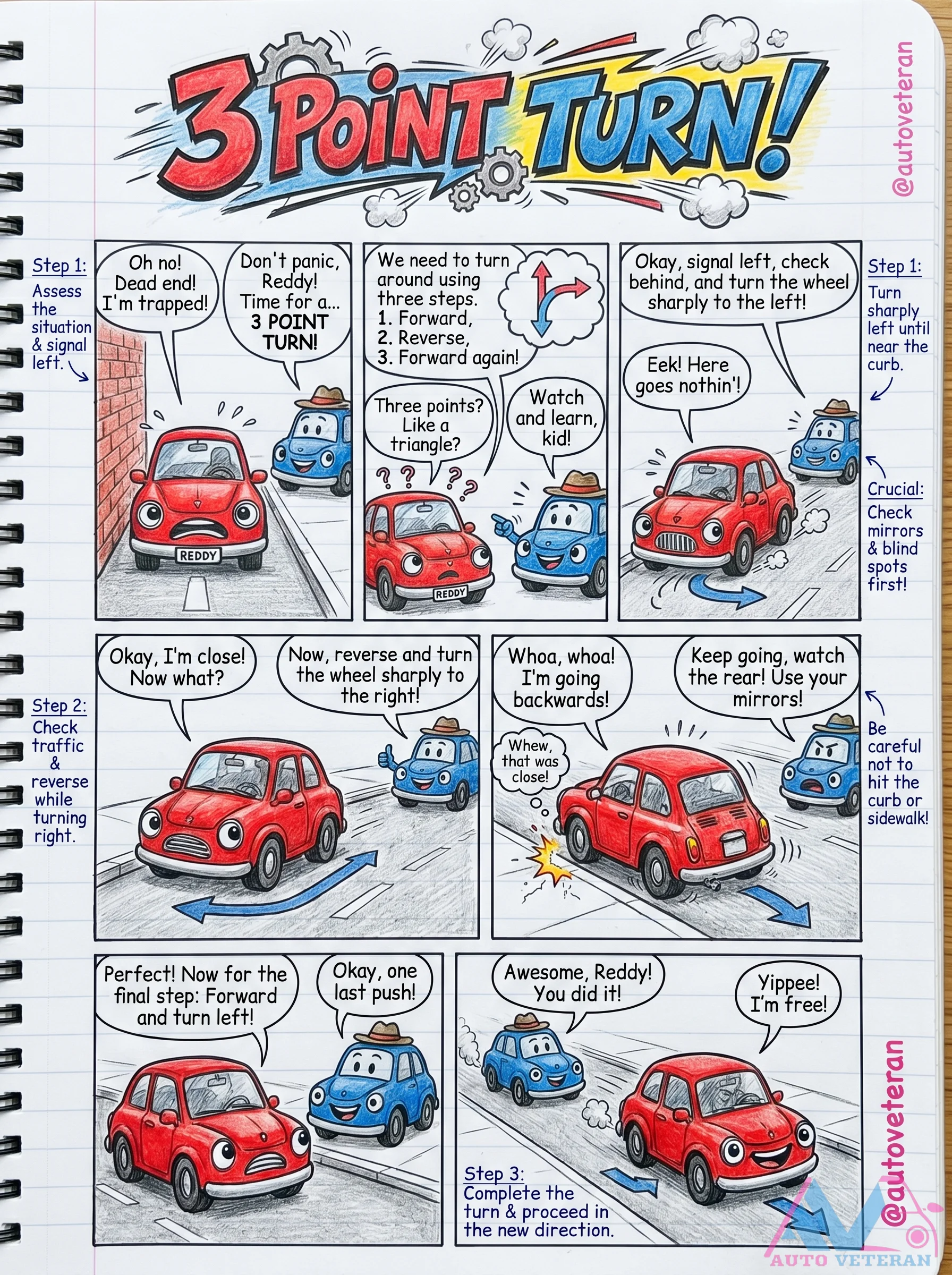
Three Point Turn Step Guide
Master the three point turn with this easy to follow step by step guide that walks you through the entire maneuver from signaling left to checking mirrors and blind spots, reversing with the wheel turned sharply, and finally forward again to complete the turn safely and confidently without panicking.
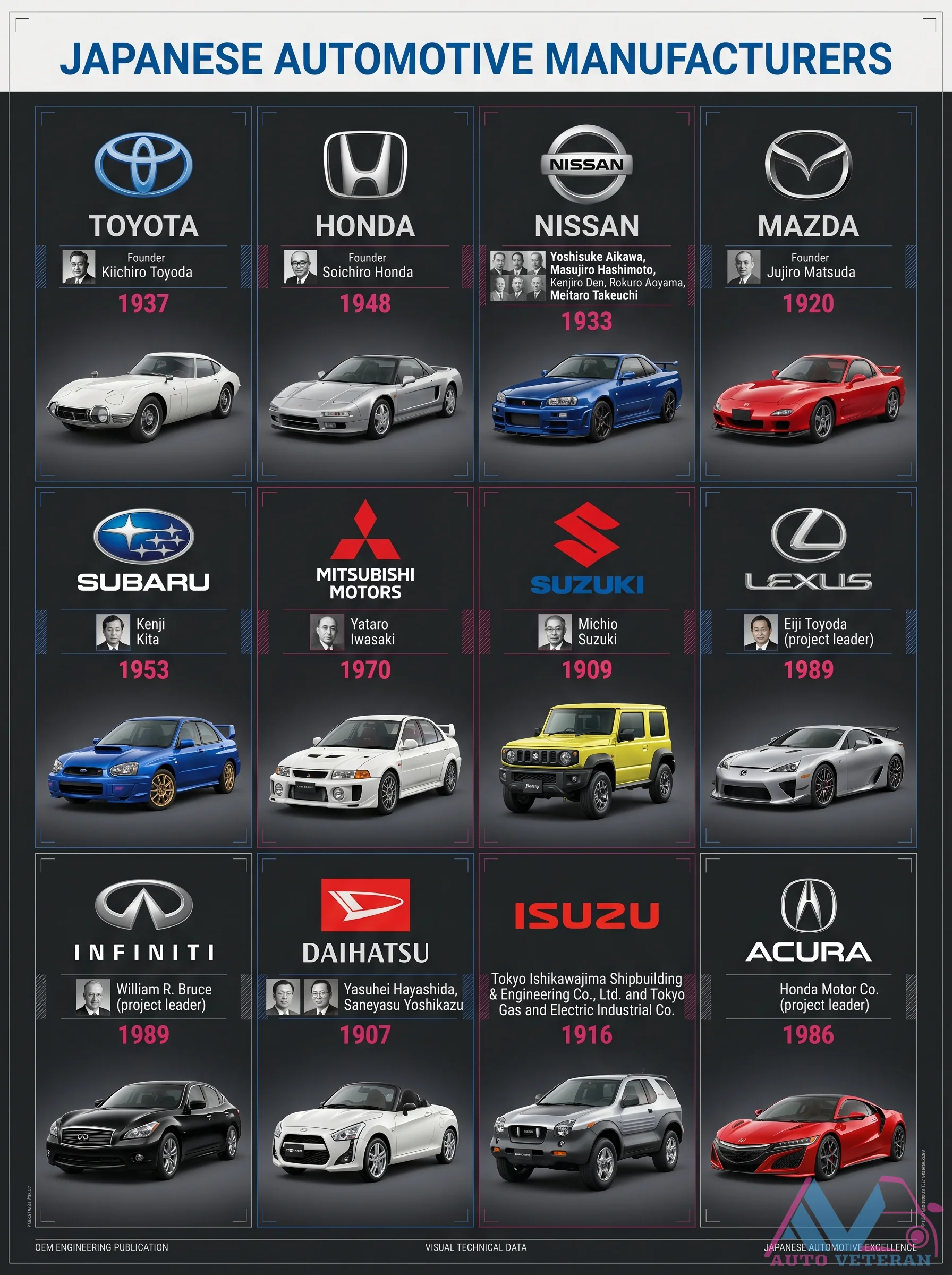
Timeline of Japanese Automakers
This chart details the founding years and key founders behind major Japanese automotive manufacturers including Nissan, Toyota, Honda, Mazda, Subaru, Mitsubishi, Suzuki, Lexus, Isuzu, Infiniti, Daihatsu, and Acura; tracing their origins from the early 20th century through the 1990s. It highlights figures like Kiichiro Toyoda, Soichiro Honda, and Jujiro Matsuda, along with lesser-known founders such as Yoshisuke Aikawa and Michio Suzuki.
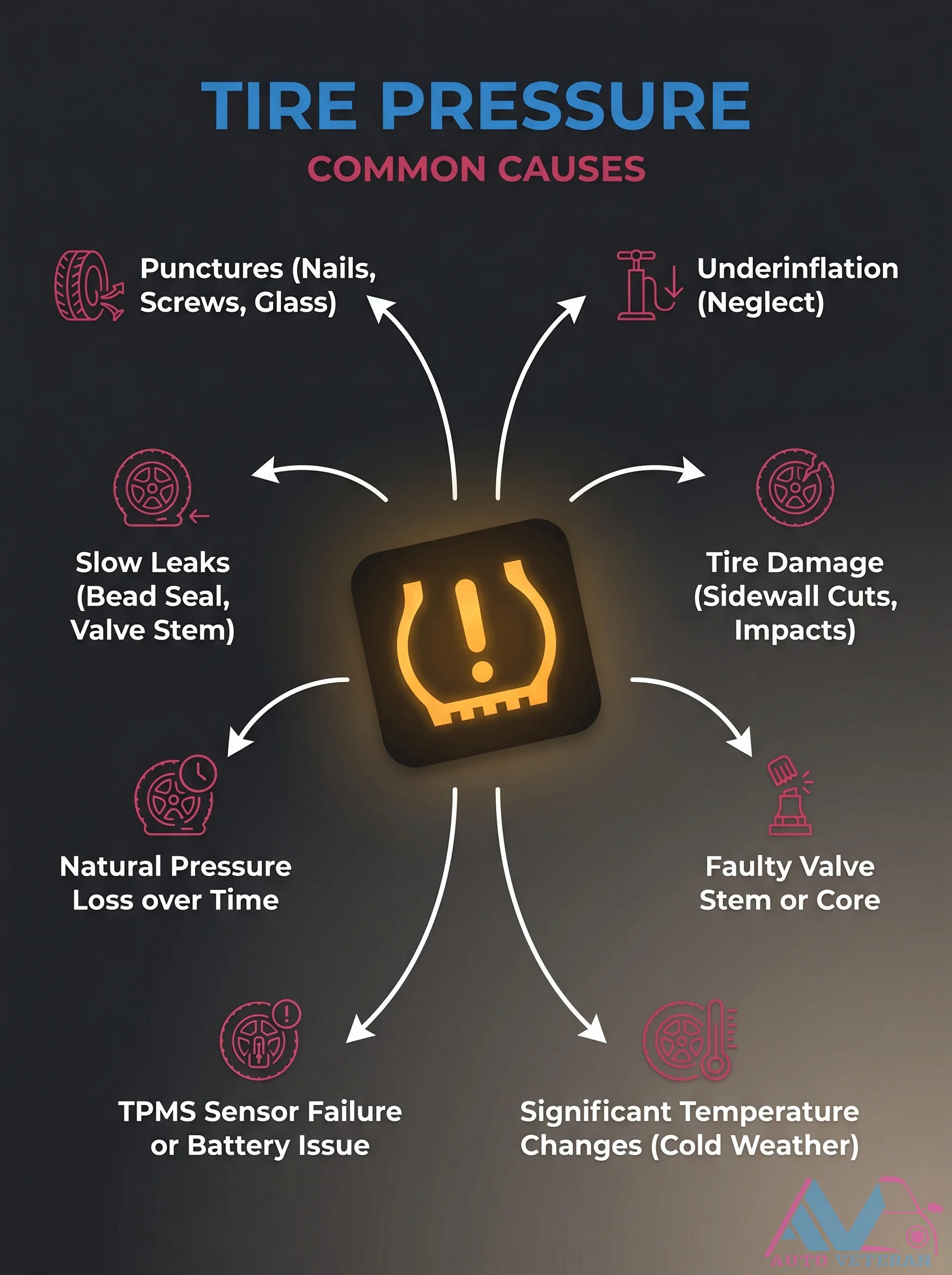
Tire Pressure Warning Common Causes
Your tire pressure warning light can be triggered by many issues beyond simple low air. Punctures from nails, screws, or glass let air escape slowly or rapidly. Underinflation from neglect, slow leaks at the bead seal or valve stem, and sidewall damage from curb impacts all cause pressure loss. Natural pressure drops over time, faulty valve stems or cores, TPMS sensor or battery failure, and significant temperature changes especially cold weather can also illuminate the warning.
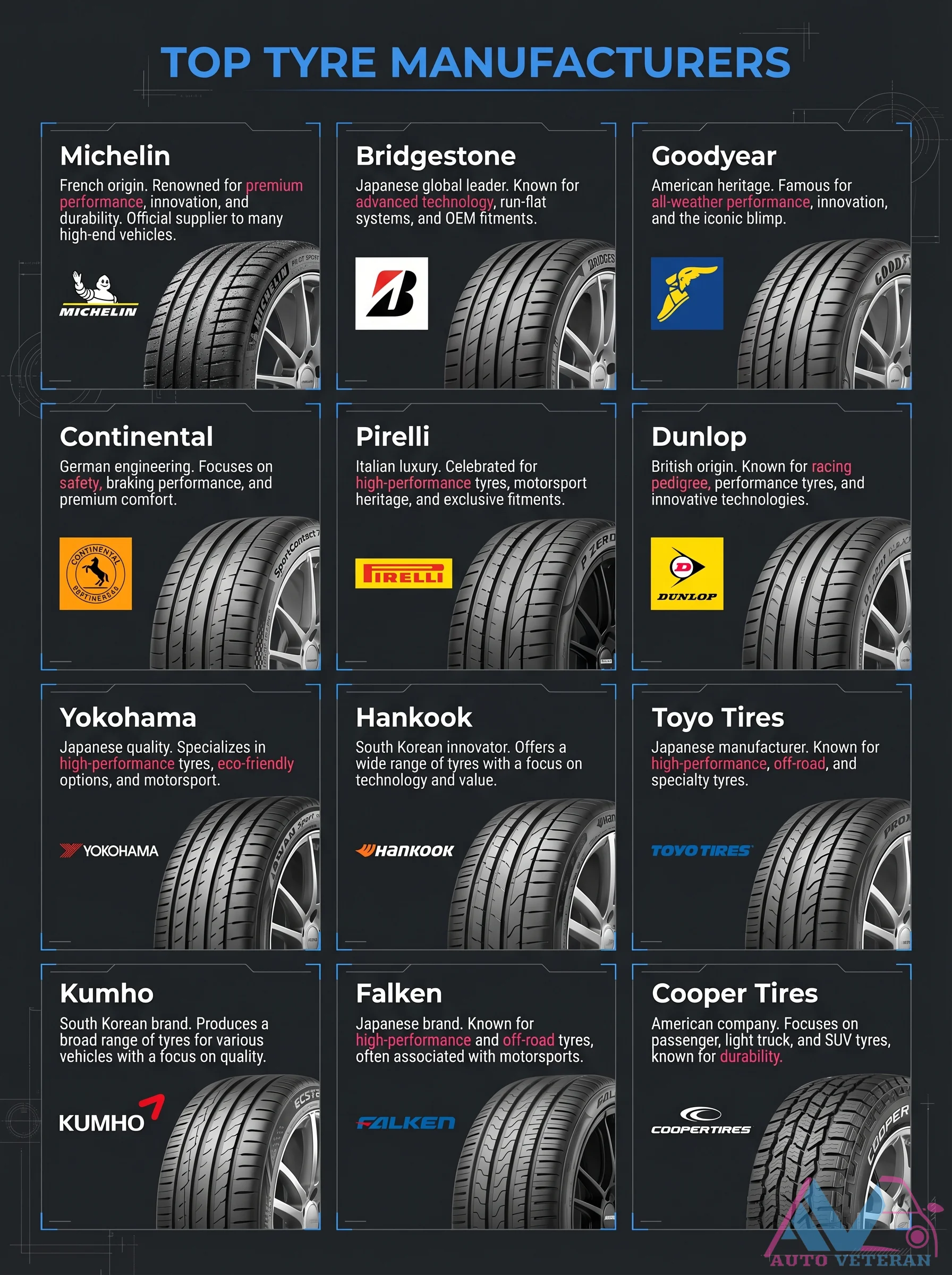
Top Tyre Manufacturers and Their Specializations
This overview highlights the world's leading tyre manufacturers, each distinguished by unique strengths and regional expertise. Michelin, of French origin, is celebrated for premium performance, innovation, and advanced run-flat systems. Bridgestone, the Japanese global leader, excels in all-weather performance and durability as an official supplier to high-end vehicles. Goodyear, with American heritage, is famous for iconic innovation and OEM fitments. Continental focuses on German engineering with safety and braking performance. Pirelli offers Italian luxury and motorsport pedigree. Dunlop, of British origin, provides premium comfort and exclusive fitments. Yokohama specializes in Japanese quality with eco-friendly and motorsport options. Hankook, a South Korean innovator, delivers technology and value across a wide range. Toyo Tires focuses on high-performance, off-road, and specialty tyres. Kumho produces various tyres with a focus on quality. Falken is known for high-performance and off-road tyres, often in motorsports. Cooper Tires, an American company, concentrates on light truck and SUV tyres for durability.
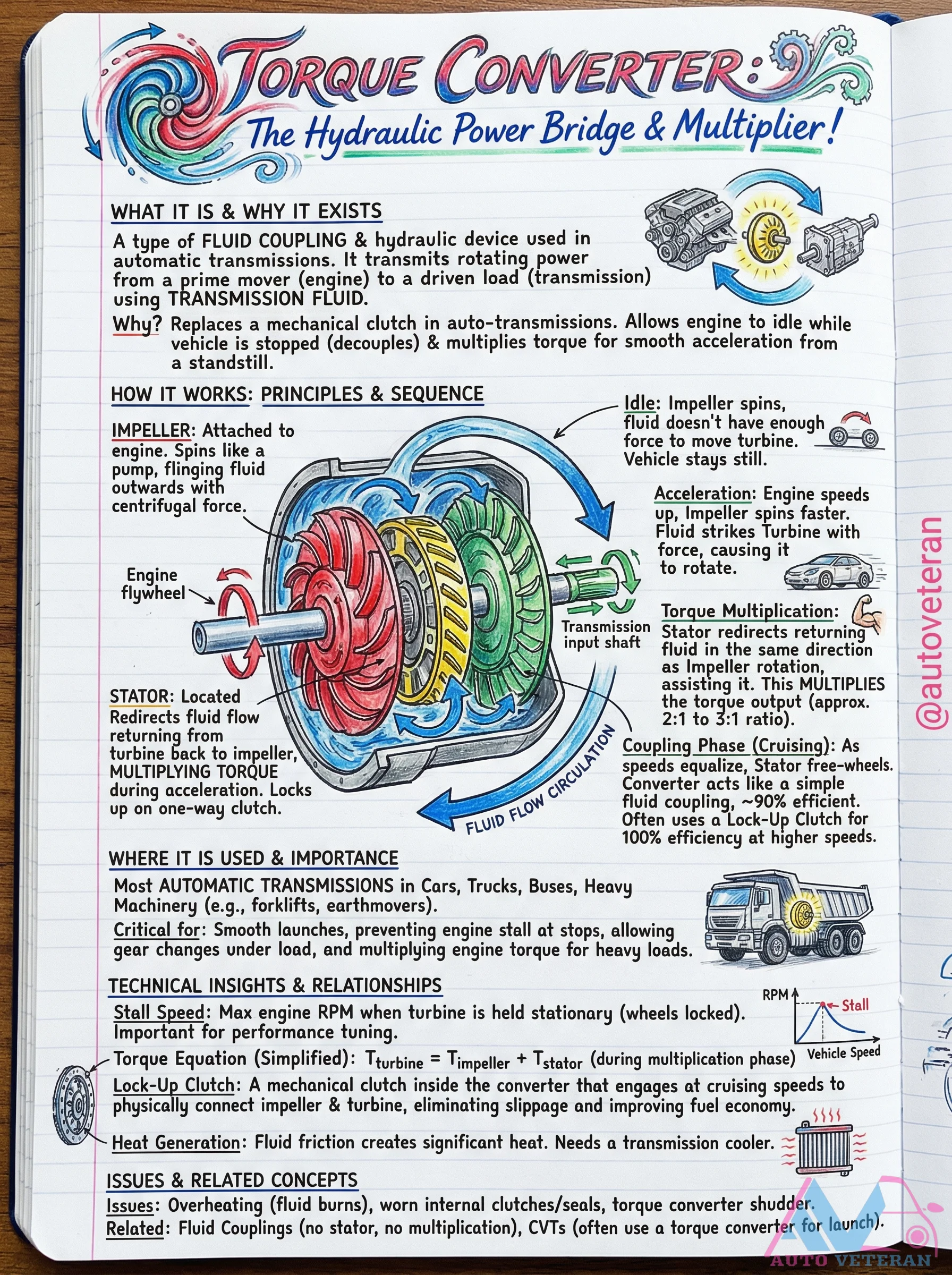
Torque Converter Hydraulic Power Bridge and Multiplier
The torque converter serves as a hydraulic power bridge and multiplier in automatic transmissions, functioning as a fluid coupling that transmits rotational energy from the engine to the transmission. It allows the engine to idle while the vehicle is stopped by decoupling the drivetrain, then multiplies torque for smooth acceleration from standstill. During operation, the impeller spins with the engine, creating centrifugal force that moves fluid to strike the turbine, while the stator redirects flow to achieve torque multiplication with ratios up to 2:1. At cruising speeds, a lock-up clutch engages to eliminate slippage and improve fuel efficiency. This component is critical for smooth launches, preventing engine stall, and enabling gear changes under load in cars, trucks, buses, and heavy machinery.
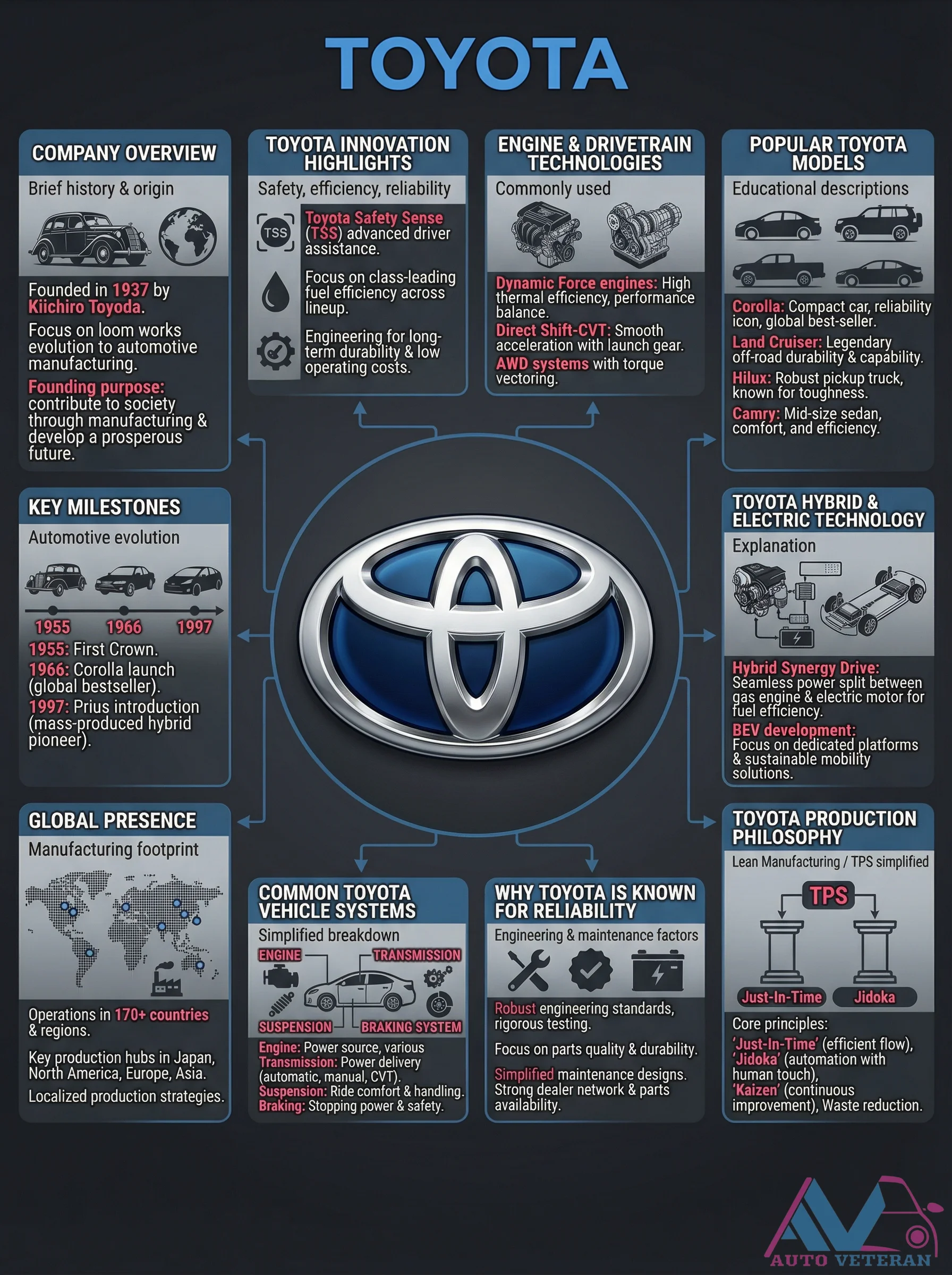
Toyota Company Overview and Innovation History
Founded in 1937 by Kiichiro Toyoda, Toyota has evolved from loom works to automotive manufacturing with a founding purpose to contribute to society. The company's key milestones include the 1955 Crown, 1966 Corolla launch as a global bestseller, and 1997 Prius introduction that pioneered mass hybrid technology. Toyota's innovation spans Dynamic Force engines with high thermal efficiency, Direct Shift CVT transmissions with launch gears, and Hybrid Synergy Drive systems. The Toyota Production System philosophy of Just In Time manufacturing, Jidoka automation with human touch, and Kaizen continuous improvement drives reliability through rigorous testing, robust engineering standards, and simplified maintenance designs. With operations in 170 countries and production hubs worldwide, Toyota maintains its reputation for safety, efficiency, and durability across popular models like the Corolla, Land Cruiser, and Hilux.
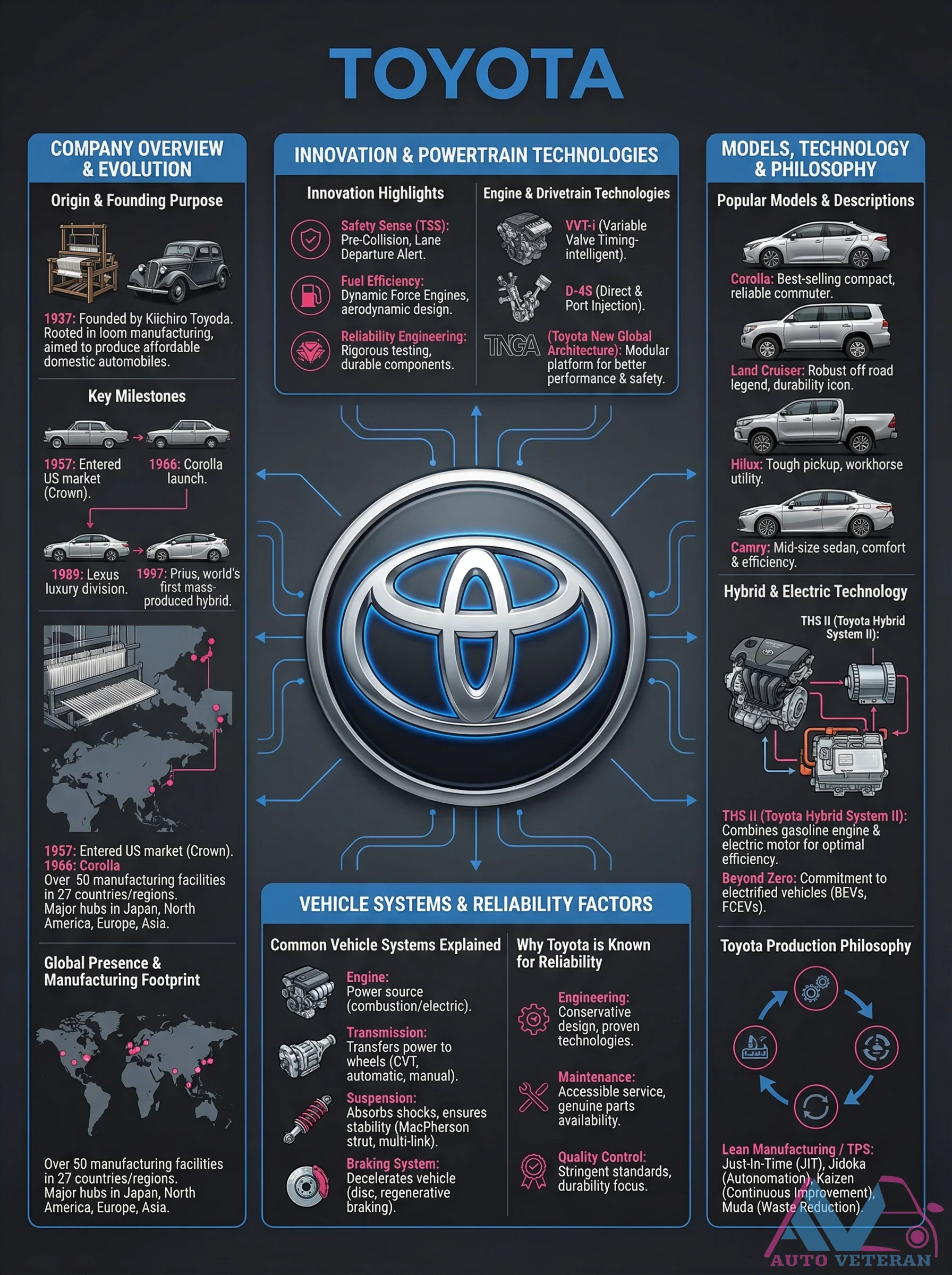
Toyota Company Overview Innovation and Reliability
Toyota's journey from its 1937 founding by Kiichiro Toyoda to becoming a global automotive leader is built on innovation and reliability. The company's engineering philosophy emphasizes conservative design, proven technologies, and rigorous testing, ensuring durable components across all models. Key innovations include Dynamic Force Engines, D-4S Direct Port Injection, and the Toyota Hybrid System II, which combines gasoline engines with electric motors for optimal efficiency. Popular models like the Corolla, Camry, Land Cruiser, and Hilux showcase Toyota's commitment to reliability, safety, and performance. The Toyota Production System, with principles like Just-In-Time, Jidoka, and Muda waste reduction, supports quality control and continuous improvement. With over 50 manufacturing facilities in 27 countries, Toyota maintains a strong global presence while advancing electrified vehicles through its Beyond Zero initiative.
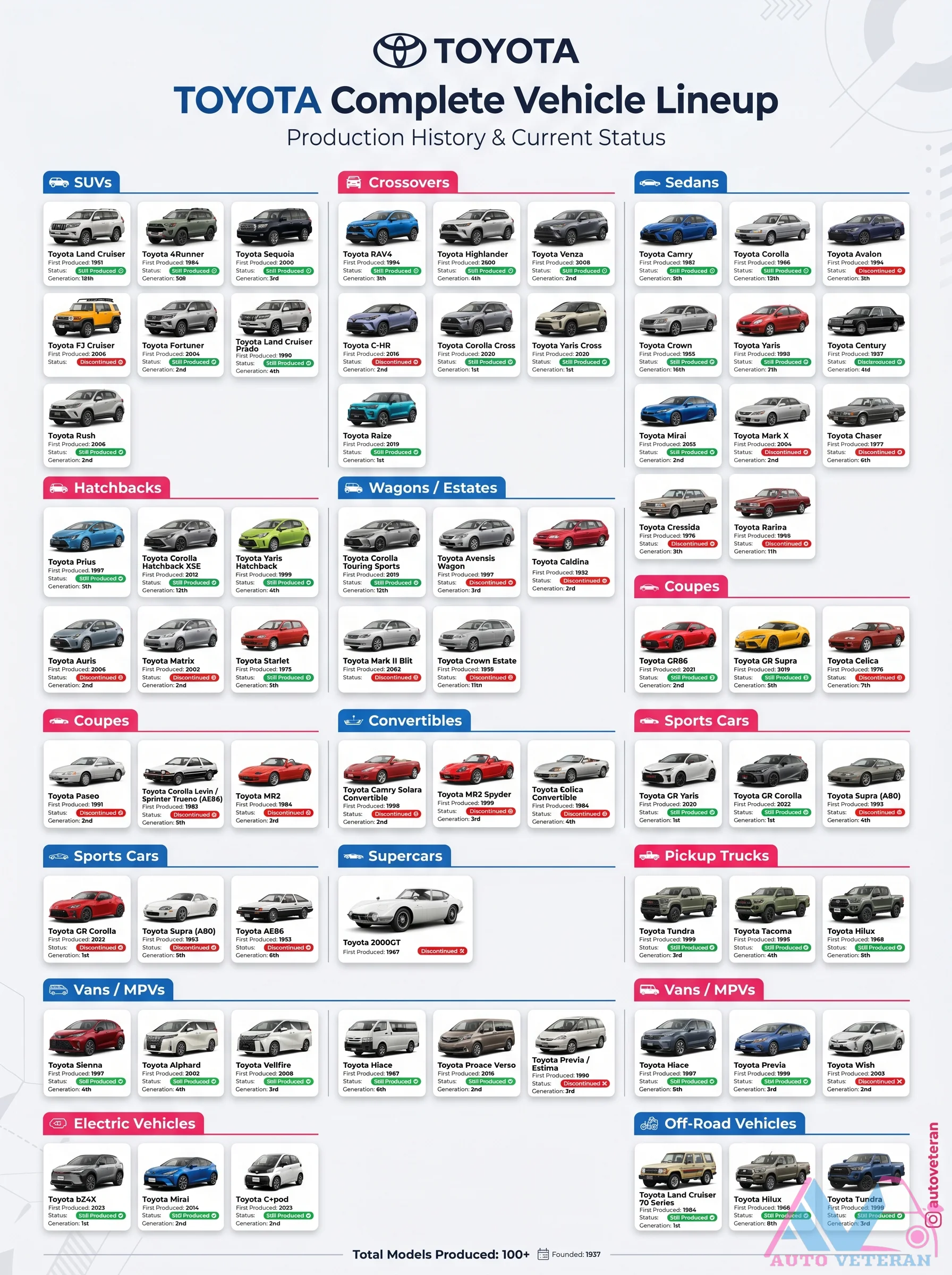
Toyota Complete Vehicle Lineup
This comprehensive overview showcases Toyota's entire production history and current model range, spanning from rugged Land Cruisers and RAV4 SUVs to iconic Sports cars like the Supra and GR Corolla, along with hybrids, electric vehicles, and utility pickups like the Tacoma and Tundra.
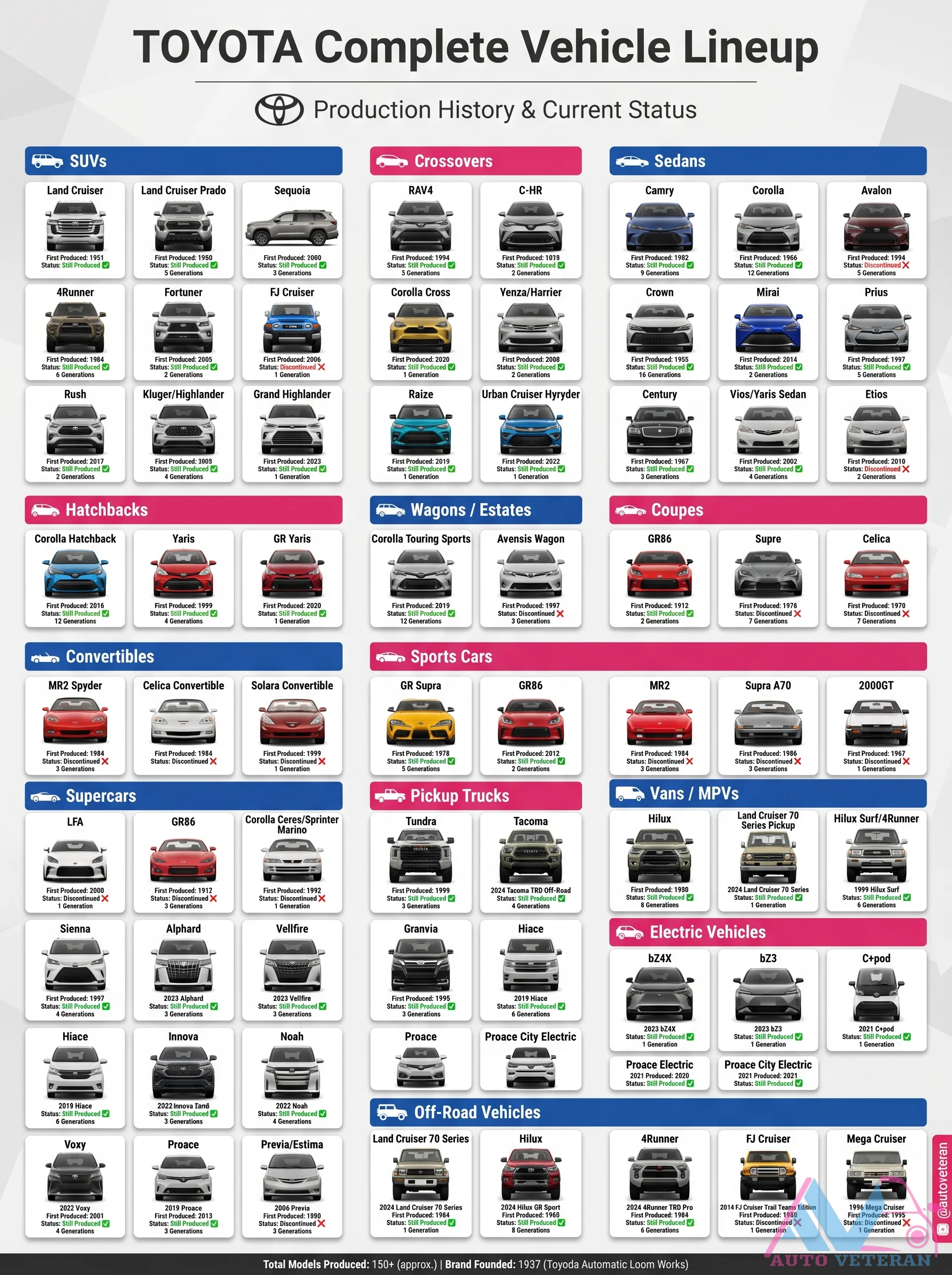
Toyota Complete Vehicle Lineup Overview
This comprehensive infographic details Toyota's full production history and current status across all vehicle categories, including SUVs like Land Cruiser and RAV4, sedans like Corolla and Avalon, hatchbacks like Yaris, sports cars like Supra and GR86, pickup trucks such as Tacoma and Tundra, vans, MPVs, electric vehicles including bZ4X and Proace Electric, and off-road models like the Land Cruiser 70 Series. It also lists brand founding information and assembly locations.
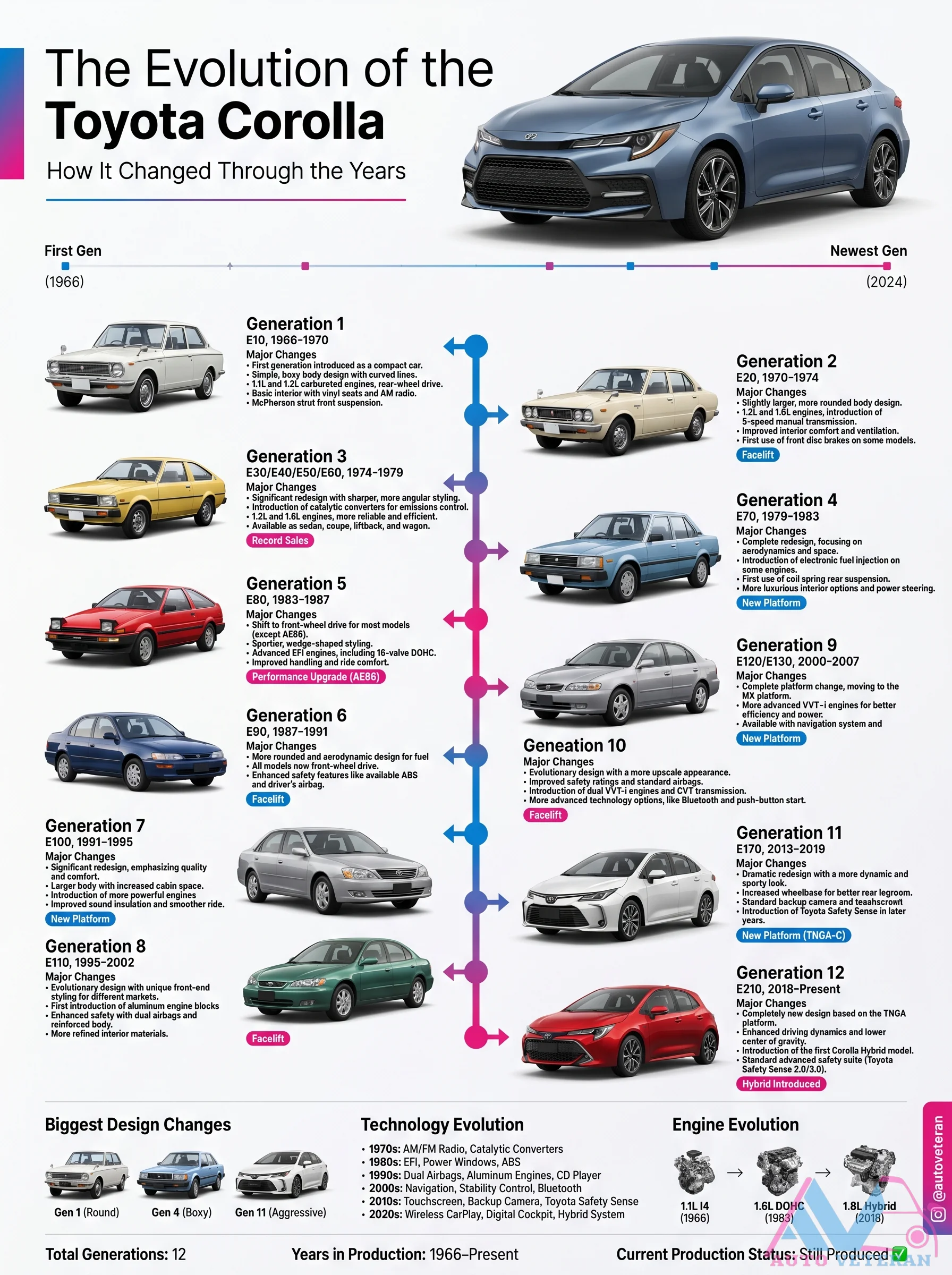
Toyota Corolla Evolution Timeline
This infographic maps twelve generations of the Toyota Corolla from 1966 through 2024; highlighting major design shifts, technological milestones like the introduction of EFI, DOHC engines, Toyota Safety Sense, and the shift to the TNGA platform, as well as key features such as ABS, airbags, Bluetooth, and the hybrid powertrain.
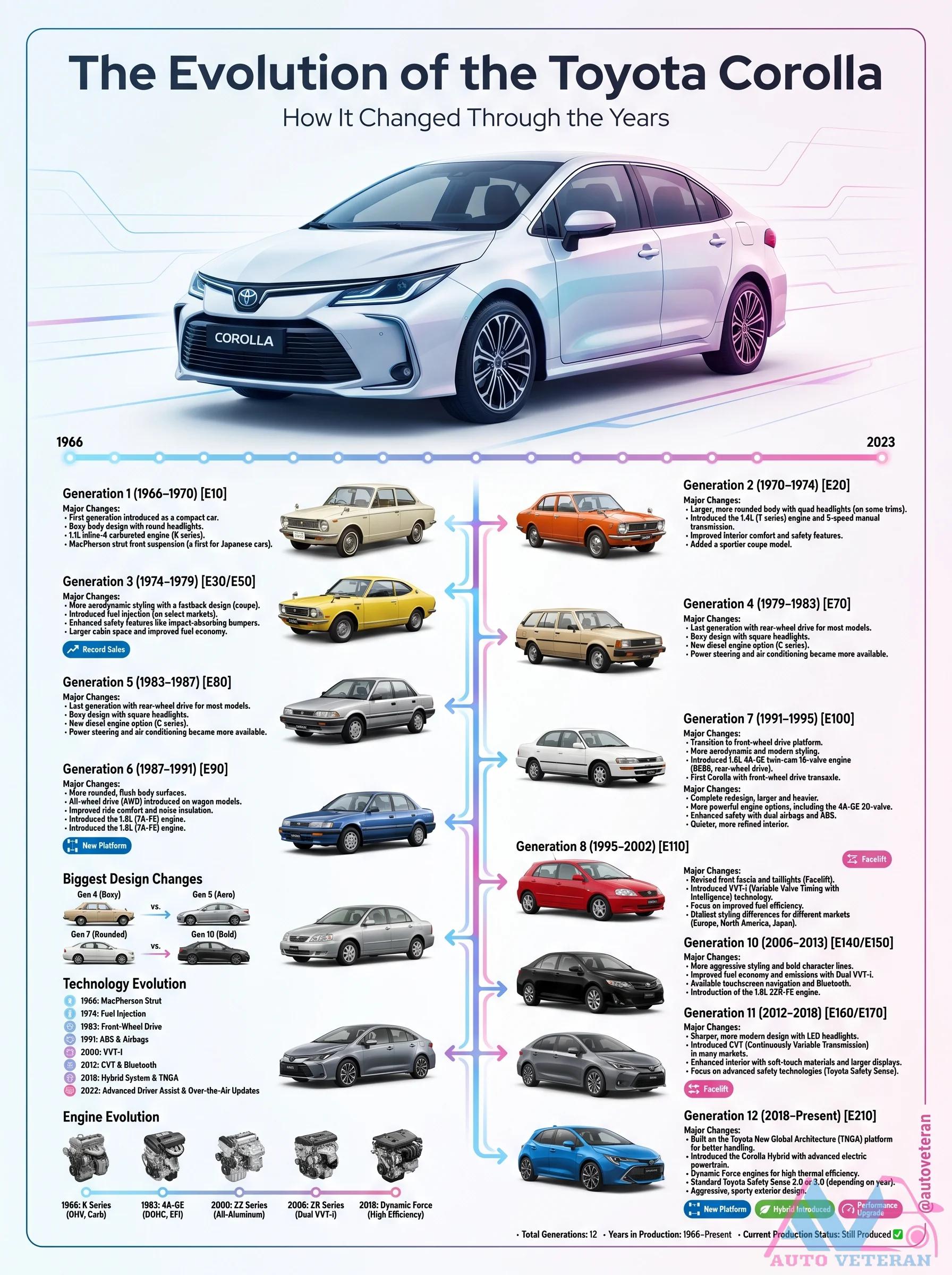
Toyota Corolla Generations Evolution (1966-2023)
From the first generation E10 in 1966 to the current E210 model, this timeline charts the complete evolution of the Toyota Corolla. Each generation brought bigger design changes, engine upgrades, and technology milestones. The OCR lists engine codes like 4S-FE and 2SC, along with horsepower figures, showing how the Corolla transformed from a compact economy car to a globally dominant sedan with continuous refinement in efficiency, safety, and performance. This visual guide covers nine generations with chassis codes spanning E10 through E210.
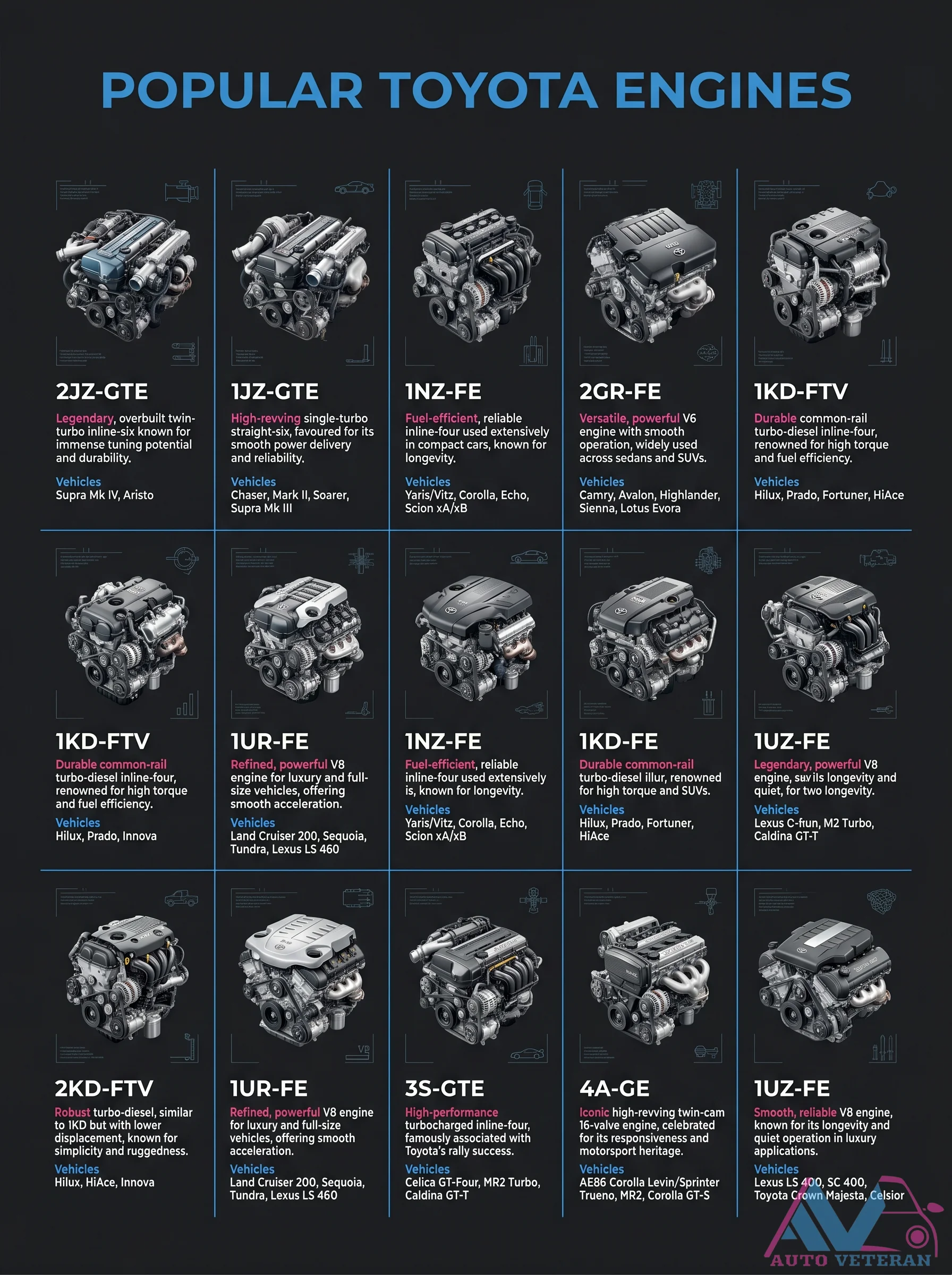
Toyota Engine Specifications and Vehicle Applications Chart
This comprehensive chart details the specifications, characteristics, and vehicle applications for popular Toyota engines, including the high-revving 2JZ-GTE, fuel-efficient 1NZ-FE, durable 1KD-FTV, and refined 1UR-FE. It highlights key attributes such as tuning potential, reliability, torque output, and smooth operation across models like the Supra, Corolla, Hilux, and Lexus LS.
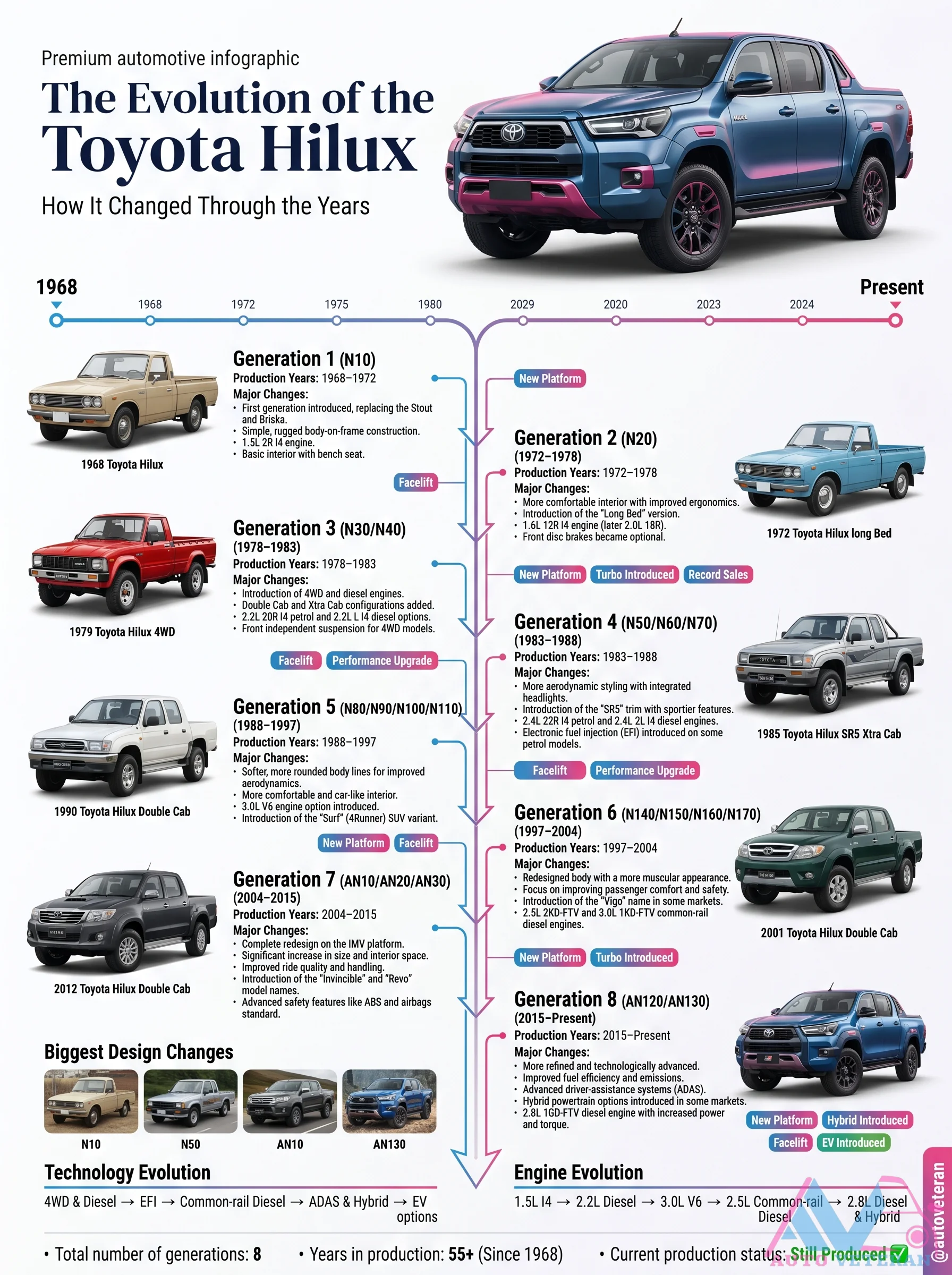
Toyota Hilux 8 Generations Evolution Timeline
This infographic chronicles the Toyota Hilux from its 1968 debut through eight generations spanning over 55 years. The starter truck evolved from a simple 1.5L 2R utility platform with birch seats to a sophisticated global icon featuring hybrid powertrains, common rail diesels, advanced driver assistance systems, and even an EV variant. Key milestones include the introduction of 4WD in 1979, the first turbo diesel in the third generation, electronic fuel injection on the fifth generation, and the modern muscular design language with double cab and Xtra Cab configurations.
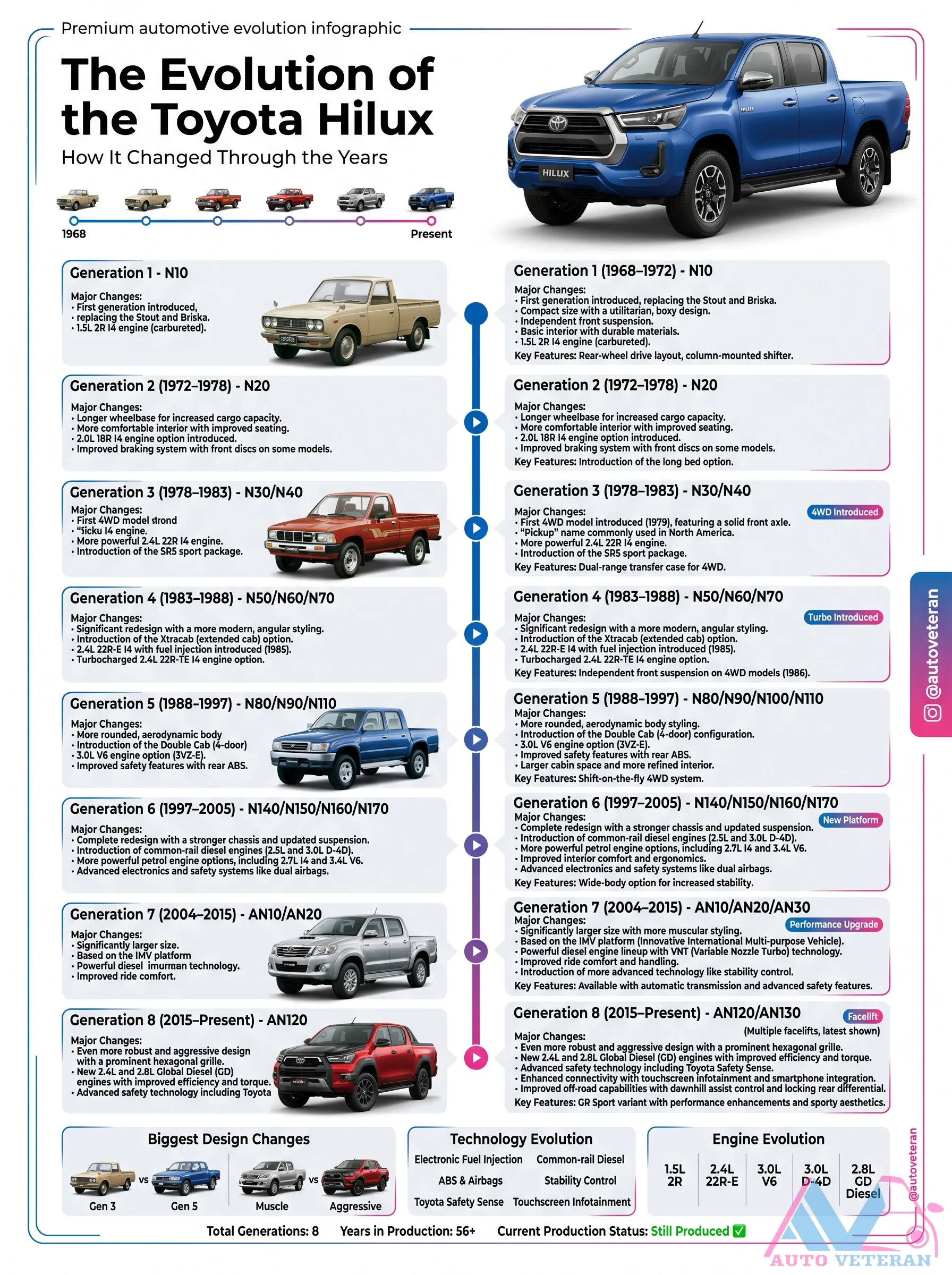
Toyota Hilux Generations Evolution
The Toyota Hilux has evolved over eight generations from 1968 to the present, starting as a utilitarian compact pickup to replace the Stout and Briska. The first generation (1968-1972) introduced the N10 chassis with a column-mounted shifter and carbureted 1.5L 2R engine. The second generation (1972-1978) brought longer wheelbase and disc brakes. The third generation (1978-1983) featured the introduction of 4WD and the SR5 sport package. The fourth generation (1983-1988) added a turbo diesel 2L-T engine and independent front suspension on 4WD models. The fifth generation (1988-1997) offered double cab configuration and 3.0L V6 options. The sixth generation (1997-2005) introduced common-rail diesel and improved safety. The seventh generation (2004-2015) added muscular styling and stability control. The eighth generation (2015-present) features aggressive design, Toyota Safety Sense, and the 2.8L GD-6 diesel engine.
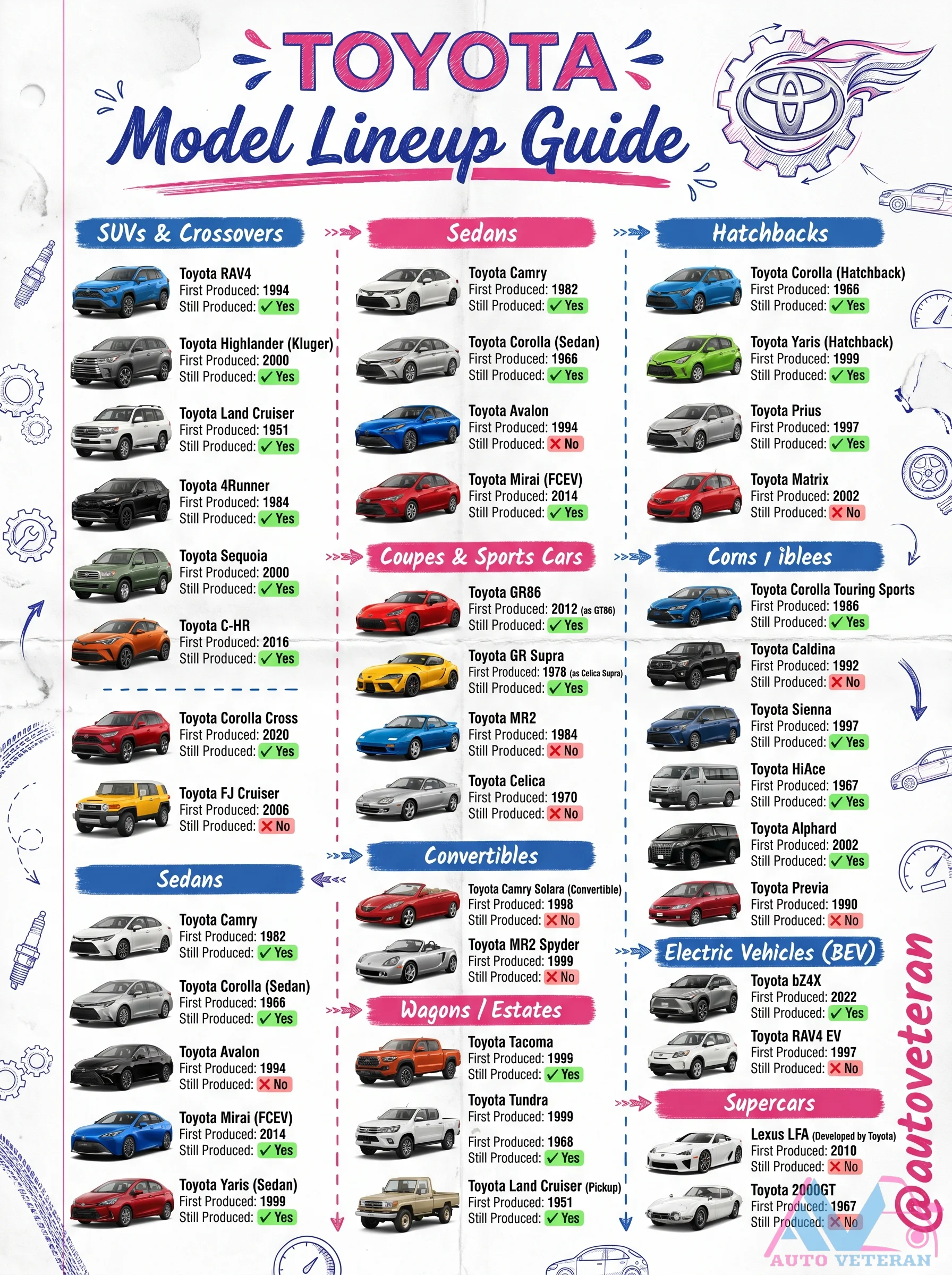
Toyota Model Lineup Guide
Explore the full Toyota lineup with this comprehensive guide covering SUVs, crossovers, sedans, hatchbacks, coupes, sports cars, convertibles, electric vehicles, trucks, vans, and supercars. It includes production history for each model like RAV4, Camry, Corolla, Land Cruiser, Prius, Supra, and more.
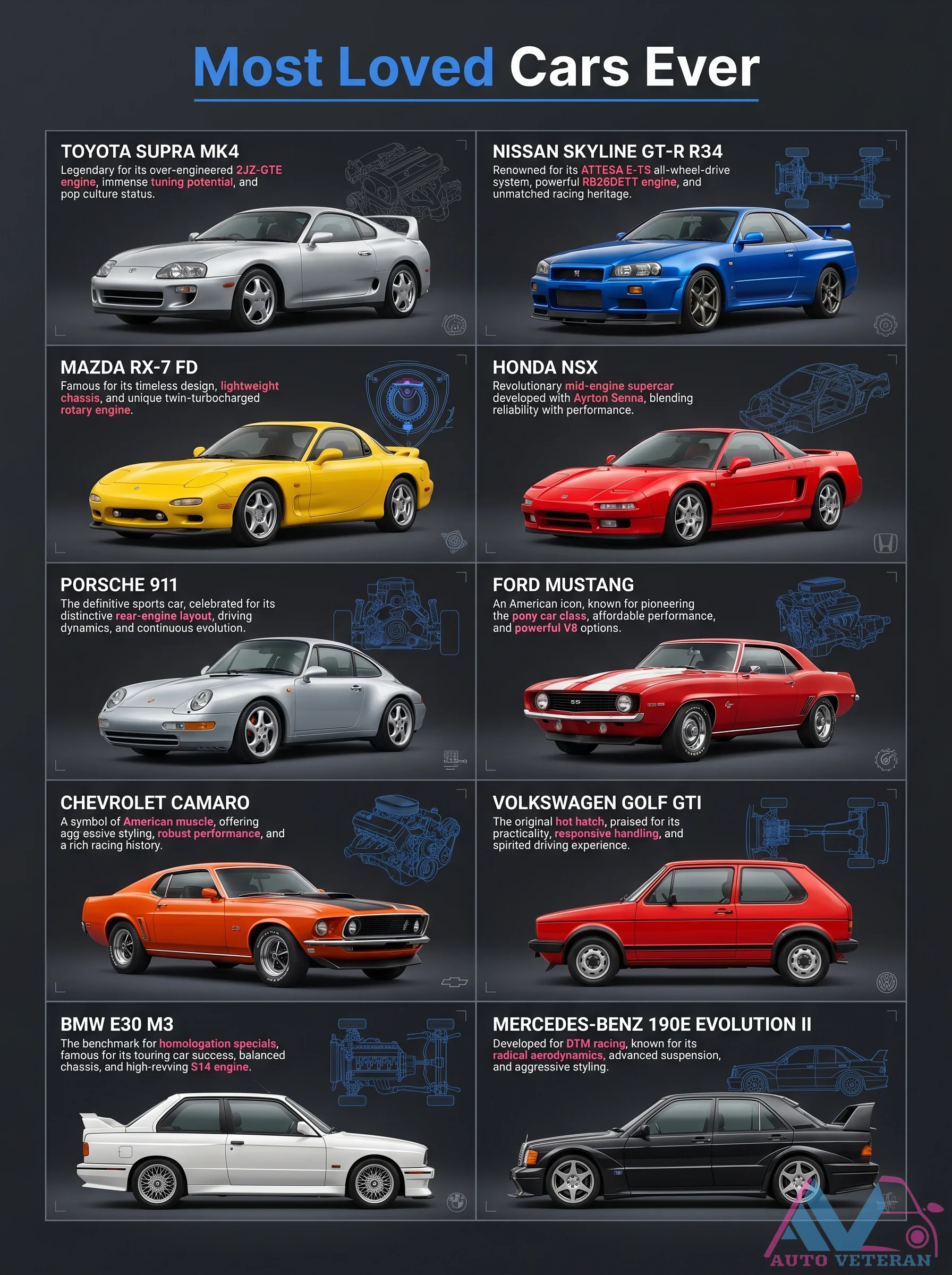
Toyota Supra MK4 2JZ-GTE Engine
The Toyota Supra MK4 is celebrated for its over-engineered 2JZ-GTE engine, an iron-block inline-six that withstands immense tuning potential; this legend dominates car culture and drag strips with bulletproof reliability and immense horsepower capabilities.
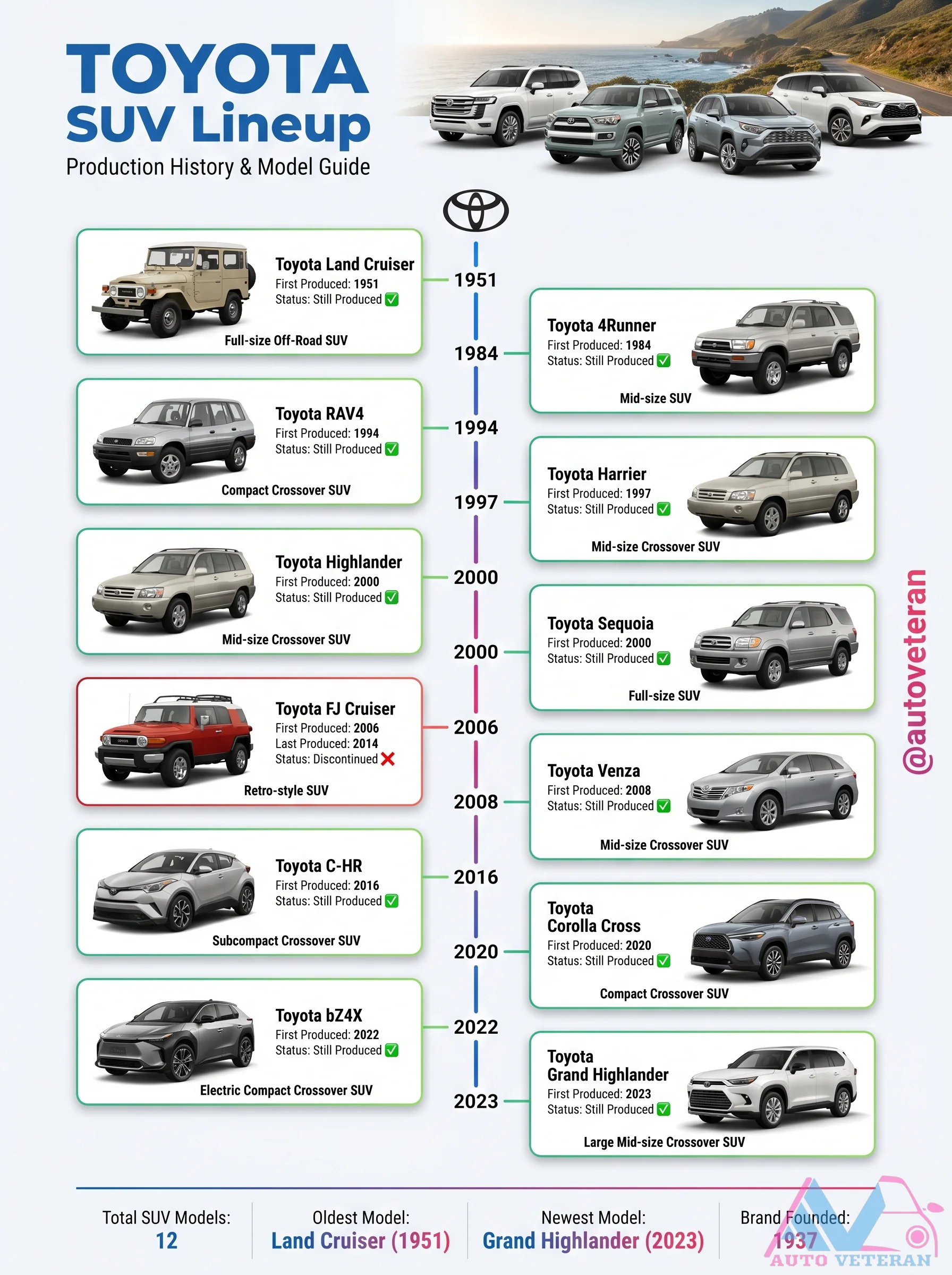
Toyota SUV Lineup Production History Guide
This guide covers the production history and status of Toyota's SUV lineup, including iconic models like the Land Cruiser first produced in 1951 and still in production, the 4Runner from 1984, the RAV4 from 1994, the Harrier from 1997, the Highlander and Sequoia both from 2000, the discontinued FJ Cruiser (2006-2014), the Venza from 2008, the C-HR from 2014, the Corolla Cross from 2020, the bZ4X from 2022, and the Grand Highlander from 2023. The oldest model is the Land Cruiser, the newest is the Grand Highlander, and there are 12 total SUV models listed. Toyota's founding status is also noted.
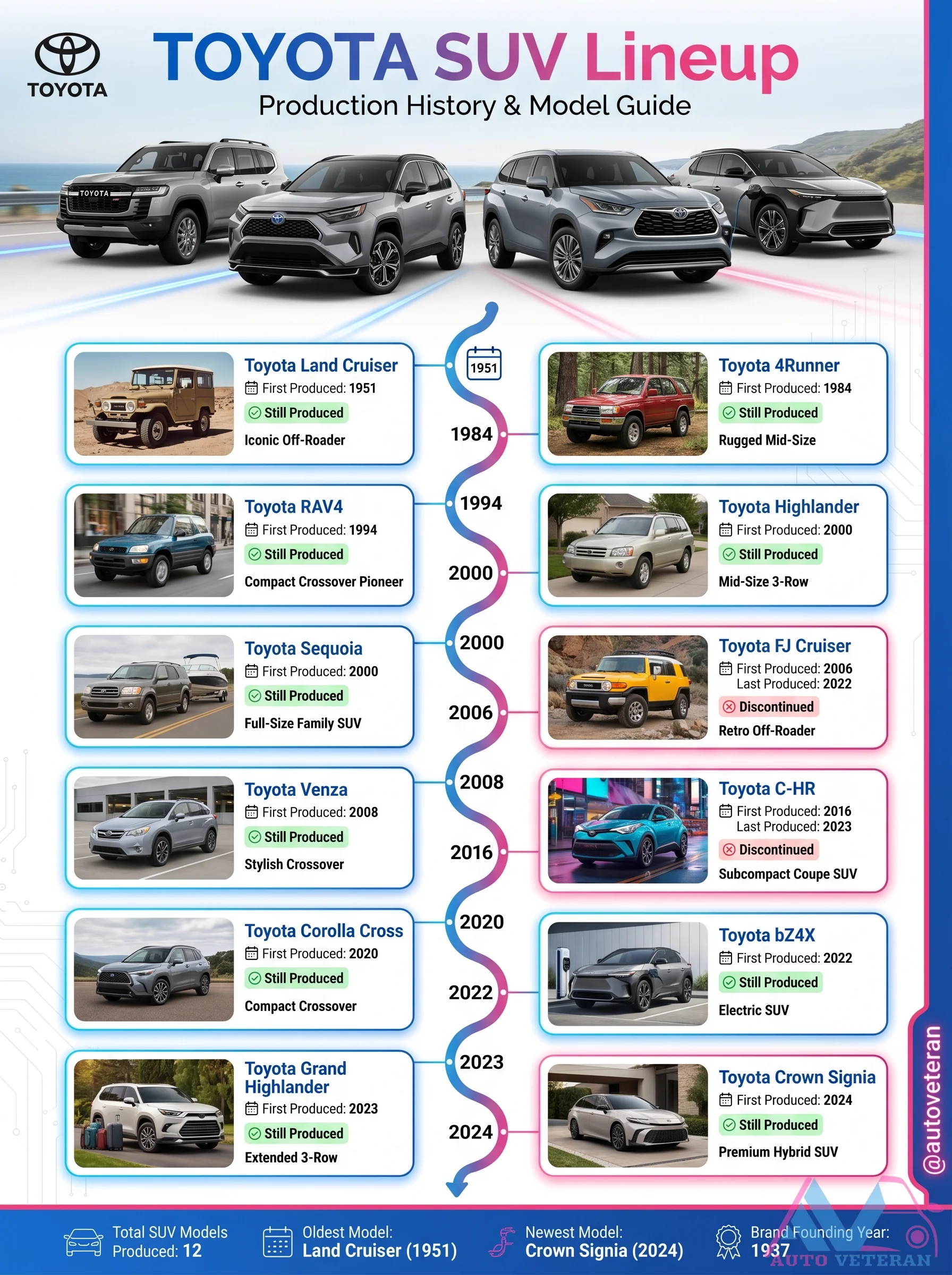
Toyota SUV Production History & Model Guide
This guide chronicles Toyota's SUV lineage from the iconic Land Cruiser first produced in 1951 through the newest Crown Signia of 2024. It details 12 models including the rugged 4Runner, pioneering RAV4, family oriented Highlander, full size Sequoia, retro FJ Cruiser, stylish Venza, subcompact C HR, compact Corolla Cross, and the electric bZ4X. Each entry highlights launch year and production status; from the still produced off road veterans to discontinued niche models.
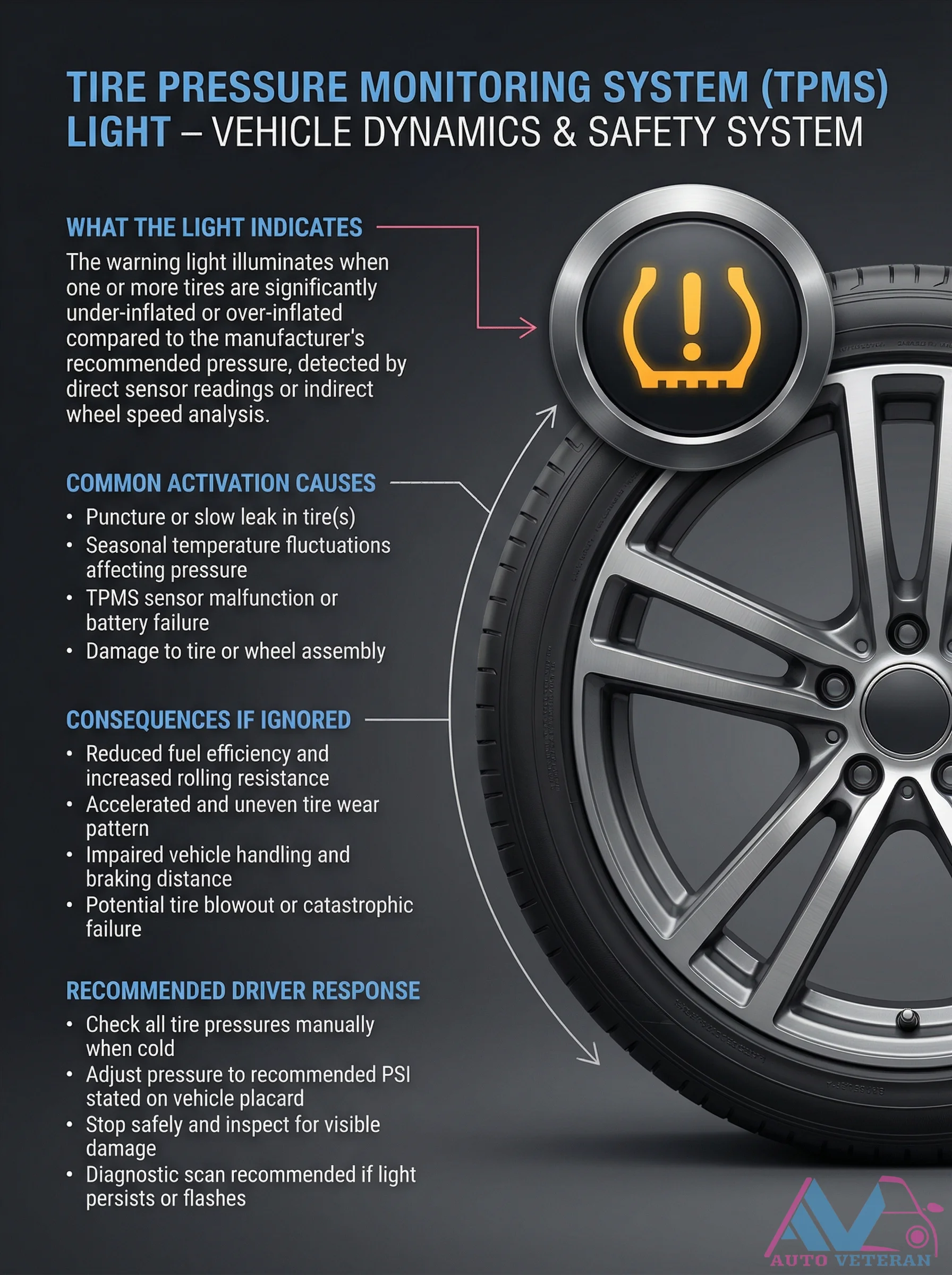
TPMS Warning Light Causes, Consequences, and Driver Response
The Tire Pressure Monitoring System warning light activates when tire pressure deviates significantly from manufacturer specifications, whether due to punctures, temperature changes, or sensor failures. Ignoring this alert leads to reduced fuel efficiency, uneven tire wear, compromised handling, and potential blowouts. Drivers should immediately check cold tire pressures, adjust to the recommended PSI, inspect for visible damage, and seek diagnostics if the light persists or flashes.