Interactive Explorer
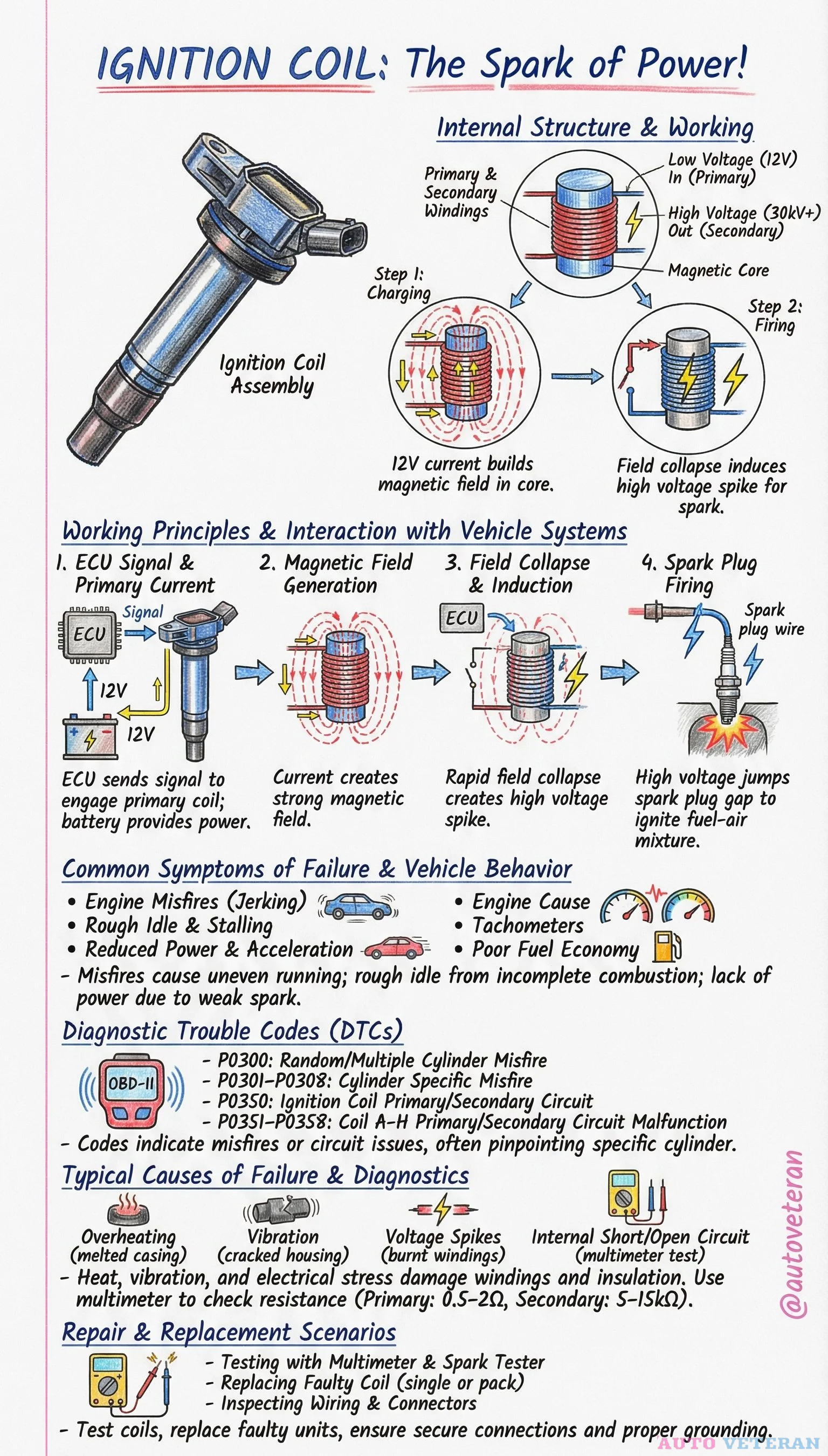
Ignition Coil Internal Structure and Failure Symptoms
The ignition coil transforms 12V battery power into 30,000+ volts through electromagnetic induction, with primary and secondary windings around a magnetic core. When this critical component fails, symptoms include engine misfires, rough idle, stalling, reduced power, and poor fuel economy. Diagnostic trouble codes like P0300 for random misfires or P0350 for circuit malfunctions help pinpoint issues. Common causes involve heat degradation, vibration damage, or electrical stress, with testing methods including multimeter resistance checks and spark tester verification.
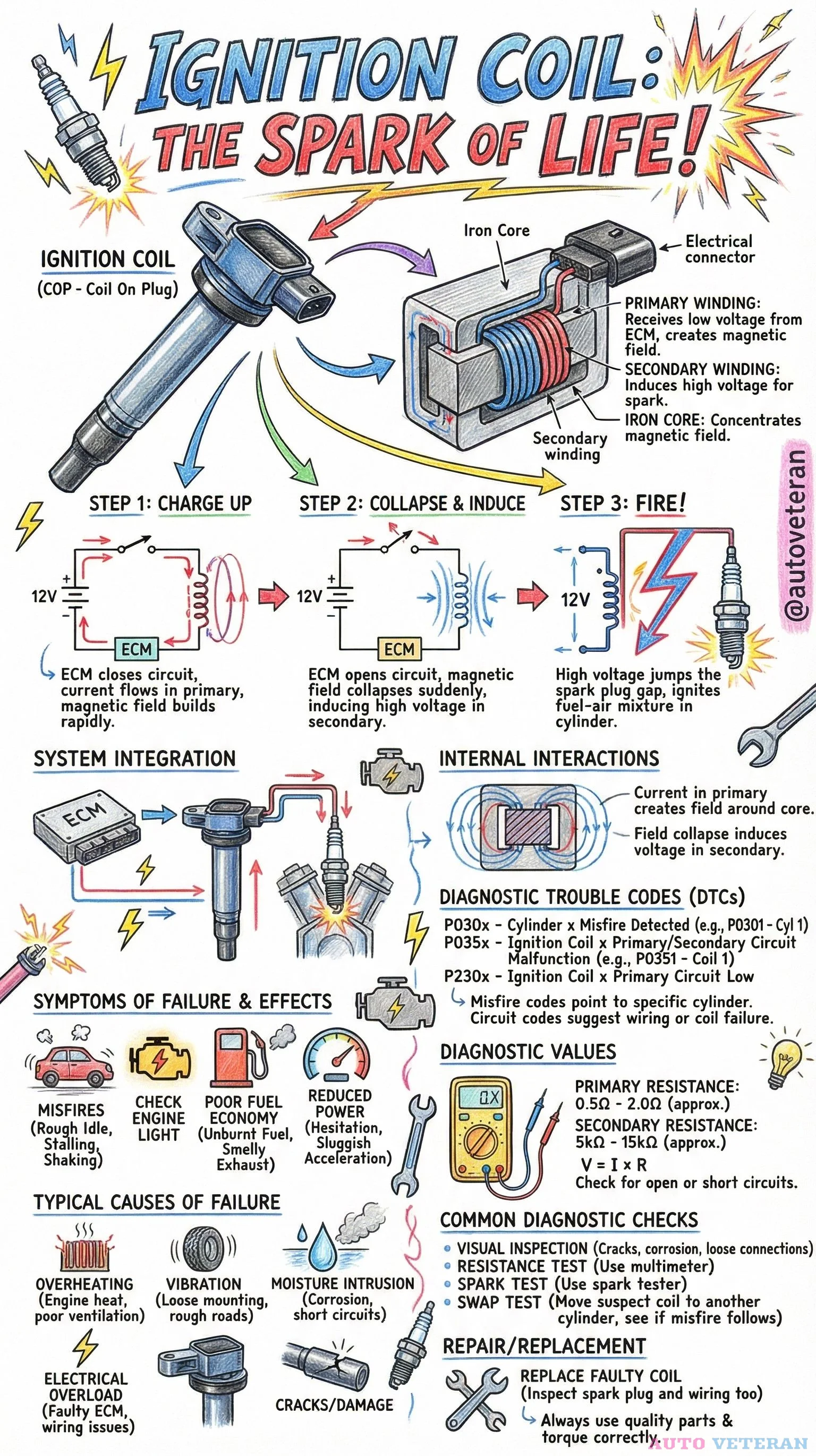
Ignition Coil Operation and Diagnostic Testing
Understanding how an ignition coil transforms low voltage into high voltage spark involves three key steps: charging up when the ECM closes the circuit, magnetic field collapse when it opens, and firing to ignite the fuel-air mixture. Diagnostic trouble codes like P035x for circuit malfunctions or P030x for cylinder misfires help pinpoint issues. Testing includes checking primary resistance around 2.00 ohms and secondary resistance between 5kΩ to 15kΩ, along with visual inspection for cracks or corrosion, spark testing, and swap testing to confirm coil failure. Symptoms of a failing coil include engine misfires, rough idle, reduced power, poor fuel economy, and hesitation during acceleration.
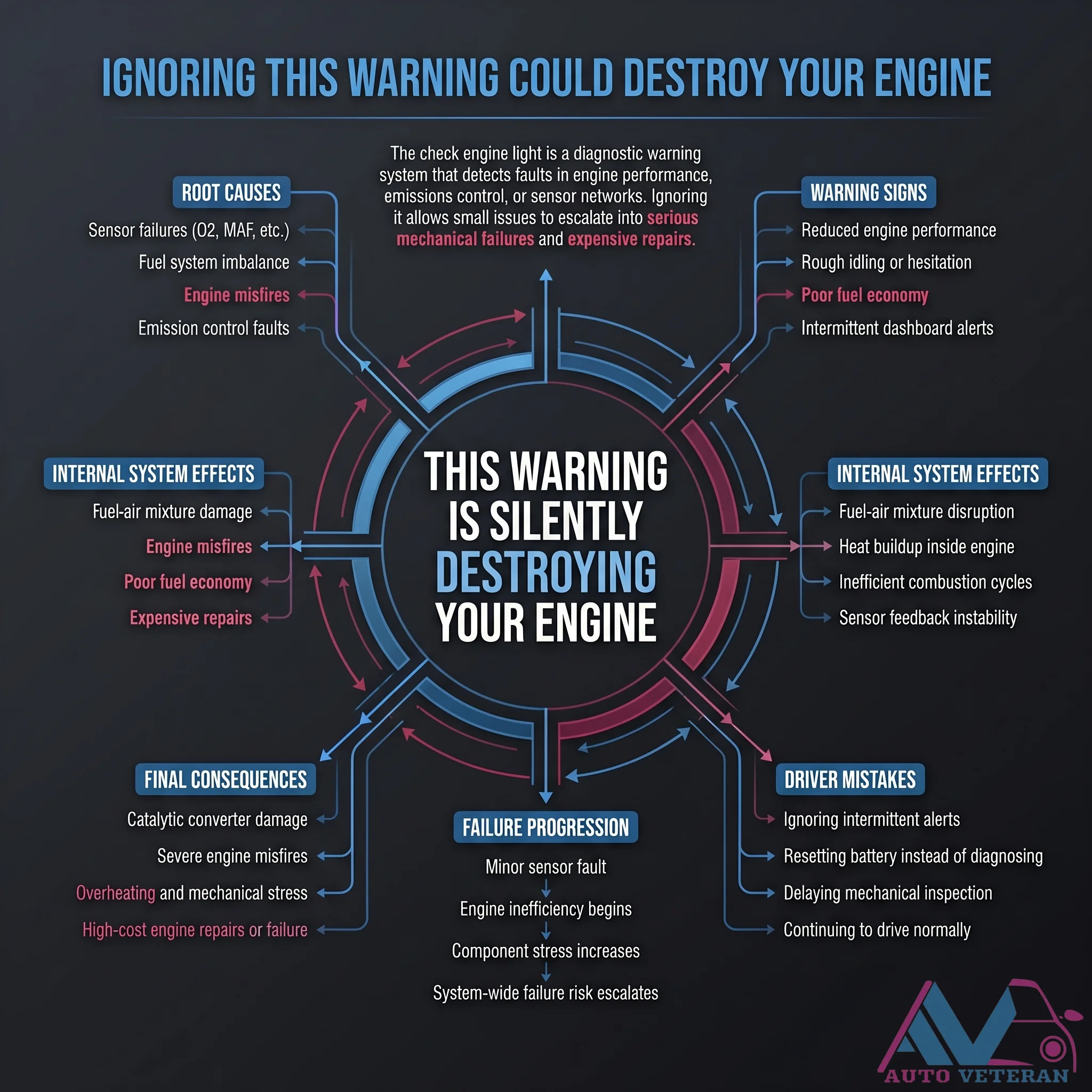
Ignoring Check Engine Light Consequences
The check engine light serves as a critical diagnostic warning system that detects faults in engine performance, emissions control, and sensor networks. When ignored, minor issues like sensor failures, fuel system imbalances, or rough idling can escalate into serious mechanical failures. This leads to internal system effects including fuel-air mixture disruption, engine misfires, heat buildup, inefficient combustion cycles, and sensor feedback instability. The progression from minor faults to system-wide failure involves catalytic converter damage, severe engine misfires, overheating, mechanical stress, and ultimately high-cost engine repairs or complete engine failure. Common driver mistakes like resetting the battery instead of diagnosing sensors or delaying mechanical inspection accelerate this destructive progression.
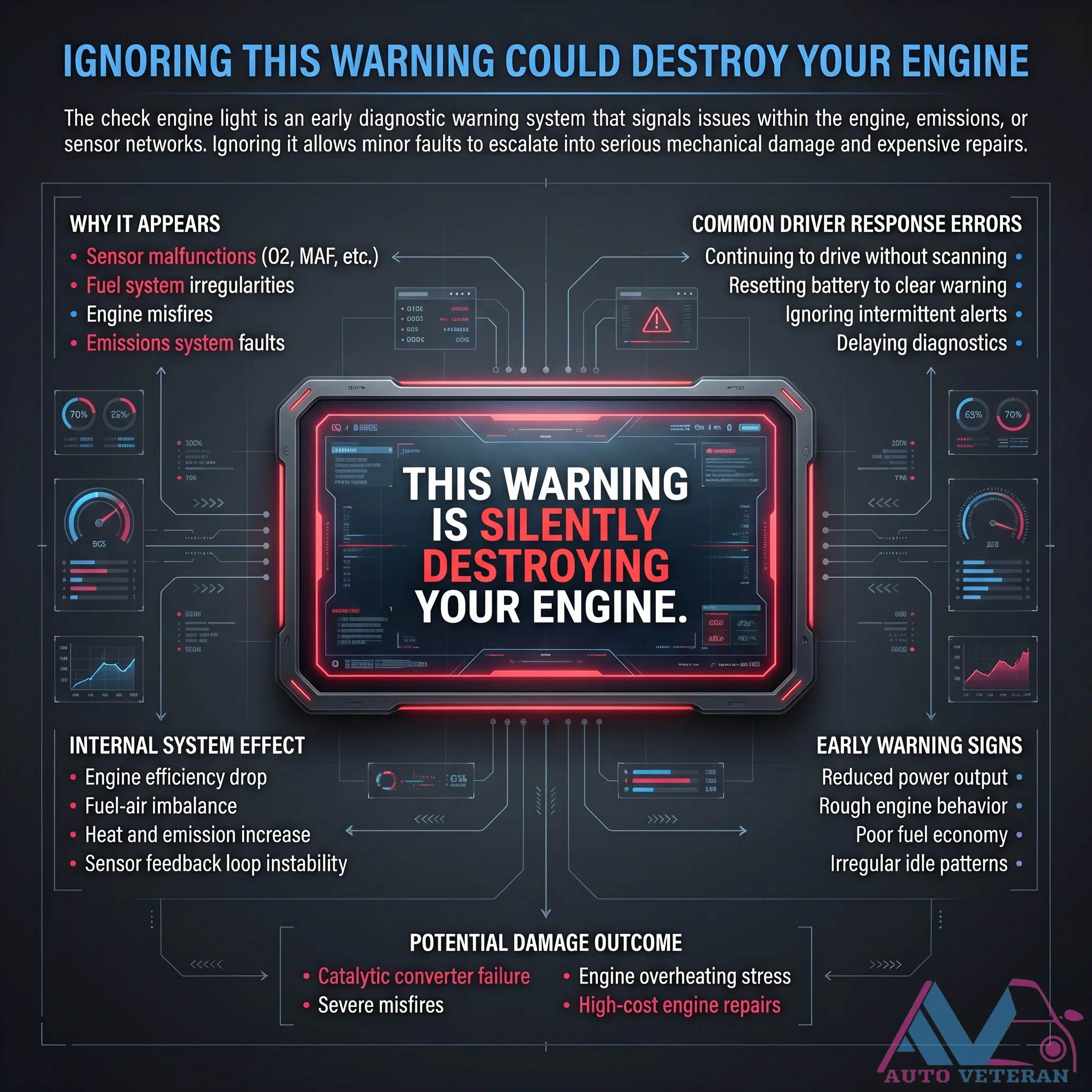
Ignoring Check Engine Light Warning Destroys Engine
The check engine light serves as a critical early diagnostic warning system for engine, emissions, and sensor network issues. Ignoring this warning allows minor faults like sensor malfunctions, fuel system irregularities, or engine misfires to escalate into serious mechanical damage. Common driver errors include continuing to drive without scanning, resetting the battery to clear warnings, or delaying diagnostics. Early warning signs include engine efficiency drops, reduced power output, fuel-air imbalance, rough engine behavior, heat and emission increases, poor fuel economy, sensor feedback loop instability, and irregular idle patterns. Potential damage outcomes include catalytic converter failure, engine overheating stress, severe misfires, and high-cost engine repairs.
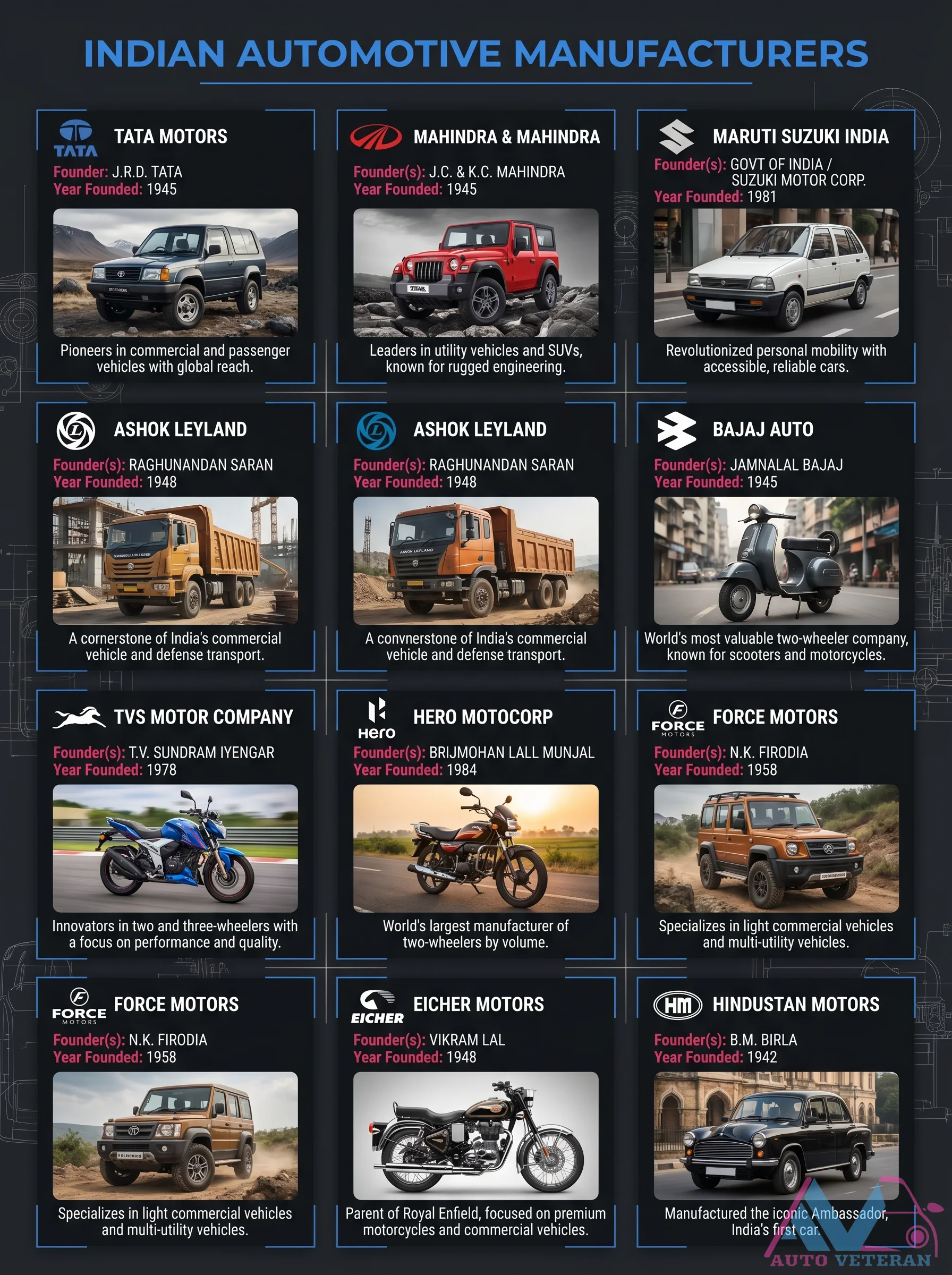
Indian Automotive Manufacturers Overview
A comprehensive look at India's leading automotive manufacturers including Tata Motors, Mahindra & Mahindra, Maruti Suzuki, Ashok Leyland, Bajaj Auto, TVS Motor Company, Hero MotoCorp, Force Motors, Eicher Motors, and Hindustan Motors; covering their founding years, founders, and core specializations from commercial vehicles and SUVs to two-wheelers and iconic models like the Ambassador.
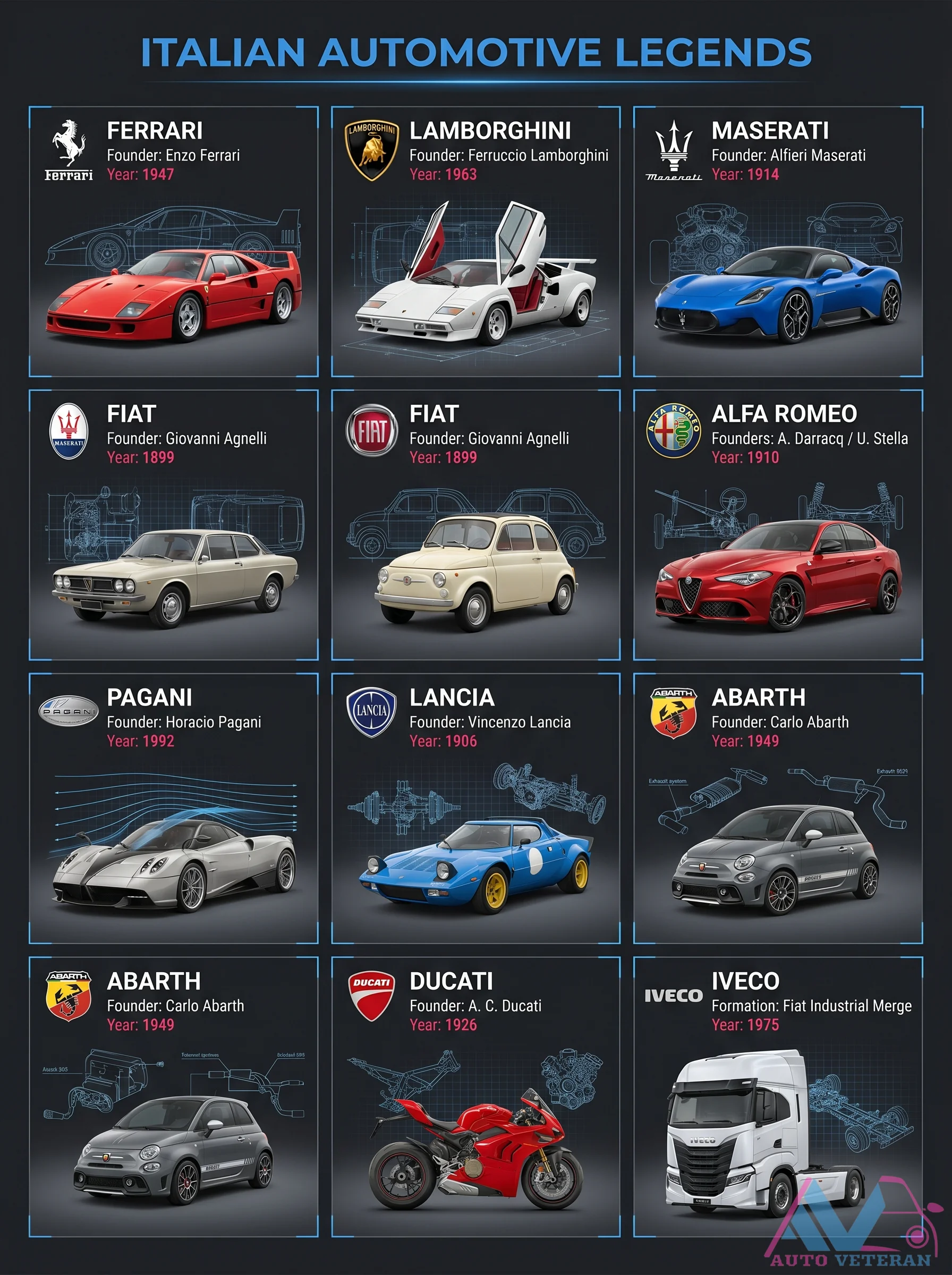
Italian Automotive Brands Founding Years
A timeline of legendary Italian automotive manufacturers including Ferrari founded in 1947 by Enzo Ferrari, Lamborghini in 1963 by Ferruccio Lamborghini, Maserati in 1914 by Alfieri Maserati, FIAT in 1899 by Giovanni Agnelli, Alfa Romeo in 1910 by Darracq and Ugo Stella, Pagani in 1992 by Horacio Pagani, Lancia in 1906 by Vincenzo Lancia, Abarth in 1949 by Carlo Abarth, Ducati in 1926, Iveco formed in 1975 from Fiat Industrial merger, and more. A snapshot of Italy's rich automotive heritage showing founders and establishment years for each iconic brand.
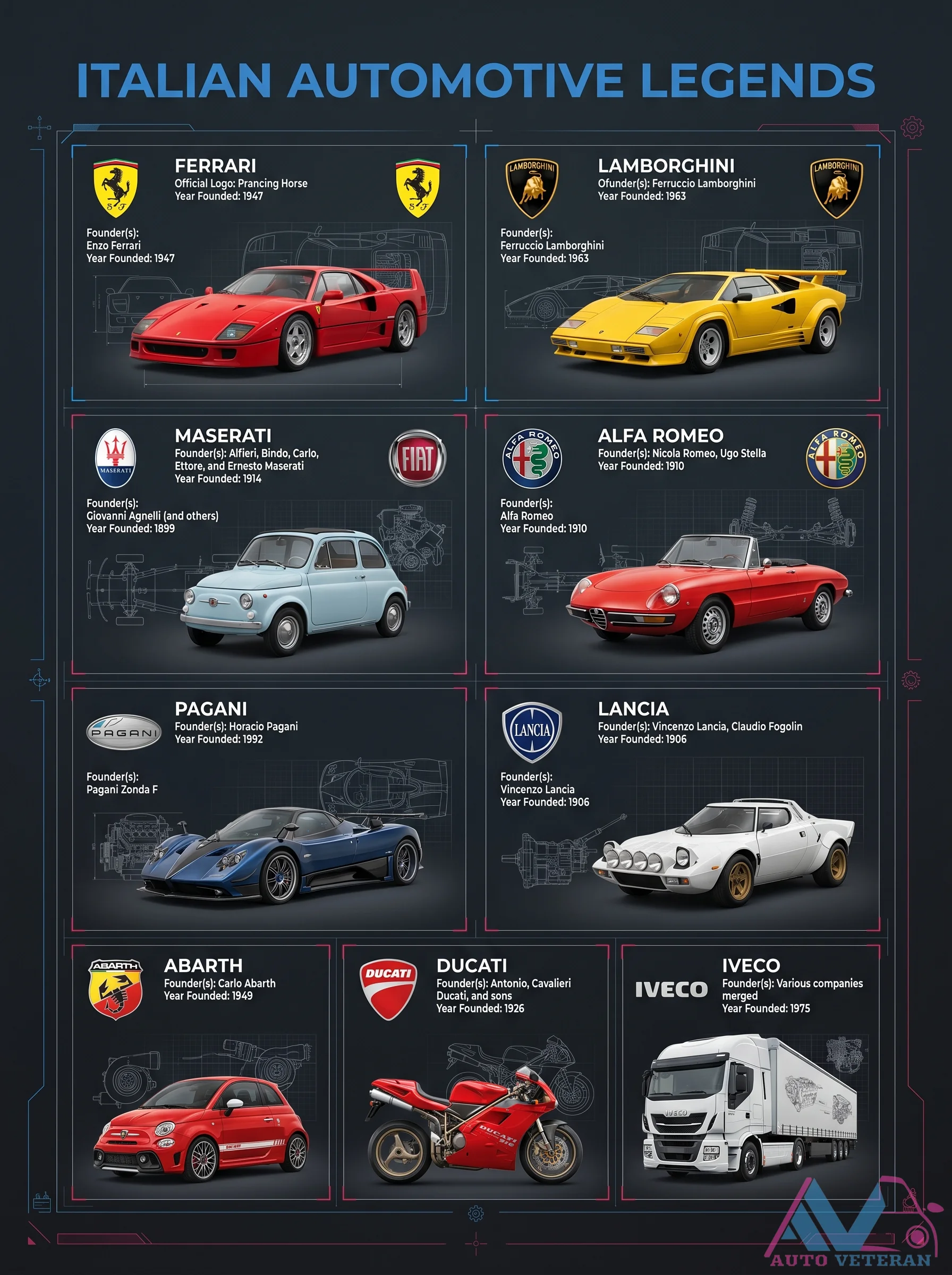
Italian Automotive Legend Timeline
A comprehensive infographic mapping the founding years and founders of Italy's most iconic automotive and motorcycle brands including Ferrari, Lamborghini, Maserati, Alfa Romeo, FIAT, Pagani, Lancia, Abarth, Ducati, Iveco, and Auto Veteran. Each marque is presented with its specific year of establishment and key founders such as Enzo Ferrari, Ferruccio Lamborghini, and Giovanni Agnelli, providing a snapshot of Italy's rich automotive heritage.