Interactive Explorer

Under-Inflated Tires Dangers and Consequences
Driving with under-inflated tires is a common mistake that gradually destroys your vehicle's performance and safety; it reduces fuel efficiency, increases tire wear, and negatively affects handling and braking. Root causes include sudden tire blowouts, slow puncture leaks, faulty valve stems, temperature fluctuations, and poor maintenance habits. Warning signs to watch for are a heavy or sluggish driving feel, uneven tire wear, higher fuel consumption, poor steering response, and reduced braking efficiency. The failure progression involves gradual air loss leading to increased rolling resistance, friction, and heat buildup, which weakens the tire structure and risks suspension system damage or loss of vehicle control. Many drivers ignore these changes because they are gradual, but the long-term consequences, such as costly tire replacement and significant safety risks, make regular tire pressure checks essential to avoid this destructive oversight.
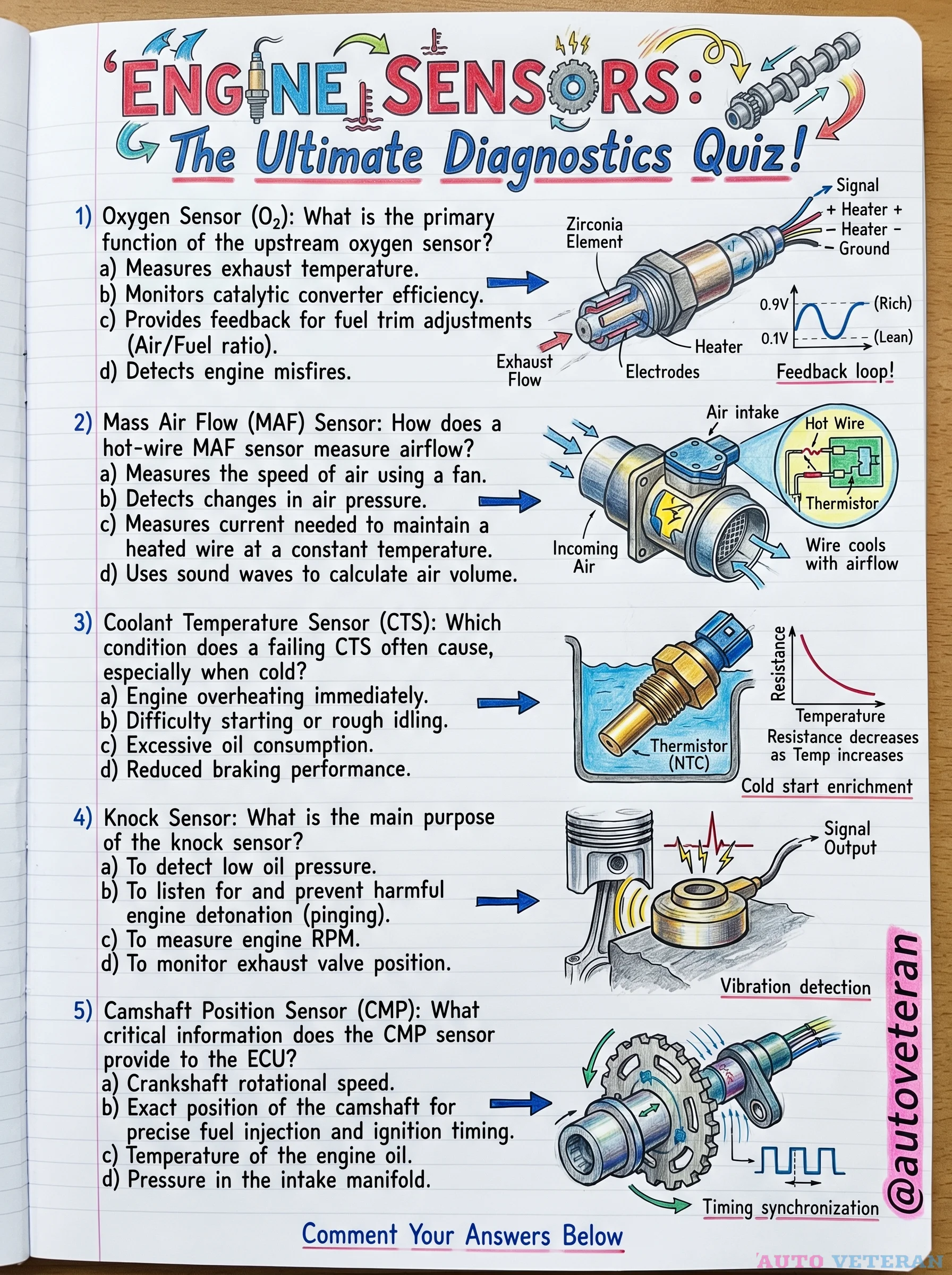
Upstream Oxygen Sensor Zirconia Heater Function
The upstream oxygen sensor's zirconia heater element serves a critical role in engine management by rapidly bringing the sensor to optimal operating temperature during cold starts; this enables accurate measurement of exhaust oxygen content, providing essential feedback for precise fuel trim adjustments to maintain the ideal air/fuel ratio. The heater ensures the sensor responds quickly to changing conditions, helping the engine control unit monitor catalytic converter efficiency and detect potential misfires while maintaining emissions compliance and fuel economy.
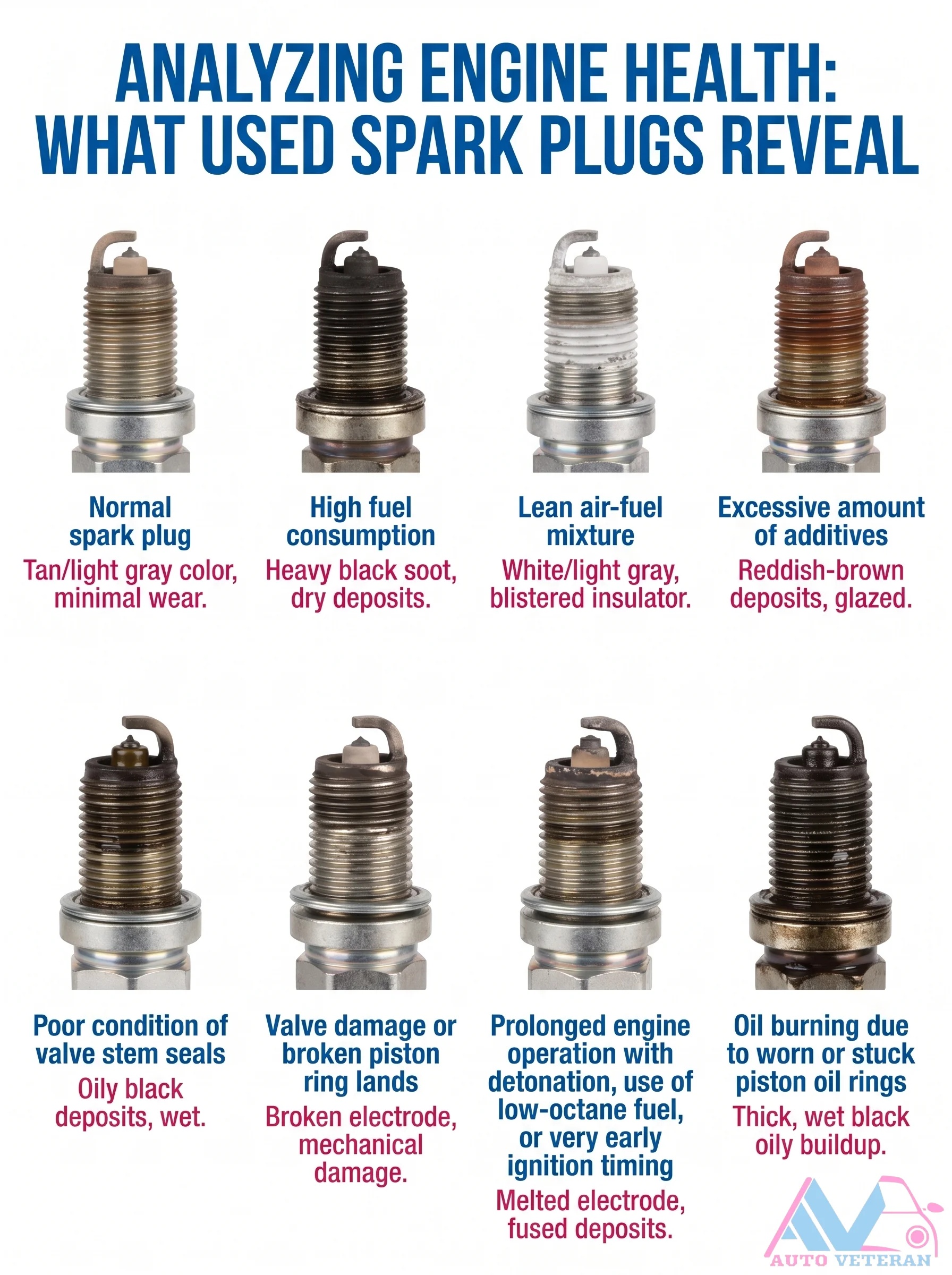
Used Spark Plug Color Diagnosis
Reading the color and condition of used spark plugs reveals engine health. A tan or light gray color with minimal wear indicates normal combustion. Heavy black soot suggests a rich fuel mixture or excessive oil consumption from worn valve seals or piston rings. White or light gray deposits with a blistered insulator point to detonation from low octane fuel or advanced timing. Reddish brown deposits may come from fuel additives. Oily wet black deposits signal oil entering the combustion chamber. A melted or fused electrode indicates severe pre ignition or mechanical damage. Each pattern guides targeted troubleshooting.
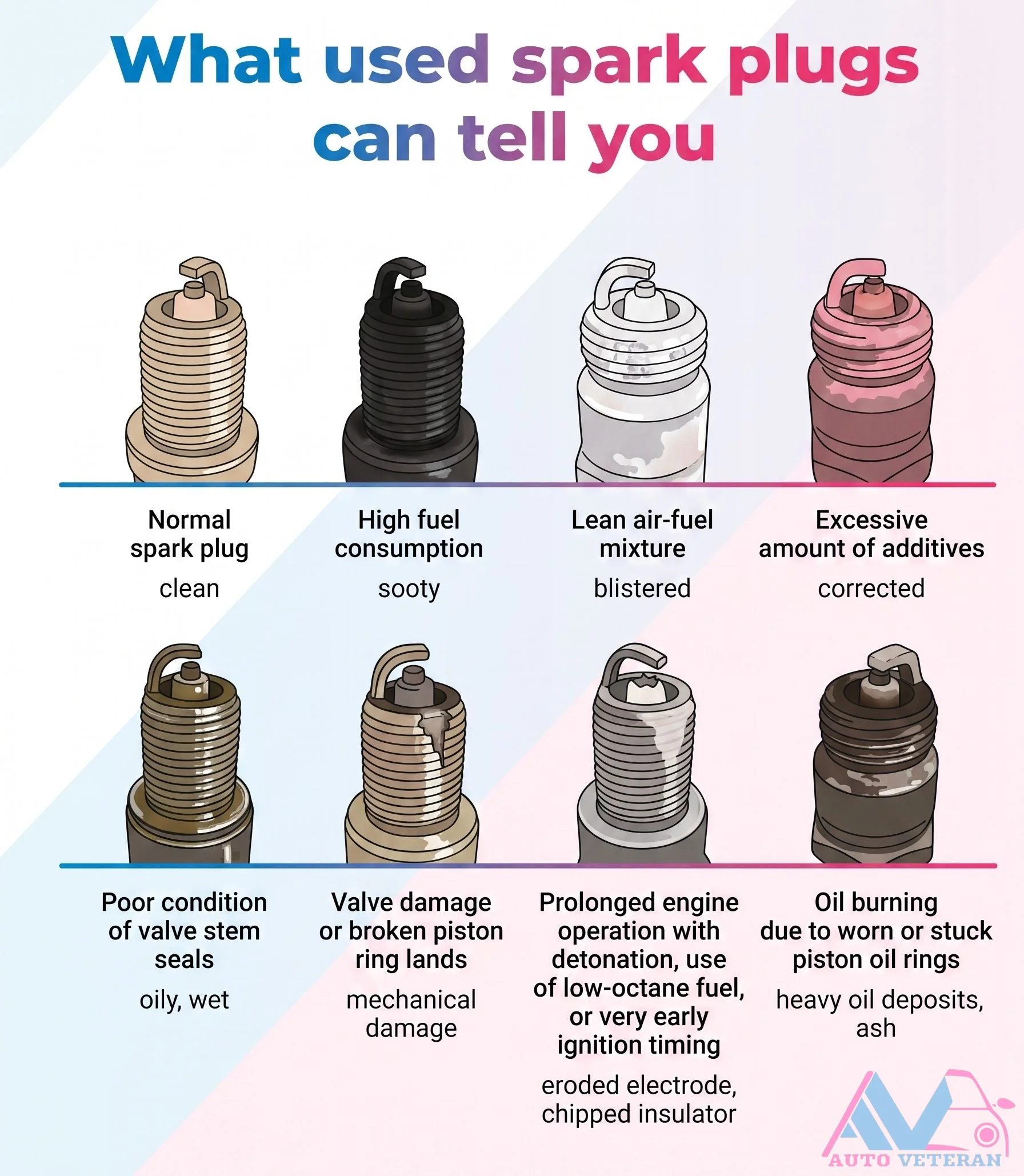
Used Spark Plug Reading Guide
Reading a used spark plug's appearance reveals vital engine health insights; normal plugs show light tan or gray deposits while a sooty plug signals a rich air fuel mixture, blistered porcelain points to detonation from low octane fuel or advanced timing, oily deposits indicate worn piston rings or valve stem seals, and wet fouling suggests mechanical oil burning or stuck piston rings; eroded electrodes and chipped insulators warn of severe damage.