Interactive Explorer
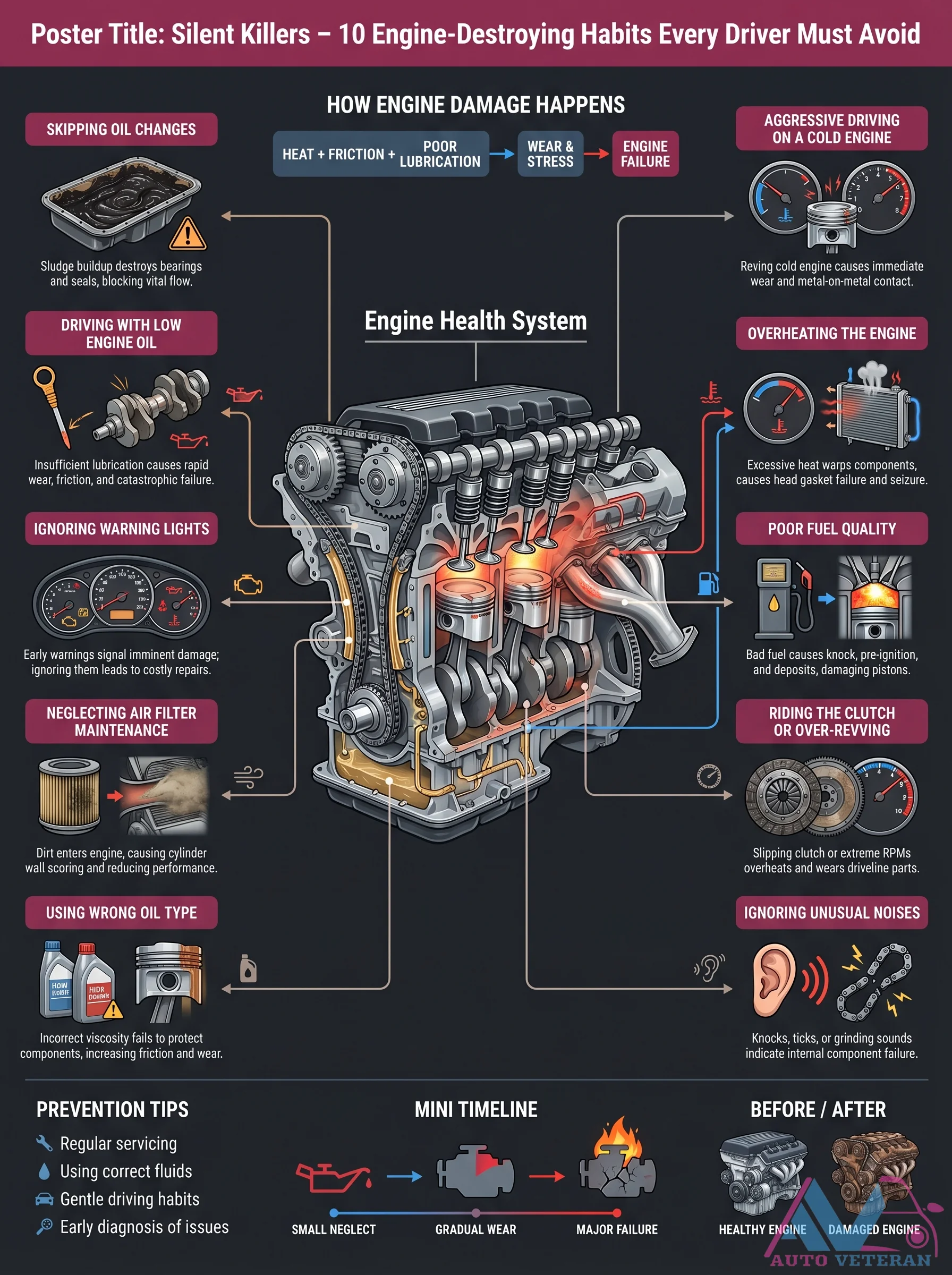
10 Engine-Destroying Habits Every Driver Must Avoid
This guide outlines the critical behaviors that silently damage engines, including aggressive driving, skipping oil changes, and ignoring warning lights. It explains how cold engine revving causes immediate wear, insufficient lubrication leads to rapid friction, and poor fuel quality results in knock and pre-ignition. The poster emphasizes prevention through regular servicing, using correct fluids, and early diagnosis to avoid gradual wear escalating into major failure.
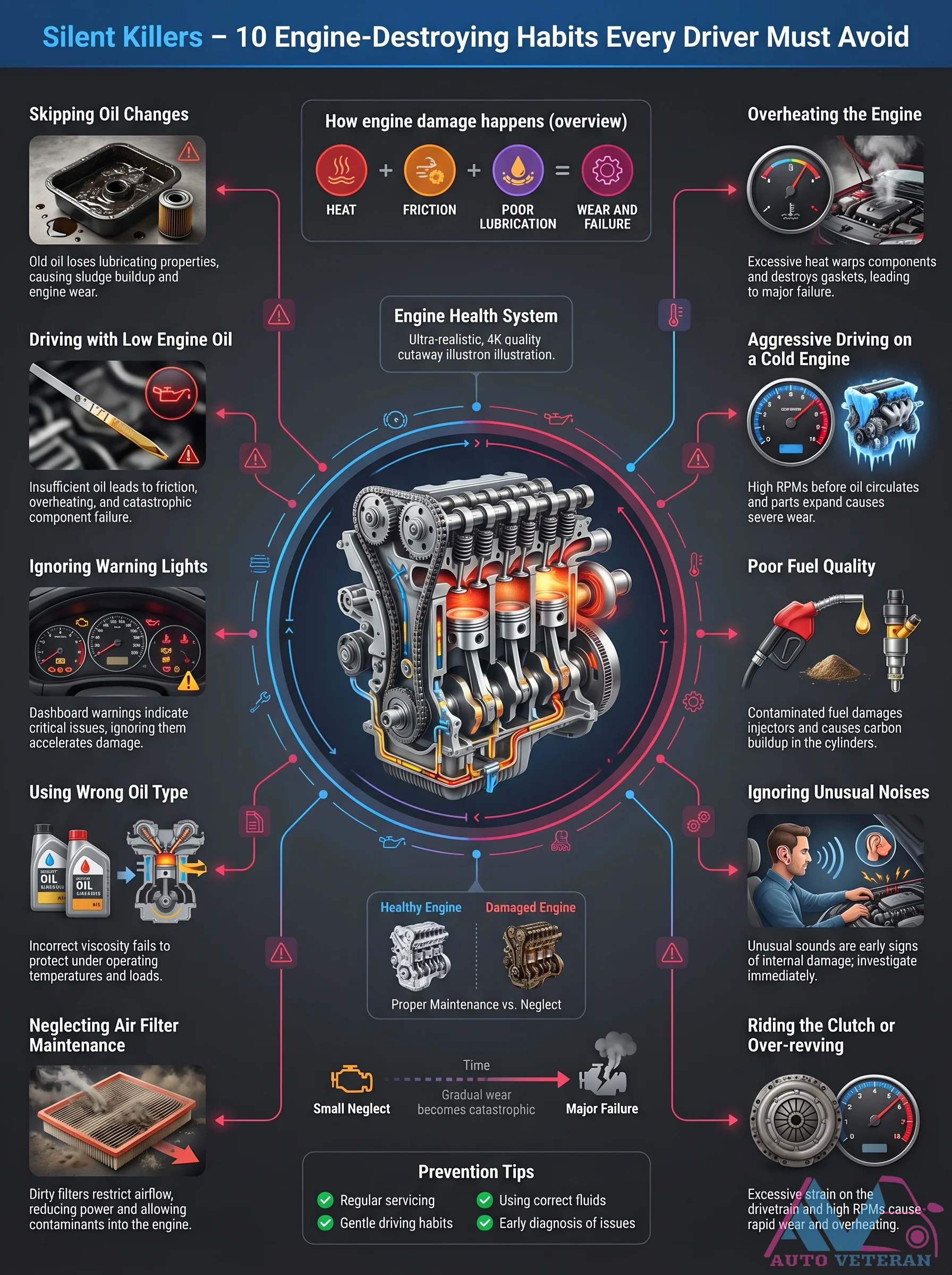
10 Silent Engine-Killing Habits Every Driver Must Avoid
Common driving habits silently destroy engines through neglect and misuse; skipping oil changes leads to sludge buildup and component failure, while overheating warps parts and destroys gaskets. Driving with low oil causes friction and catastrophic failure, and aggressive driving on cold engines before oil circulates results in severe wear. Ignoring warning lights accelerates damage, poor fuel quality damages injectors and causes carbon buildup, and using wrong oil types fails to protect under operating temperatures. Unusual noises indicate early internal damage, neglecting air filters restricts airflow and allows contaminants, and over-revving causes rapid wear and overheating. Regular servicing, correct fluids, gentle driving habits, and early diagnosis prevent gradual neglect from becoming catastrophic failure.
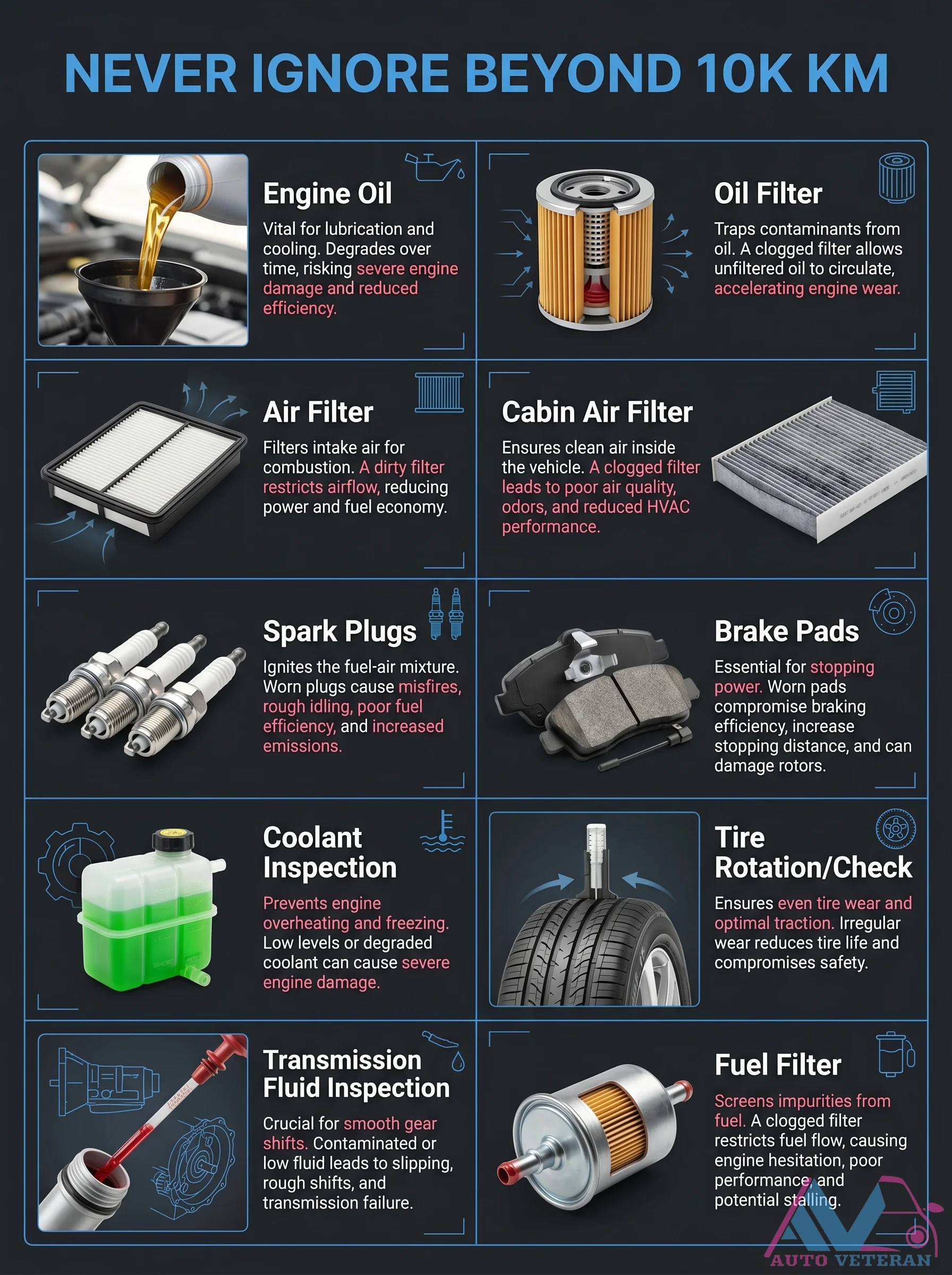
10K KM Service Checklist Critical Components
At the 10,000 kilometer service interval, several key automotive components require inspection and maintenance to ensure optimal vehicle performance and longevity. Engine oil and oil filter must be replaced to maintain proper lubrication and prevent contaminant circulation. Air filters need checking to avoid airflow restriction and power loss. Spark plugs should be examined for wear that causes misfires and poor fuel economy. Brake pads require inspection to maintain safe stopping distances. Coolant levels must be verified to prevent overheating. Tire condition affects both wear patterns and safety. Transmission fluid quality impacts shifting smoothness, while fuel filter condition directly influences engine performance and prevents stalling. Each component on this checklist plays a vital role in vehicle reliability when maintained at proper intervals.
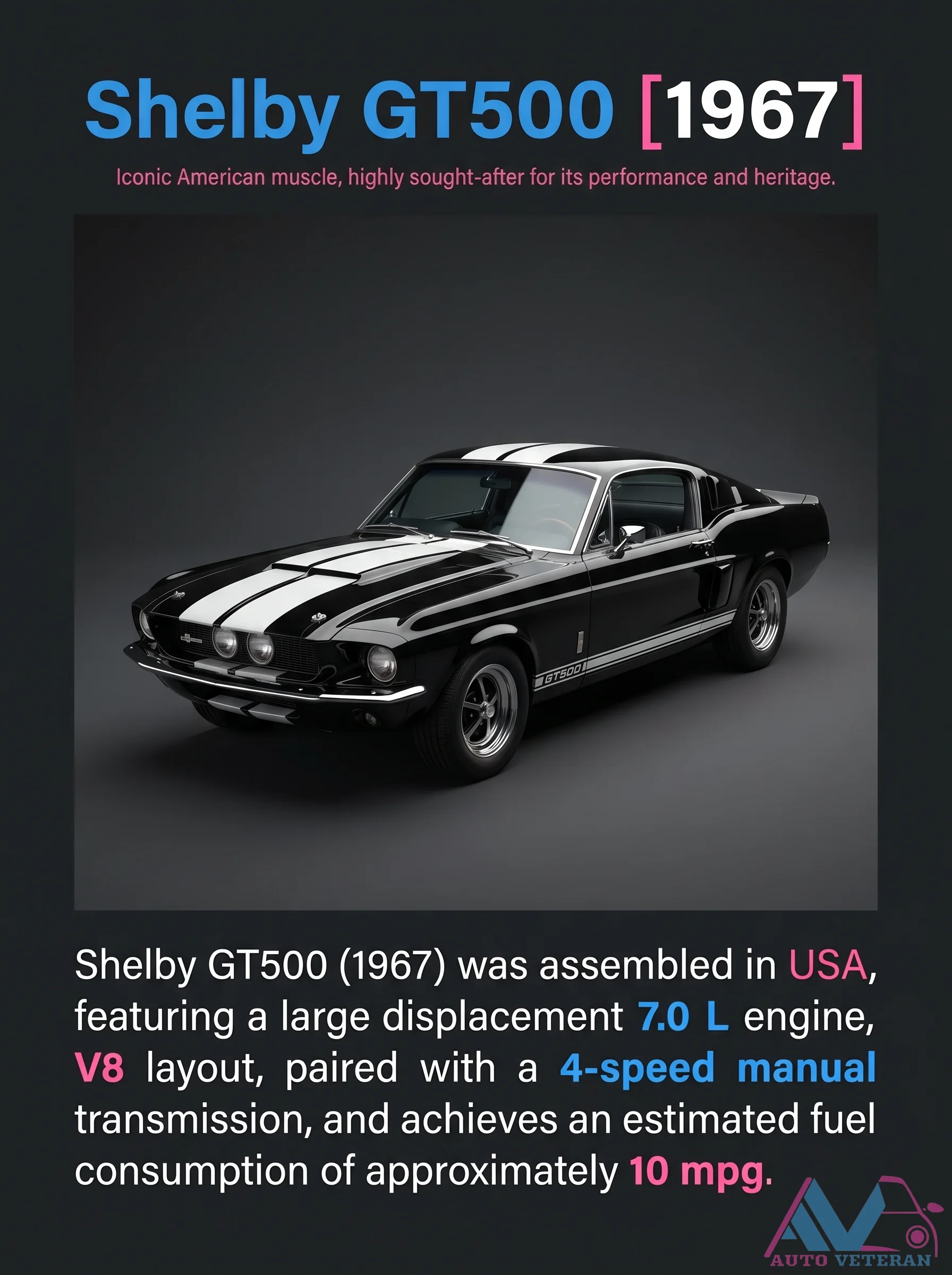
1967 Shelby GT500 Performance Specs
The 1967 Shelby GT500 elevated the Ford Mustang into an American muscle icon with its massive 7.0 liter V8 engine, 4 speed manual transmission, and a raw driving experience that delivered an estimated 10 miles per gallon. This highly sought after performance machine, assembled in the USA, remains a benchmark of pure power and heritage for collectors and enthusiasts worldwide.
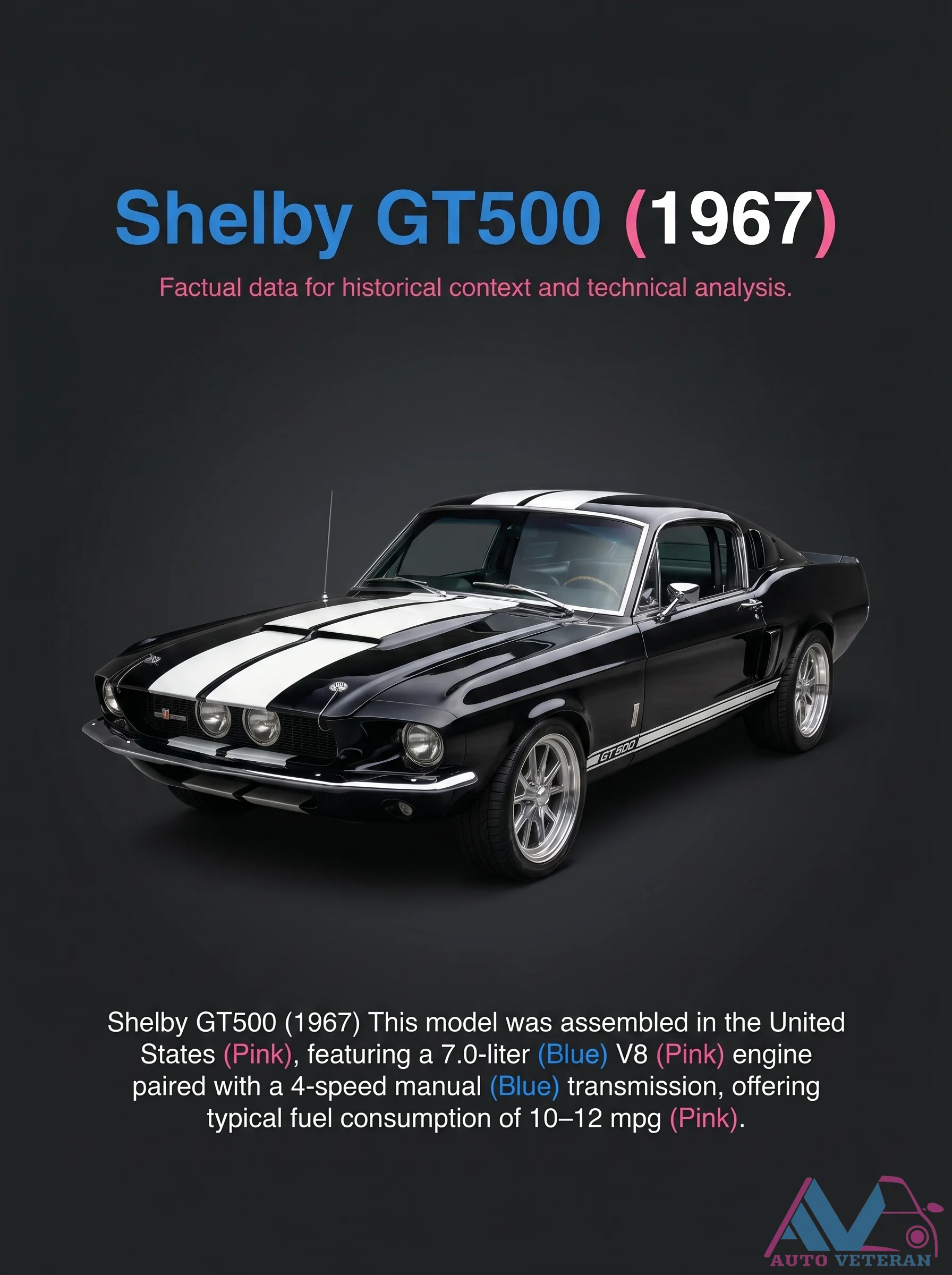
1967 Shelby GT500 Specs
The 1967 Shelby GT500, assembled in the United States, featured a formidable 7.0-liter V8 engine mated to a 4-speed manual transmission, delivering classic muscle car performance with typical fuel consumption of 10-12 mpg.

1990s Supercars: Decade of Performance
This guide showcases the most iconic supercars of the 1990s, from the Vector W8 and Ferrari F50 to the McLaren F1 and Mercedes-Benz CLK GTR, highlighting each model's unique contribution to automotive performance and design.