Interactive Explorer
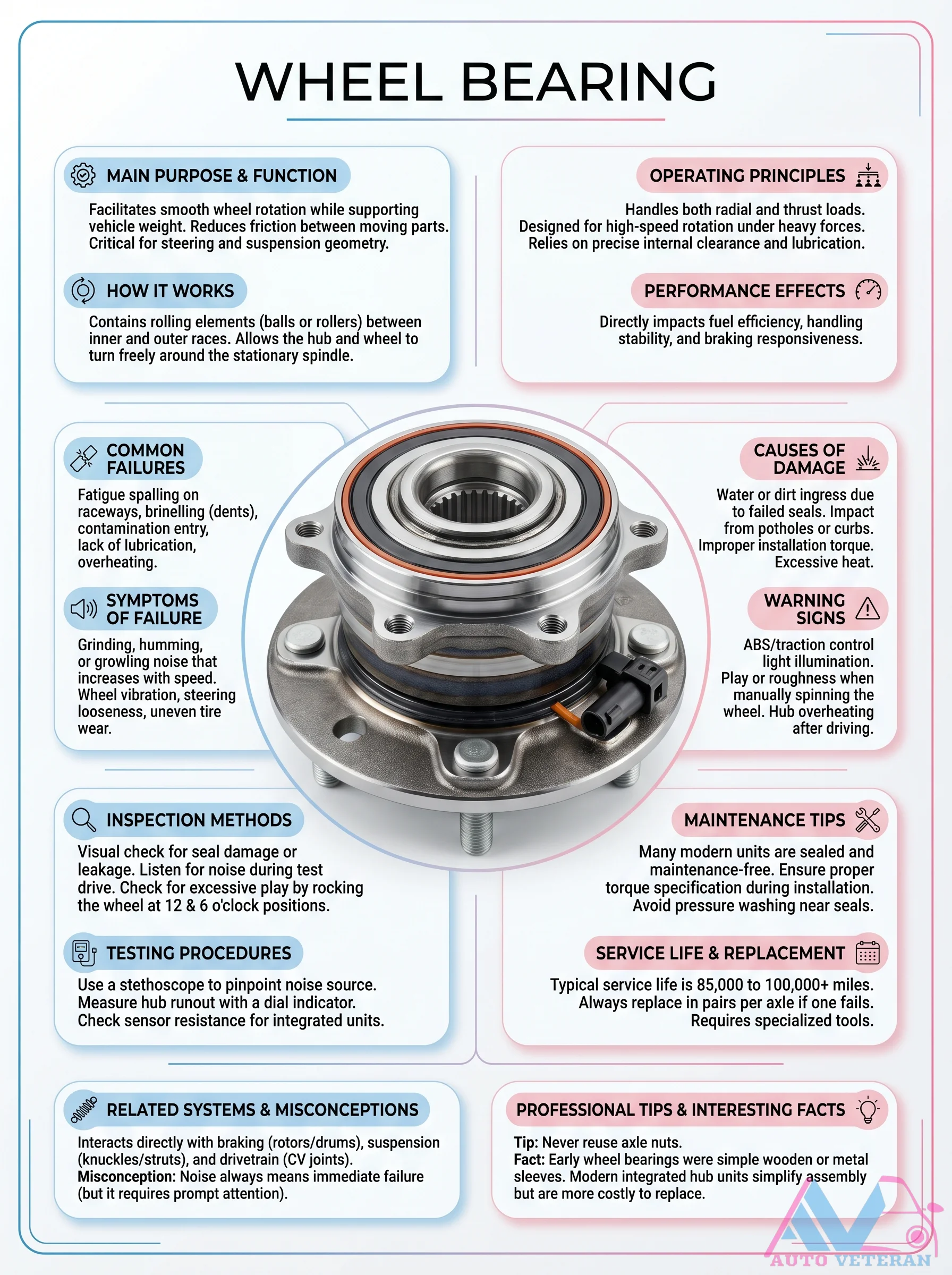
Wheel Bearing Failure Symptoms and Diagnosis
This guide covers the main purpose and operating principles of wheel bearings, including how they handle radial and axial loads while reducing friction. It explains common failure causes like fatigue spalling, brinelling, and water ingress, along with symptoms such as grinding noises, vibration, and uneven tire wear. Inspection methods involve visual checks, listening for noise during test drives, and checking for play by rocking the wheel at 12 and 6 o'clock positions. Testing procedures include using a stethoscope to pinpoint noise, measuring hub runout with a dial indicator, and checking sensor resistance for integrated units. Maintenance tips emphasize avoiding pressure washing near seals and ensuring proper torque specifications. Service life typically ranges from 85,000 to 100,000+ miles, and it is recommended to replace bearings per axle if one fails. Professional tips advise never reusing axle nuts, and interesting facts note that early bearings were simple wooden or metal sleeves while modern integrated hub units simplify assembly but cost more to replace.
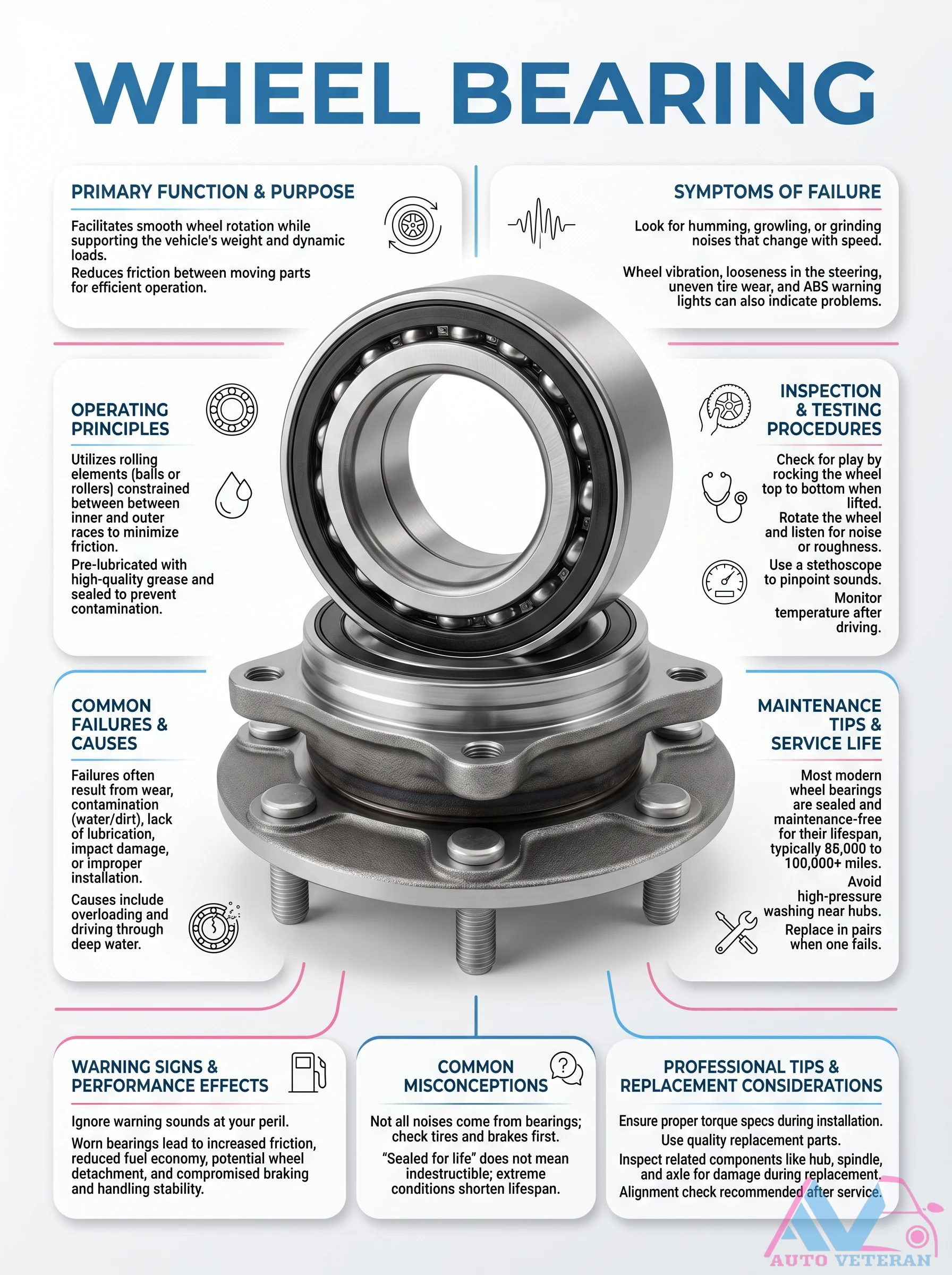
Wheel Bearing Failure Symptoms and Inspection
Wheel bearings facilitate smooth wheel rotation while supporting vehicle weight and dynamic loads; reducing friction between moving parts. Symptoms of failure include moaning, grinding, or growling noises that change with speed; wheel vibration or looseness; uneven tire wear; and ABS warning lights. Inspection involves checking for play by rocking the wheel top to bottom when lifted; rotating the wheel to listen for noise or roughness; and using a stethoscope to pinpoint sounds. Monitor temperature after driving for overheating. Maintenance tips: most modern bearings are sealed and maintenance-free with a lifespan of 86,000 to 100,000+ miles; avoid high-pressure washing near hubs; replace pairs when one fails; and ensure proper torque specs during installation. Professional advice: not all noises come from bearings; check tires and brakes first. 'Sealed for life' does not mean indestructible; extreme conditions shorten lifespan. Inspect related components like hub, spindle, and axle during replacement; alignment check recommended after service.
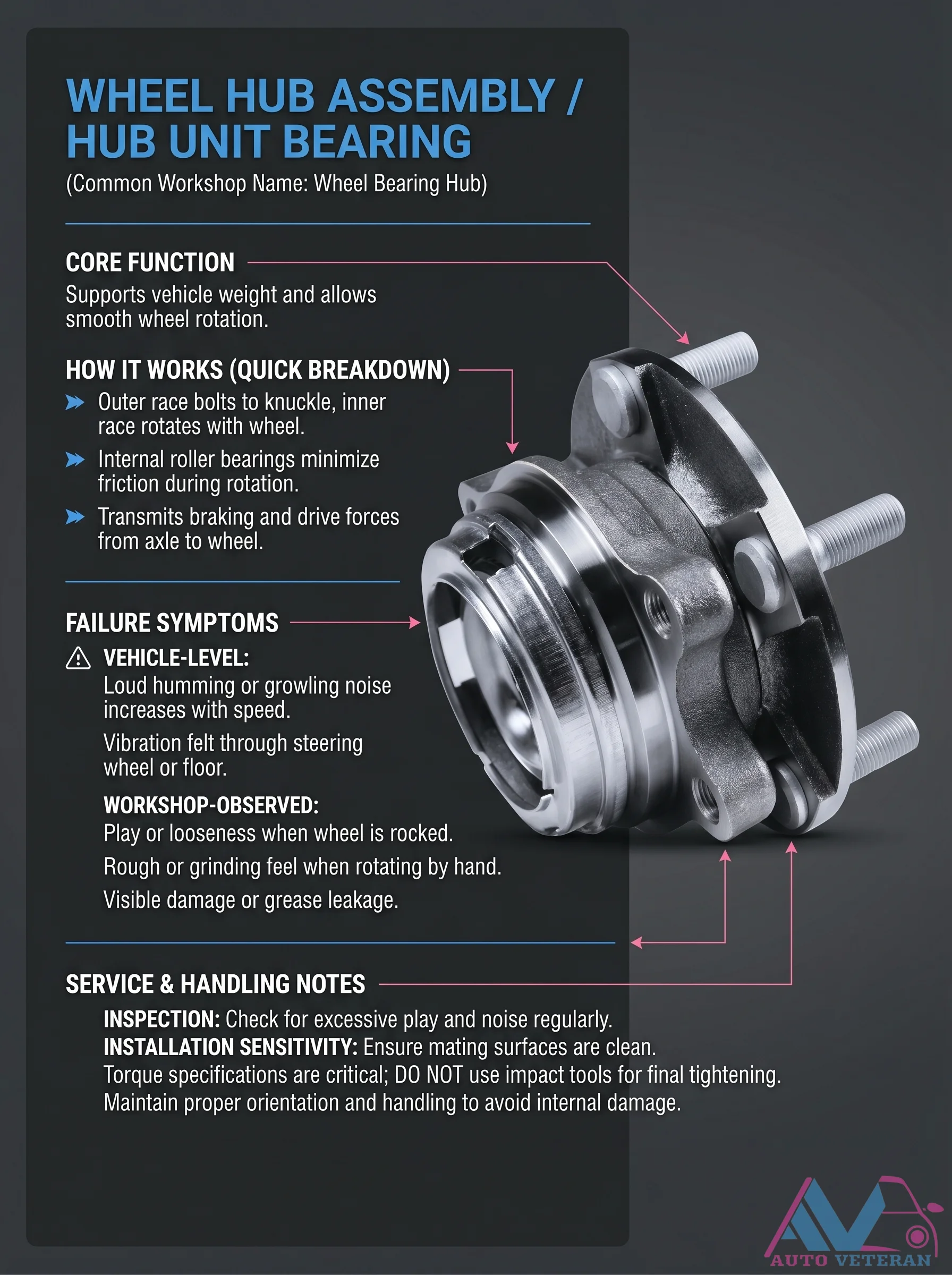
Wheel Hub Assembly Bearing Symptoms
A wheel hub assembly, commonly called a wheel bearing hub, supports the vehicle weight and allows smooth wheel rotation through internal roller bearings. Failure symptoms include a loud humming or growling noise that increases with speed, vibration felt through the steering wheel or floor, and workshop observed play or looseness when rocking the wheel. Regular inspection for excessive play and noise is critical. During installation, ensure mating surfaces are clean, follow torque specifications precisely, avoid impact tools for final tightening, and maintain proper orientation to prevent internal damage.
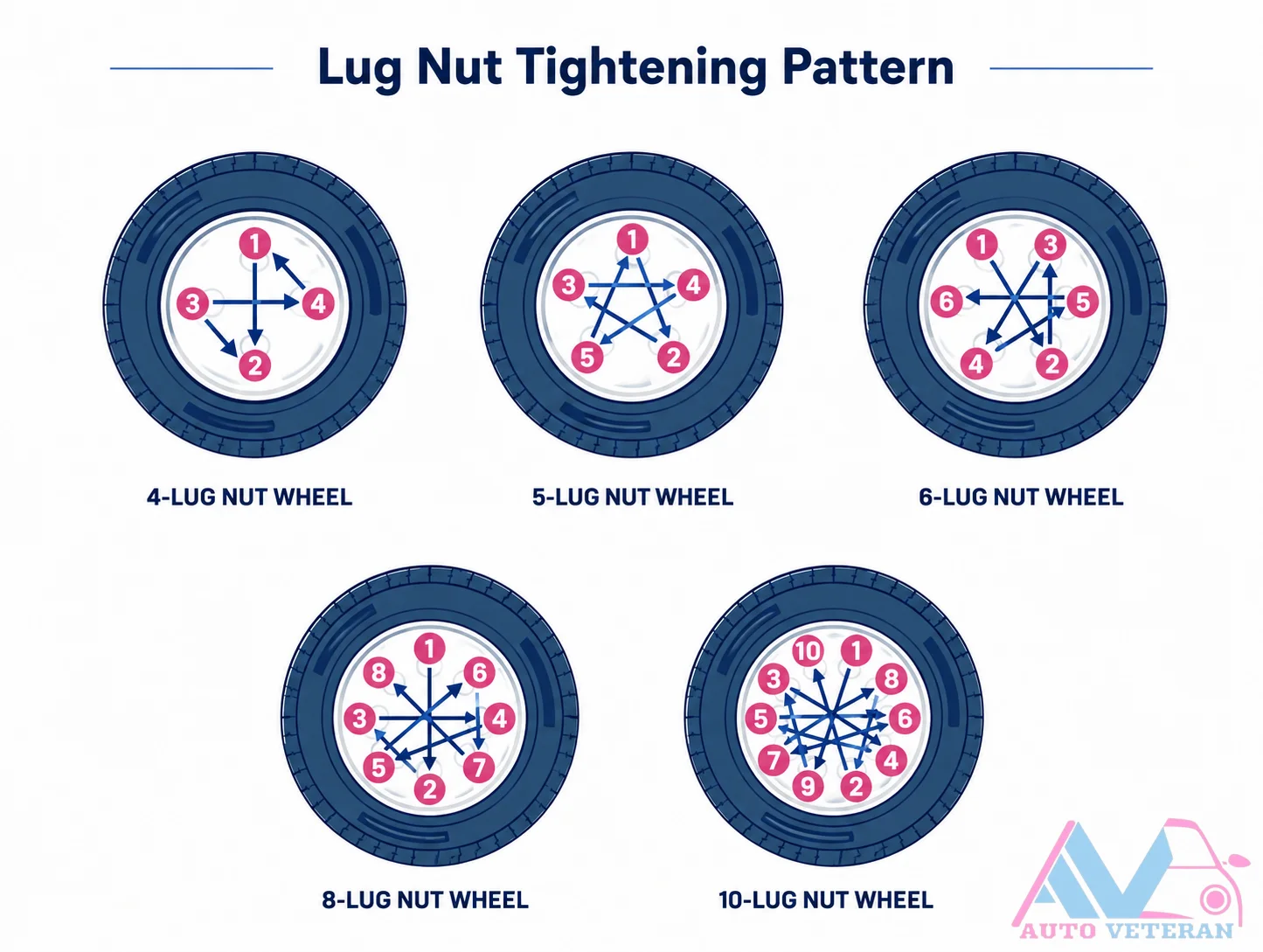
Wheel Lug Nut Tightening Pattern
This diagram illustrates the correct order for tightening lug nuts across various wheel bolt patterns: 4 lug, 5 lug, 6 lug, 8 lug, and 10 lug. Using a star or cross pattern ensures even clamping force, preventing warping of the brake rotor and maintaining wheel balance. Always tighten in stages with a torque wrench to manufacturer specs for safety.
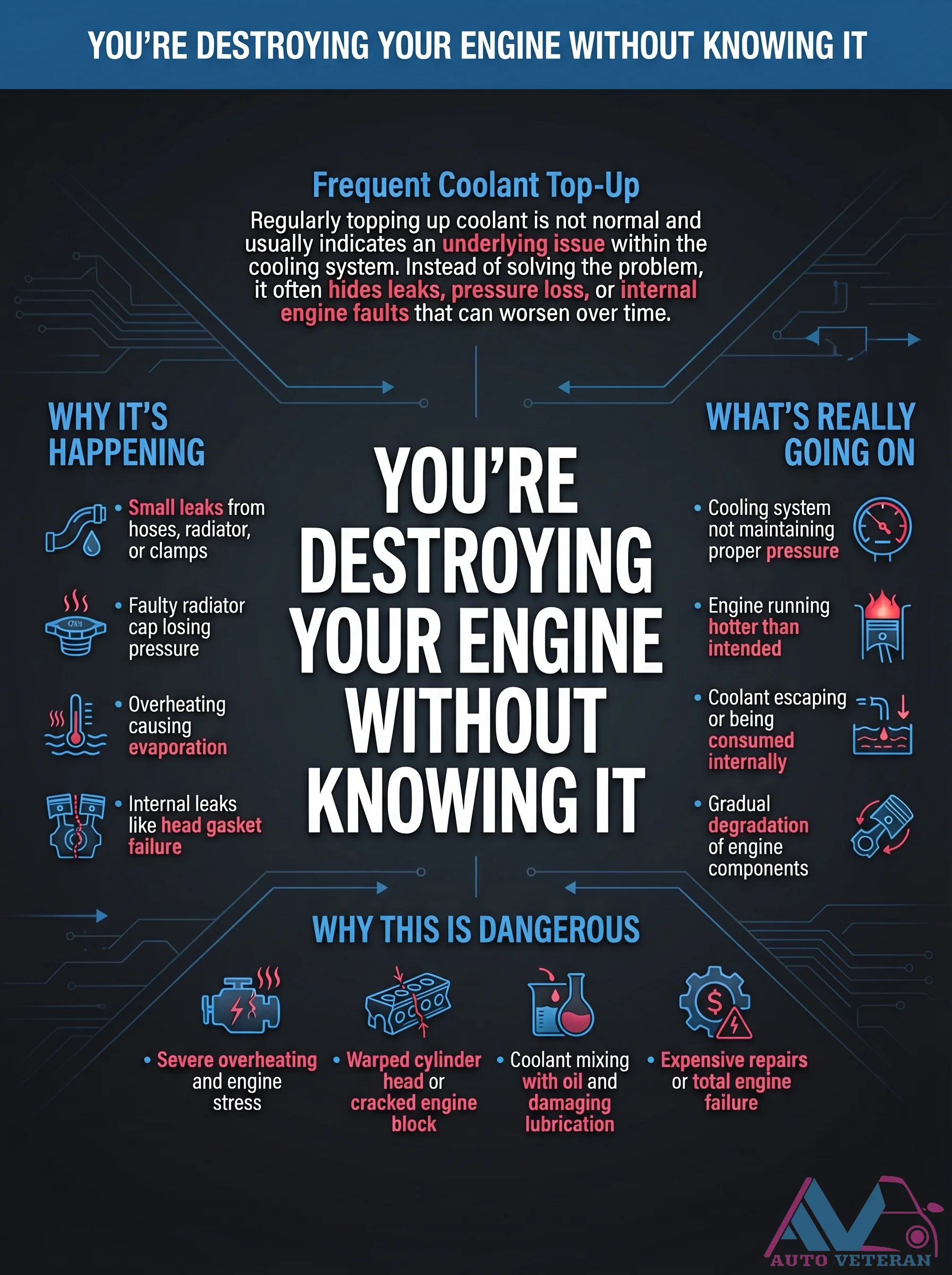
Why Frequent Coolant Top-Up Is Dangerous
Regularly adding coolant to your vehicle is not a normal maintenance task; it signals serious underlying problems in your cooling system. This constant need for coolant typically indicates leaks from hoses, radiators, or clamps, a faulty radiator cap causing pressure loss, or internal engine faults like head gasket failure. These issues lead to overheating, which can warp cylinder heads, crack engine blocks, and cause coolant to mix with oil, resulting in catastrophic engine damage and expensive repairs. Ignoring these warning signs allows gradual degradation that ultimately destroys your engine.
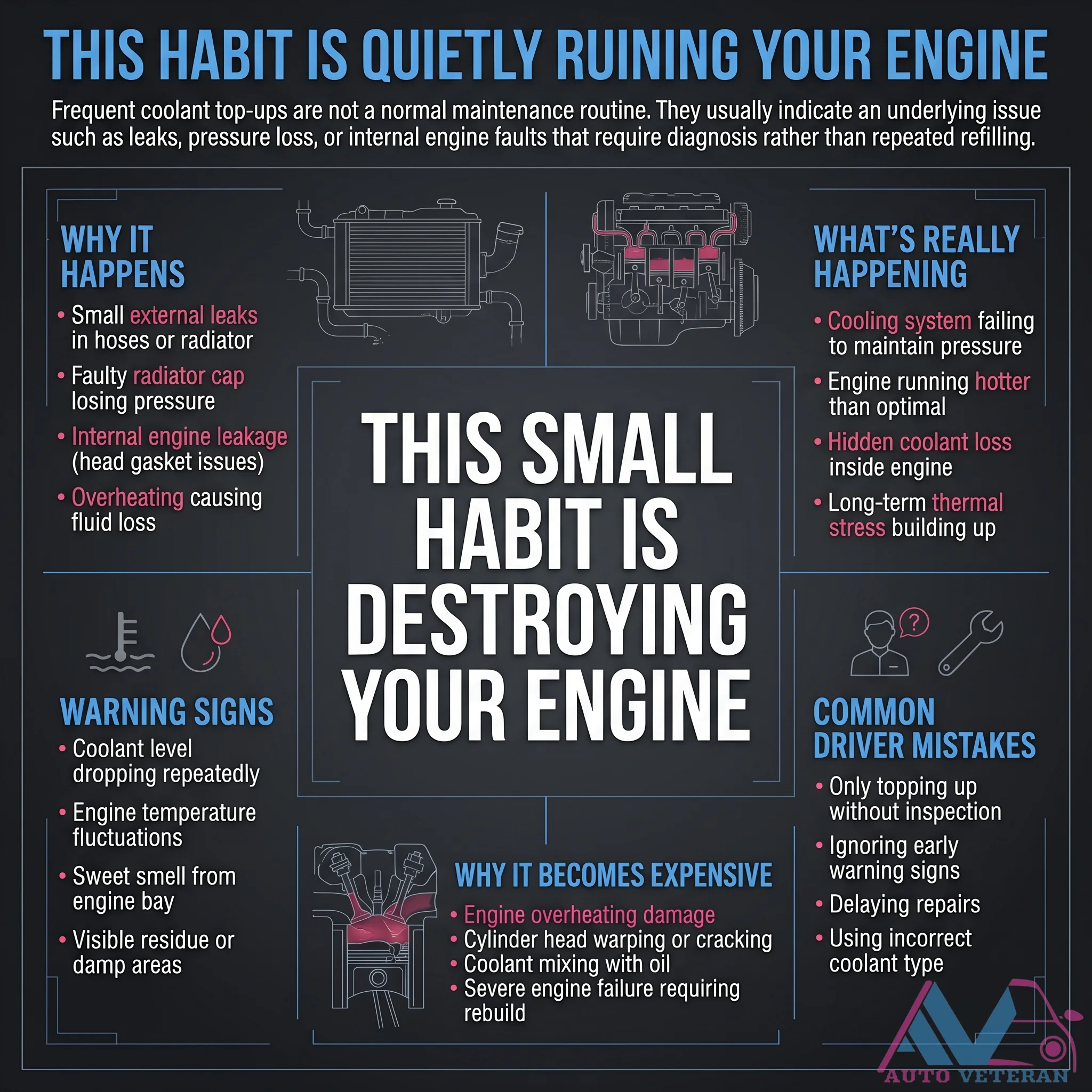
Why Frequent Coolant Top-Ups Destroy Engines
Repeatedly adding coolant without addressing the root cause is a dangerous habit that masks serious underlying problems. This practice often indicates external leaks in hoses or radiators, pressure loss from faulty radiator caps, or internal engine issues like head gasket failures. When coolant levels drop consistently, it signals cooling system failure, leading to engine overheating, thermal stress buildup, and potential cylinder head warping or cracking. Ignoring warning signs like temperature fluctuations, sweet smells from the engine, or visible residue only delays inevitable severe damage that can require complete engine rebuilds.
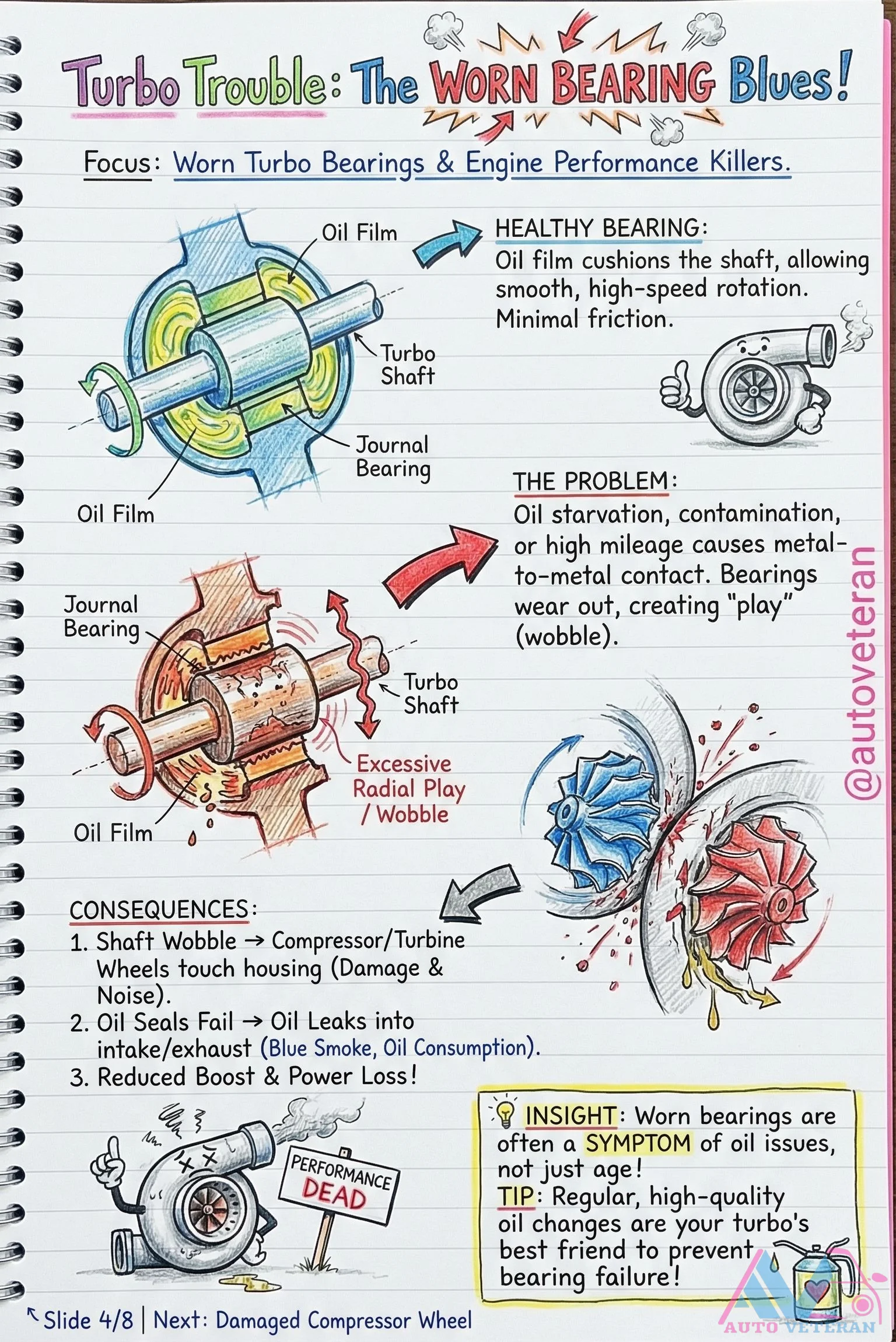
Worn Turbo Bearings from Oil Starvation Consequences
When turbocharger journal bearings experience oil starvation, contamination, or high mileage wear, the protective oil film breaks down, leading to metal to metal contact and excessive radial play. This shaft wobble causes compressor and turbine wheels to contact their housings, resulting in damage and noise. Simultaneously, oil seals fail, allowing oil to leak into the intake or exhaust systems, manifesting as blue smoke and increased oil consumption. The compromised bearing integrity also reduces boost pressure and overall engine power. Recognizing that worn bearings often signal underlying oil system issues rather than simple age, regular high quality oil changes become essential for preventing this destructive failure mode.