Interactive Explorer
Signs of a Worn Tyre: Tread Depth and Damage
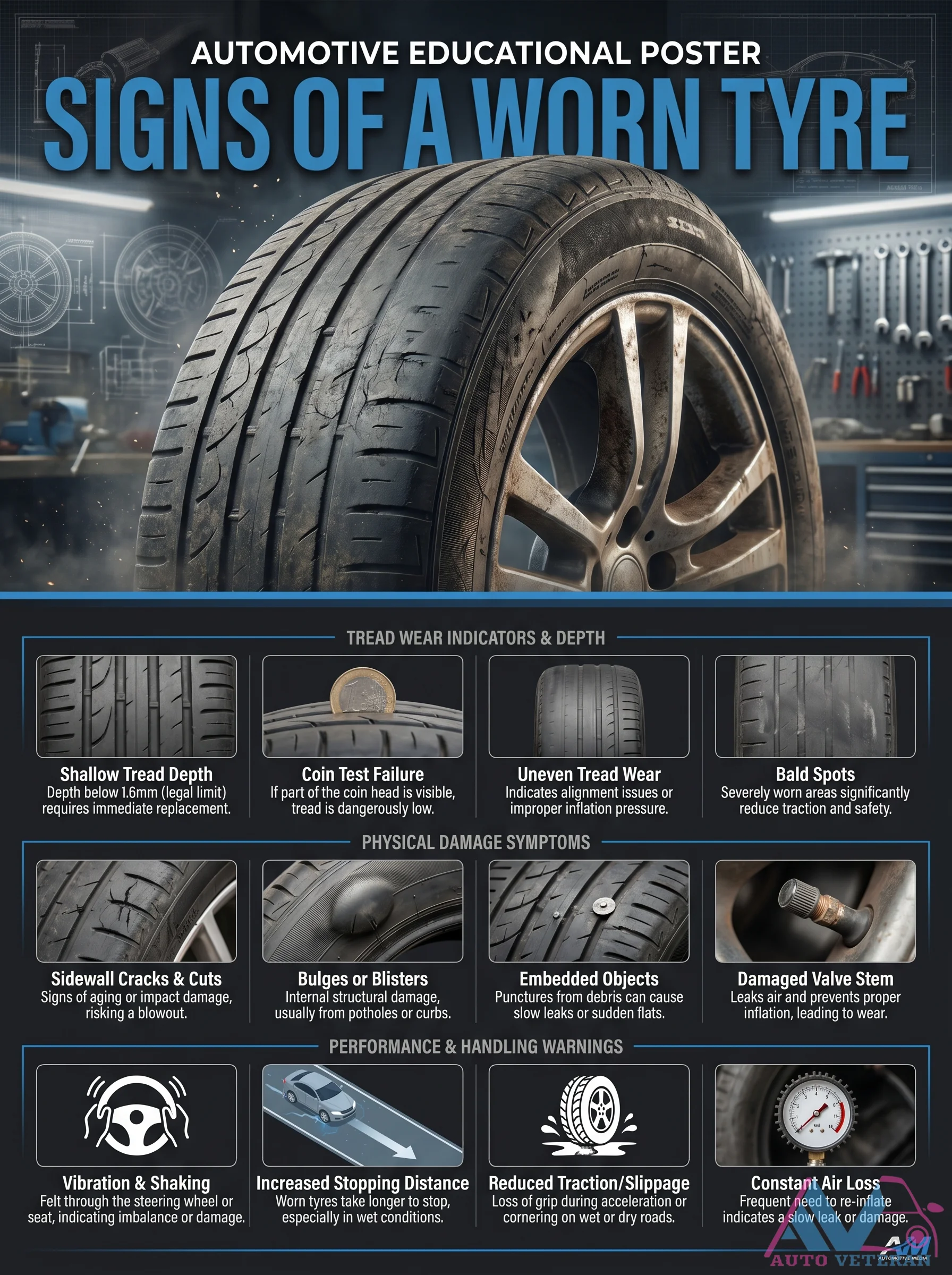
Recognizing the signs of a worn tyre is critical for safety. This guide covers tread wear indicators like the 1.6mm legal limit, the coin test, uneven wear from alignment issues or improper inflation, and physical damage such as sidewall cracks, bulges, and embedded objects. Performance warnings include vibrations, increased stopping distance, reduced traction, and constant air loss. Regularly inspect your tyres to avoid blowouts and maintain grip in wet conditions.
Solar Panel Photovoltaic Energy Flow Diagram
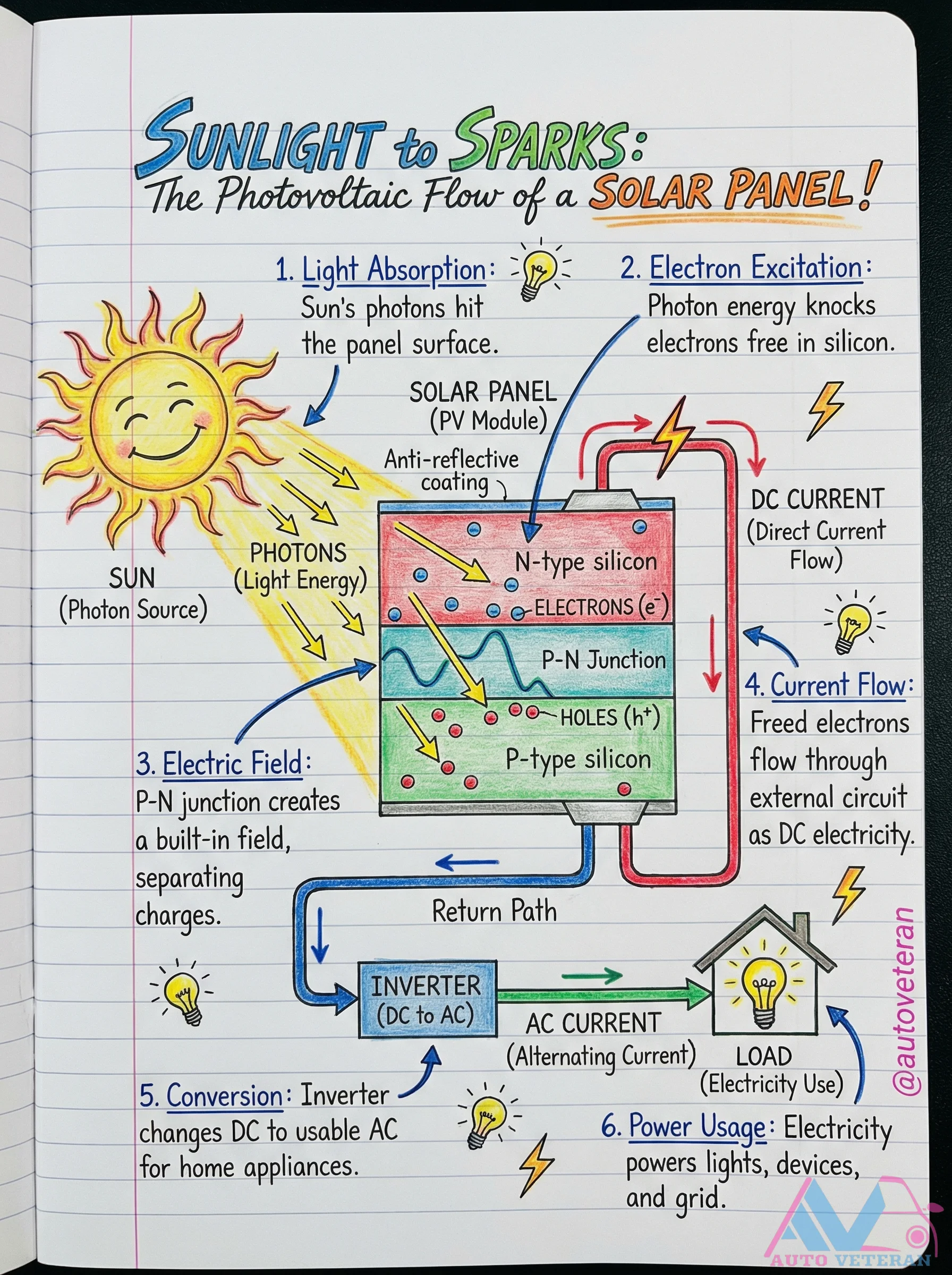
This diagram illustrates the photovoltaic energy flow process in a solar panel, starting with sunlight absorption where photons strike the panel surface. The process continues with electron excitation in silicon layers, charge separation at the P-N junction, DC current generation, inverter conversion to AC power, and finally electricity distribution for home appliances and grid use.
Solar Panel PV Cell Working Principle
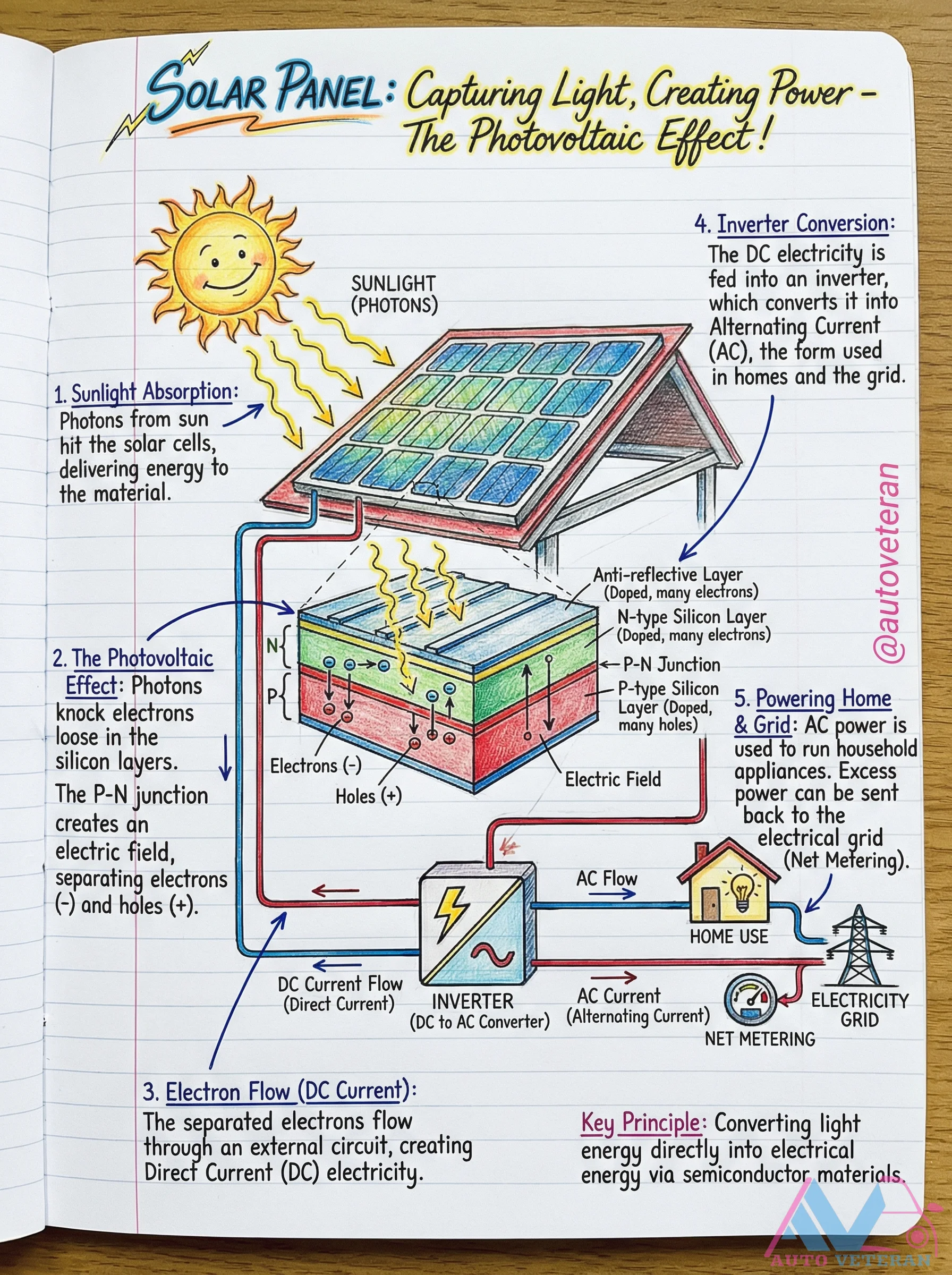
Solar panels convert sunlight into electricity through a detailed process involving photon absorption, electron flow, and DC to AC conversion. Photons from sunlight strike silicon solar cells, delivering energy that knocks electrons loose within the P-N junction layers. This creates an electric field that separates electrons and holes, generating direct current flow. The DC electricity then feeds into an inverter, which converts it to alternating current for powering homes and sending excess back to the grid via net metering.
Spark Plug Types and Ignition Circuit Basics
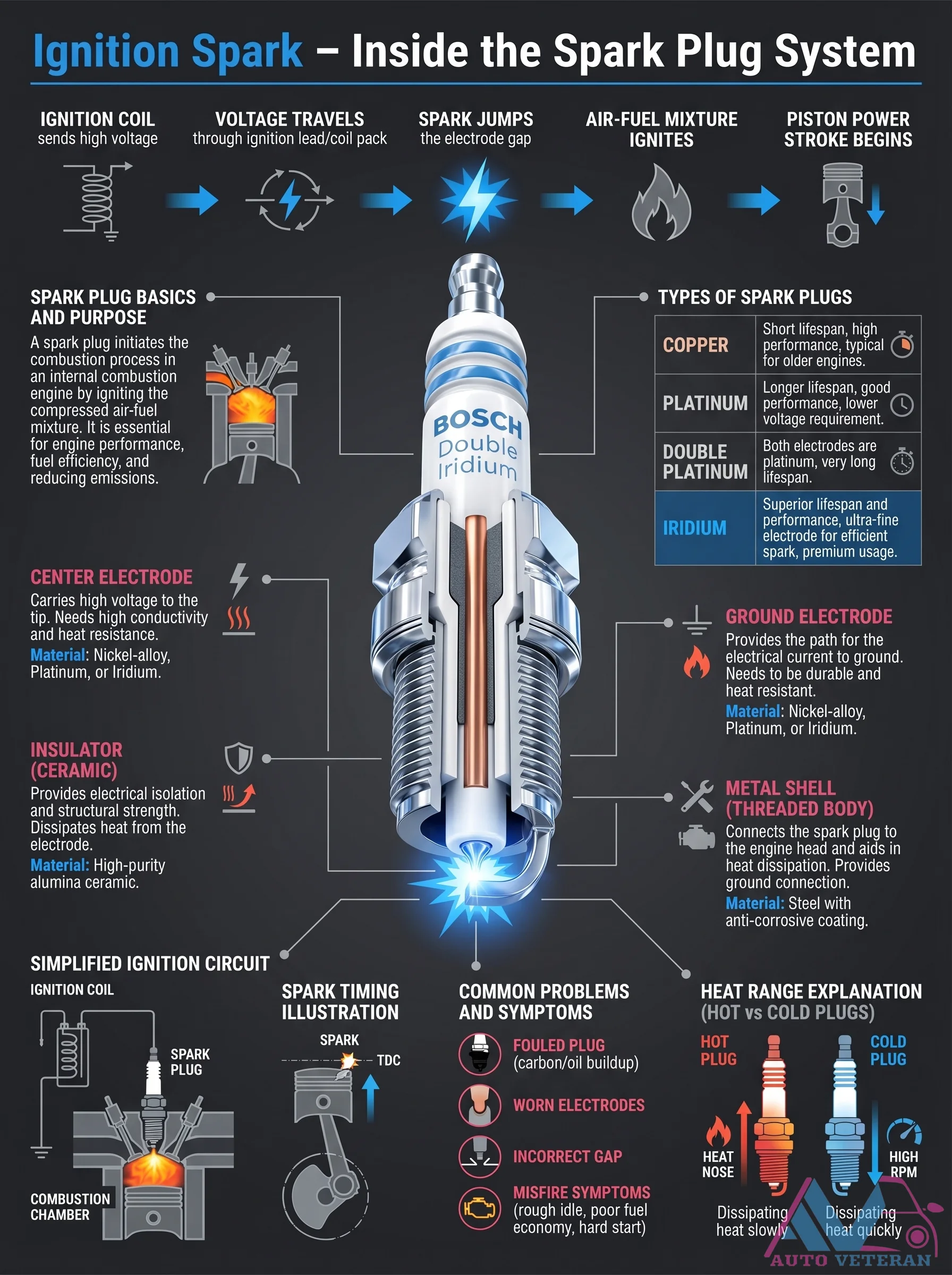
Understanding the fundamentals of spark plug operation begins with the ignition coil sending high voltage through the lead or coil pack; this voltage jumps the electrode gap to ignite the compressed air-fuel mixture, initiating the power stroke. Different spark plug types serve distinct purposes: copper plugs offer short lifespan but high performance for older engines, platinum plugs provide longer lifespan with moderate performance, double platinum plugs feature platinum on both electrodes for very long lifespan, and iridium plugs deliver superior lifespan and performance with ultra-fine electrodes for efficient spark in premium applications. Key components include the center electrode that carries high voltage requiring conductivity and heat resistance, the ground electrode that provides current path to ground needing durability, the ceramic insulator for electrical isolation, and the metal shell for heat dissipation and engine connection. Common problems include spark plug fouling from carbon or oil buildup, worn electrodes, incorrect gap settings, and misfire symptoms like rough idle or poor fuel economy; heat range differences between hot plugs that dissipate heat slowly and cold plugs that dissipate quickly affect performance across various RPM ranges and combustion conditions.
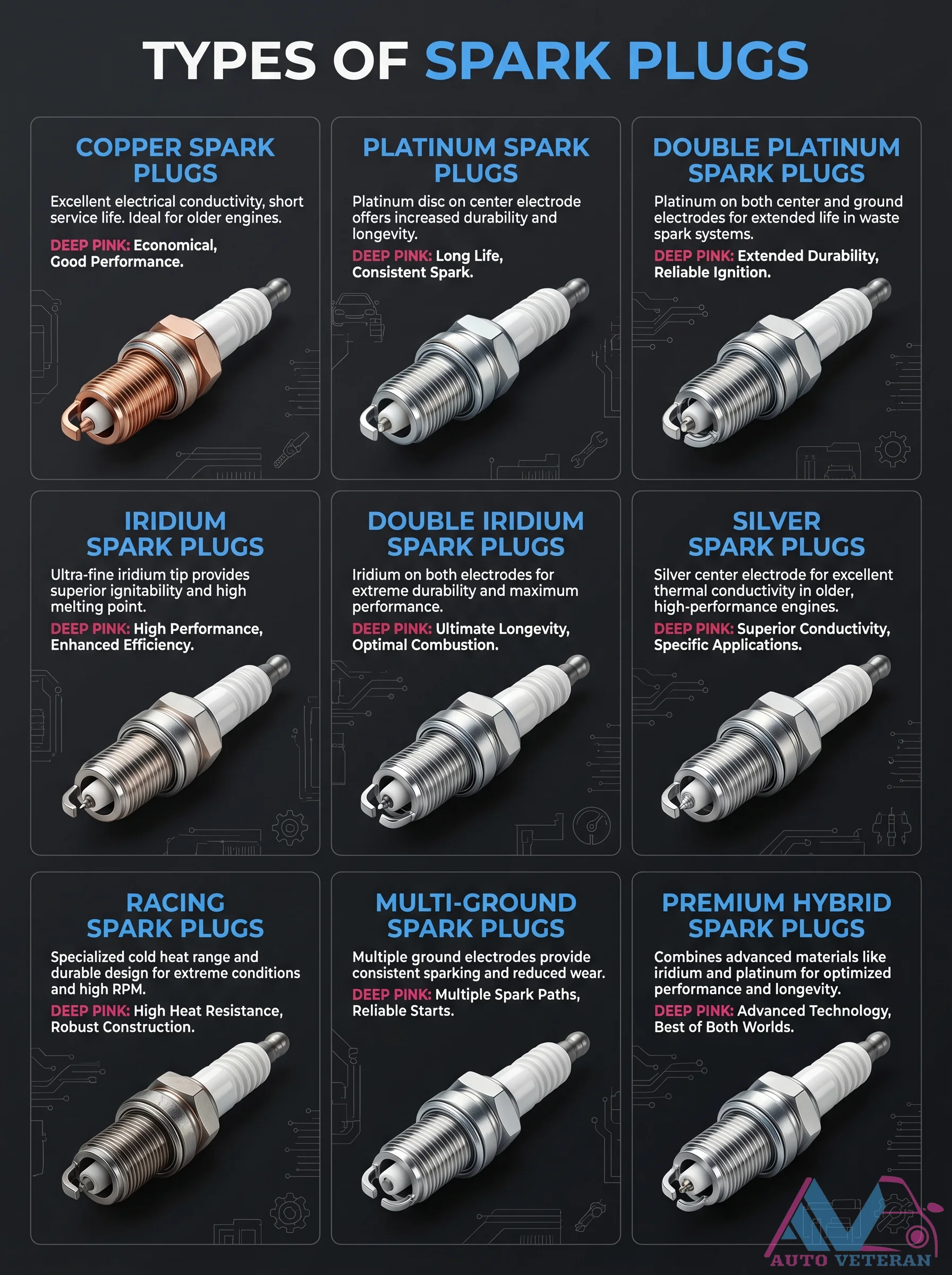
Spark Plug Types Comparison and Applications
This guide compares various spark plug types, including copper, platinum, double platinum, iridium, double iridium, silver, racing, multi-ground, and hybrid plugs. Each type offers distinct advantages: copper provides excellent electrical conductivity but shorter service life, ideal for older engines; platinum offers increased durability and longevity; double platinum features platinum on both electrodes for extended life; iridium has an ultra-fine tip for superior ignitability and high melting point; double iridium delivers extreme durability and maximum performance; silver excels in thermal conductivity for older high-performance engines; racing plugs are specialized for extreme conditions and high RPM; multi-ground plugs ensure consistent sparking with multiple ground electrodes; and hybrid plugs combine advanced materials like iridium and platinum for optimized performance. The guide highlights key benefits such as economical pricing, reliable ignition, enhanced efficiency, optimal combustion, specific applications like racing, multiple spark paths, high heat resistance, reliable starts, advanced technology, and robust construction, helping you select the right plug for your engine's needs.
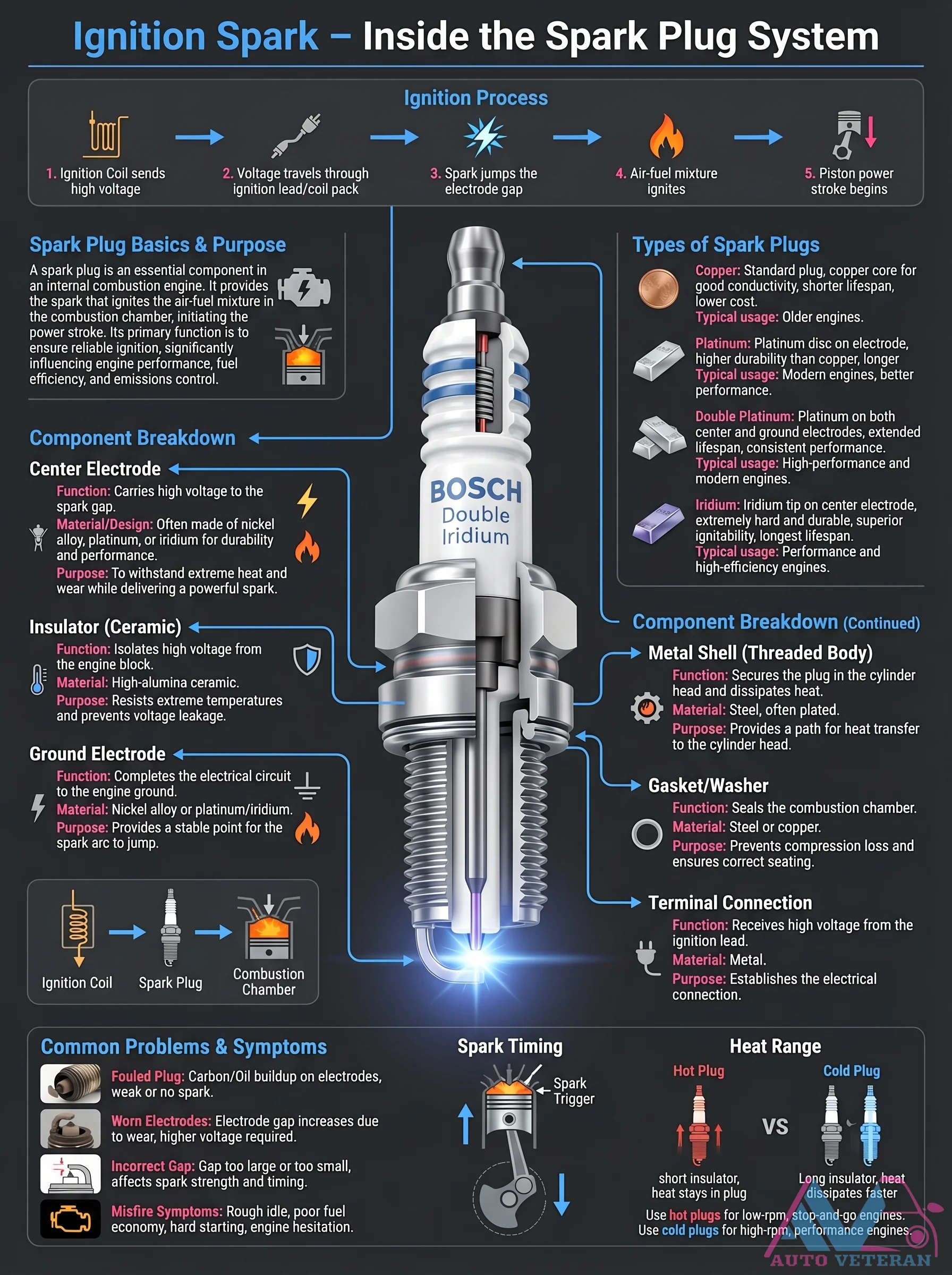
Spark Plug Types, Components, and Common Problems
Understanding the different spark plug types, from standard copper to high-performance iridium variants, along with their specific components and common failure symptoms, is essential for optimal engine performance. Each type offers distinct characteristics in conductivity, durability, and lifespan, influencing ignition reliability and fuel efficiency. Common issues like fouled plugs, worn electrodes, and incorrect gap settings can lead to misfires, rough idle, and poor acceleration, making proper selection and maintenance crucial for your vehicle's operation.
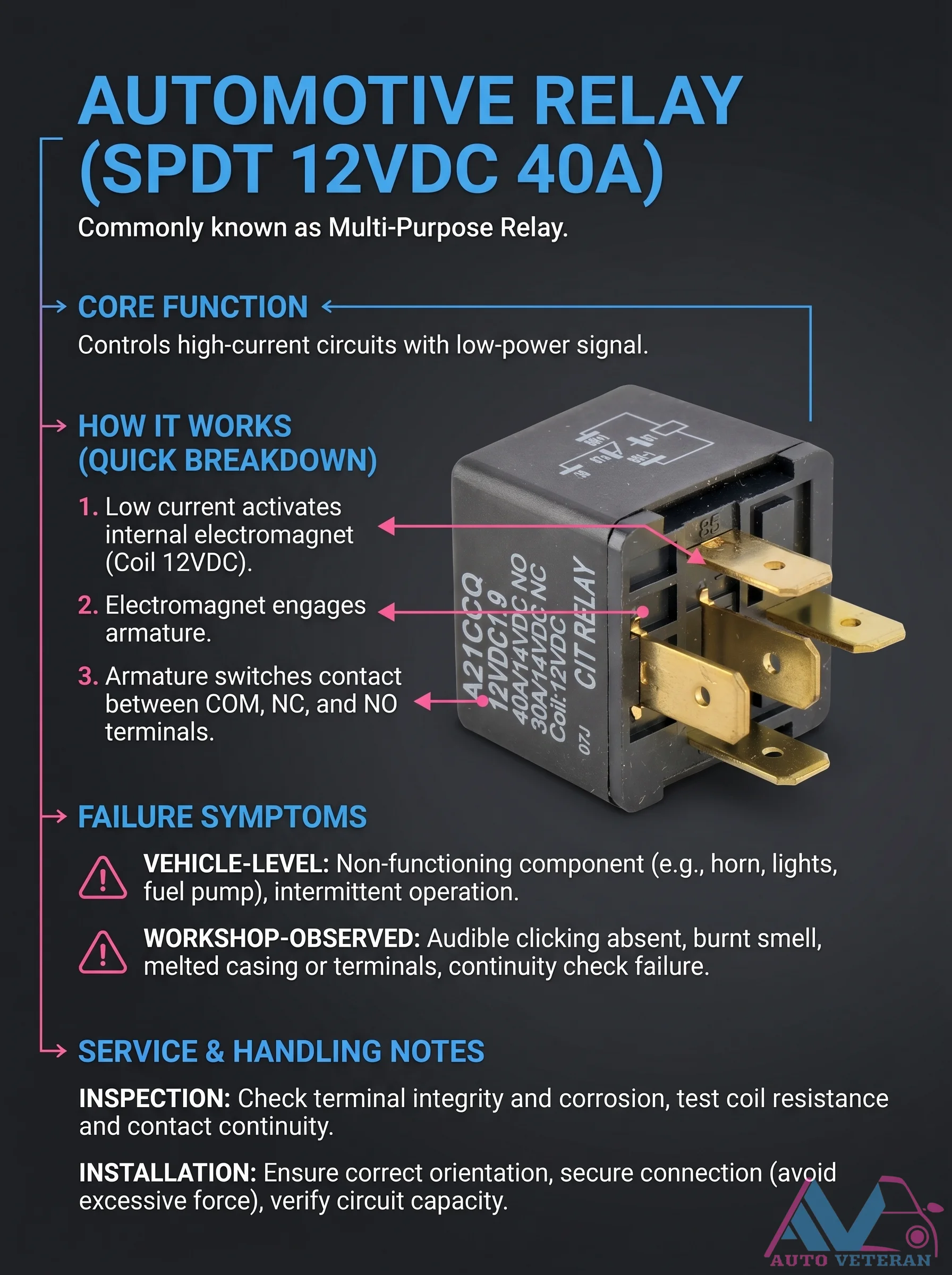
SPDT 12VDC 40A Relay Failure Symptoms
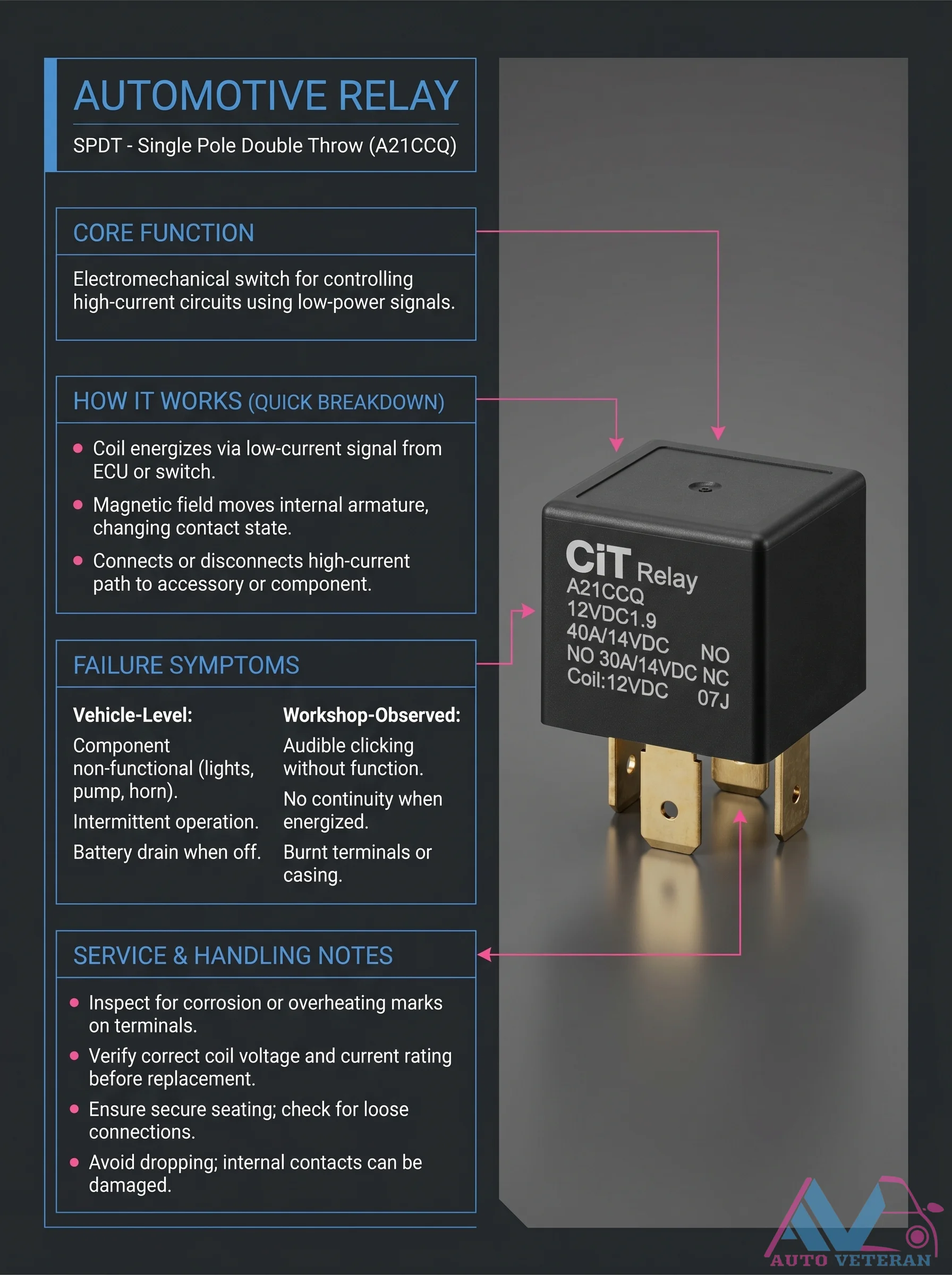
This 12 volt 40 amp single pole double throw automotive relay uses a low current signal to engage its internal electromagnet which then switches high current circuits for components like horns lights and fuel pumps. When it fails you may hear no audible click notice a burnt smell see melted casing or terminals or get a continuity check failure leading to non functioning or intermittent operation of the controlled component. Always inspect terminal integrity and corrosion test coil resistance and contact continuity and ensure correct orientation and secure installation without excessive force.
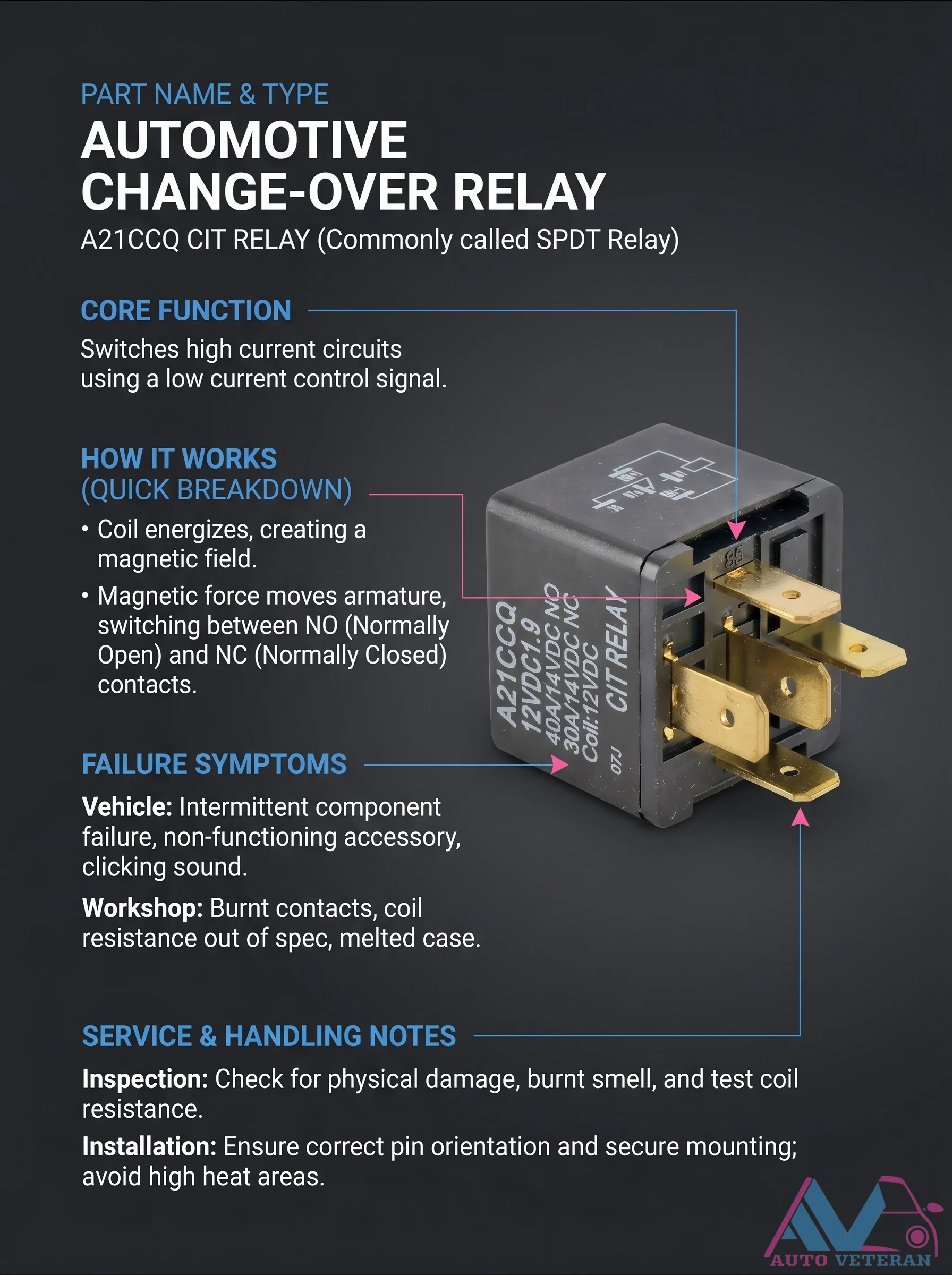
SPDT Change-Over Relay Failure Symptoms
A change-over relay, also known as an SPDT relay, uses a low current control signal to switch high current circuits. When the coil energizes, it creates a magnetic field that moves the armature, toggling between Normally Open and Normally Closed contacts. Failure symptoms include intermittent component operation, non-functioning accessories, clicking sounds, burnt contacts, out-of-spec coil resistance, and a melted case. Always inspect for physical damage and burnt smell, and test coil resistance during diagnosis.
SPDT Relay Failure Symptoms and Testing
A single pole double throw (SPDT) automotive relay like the A21CCQ works as an electromechanical switch that uses a low current signal from the ECU to control high current circuits. When the relay fails, you may hear audible clicking without function, or components like lights, pumps, or horns stop working entirely. Intermittent operation, battery drain when off, burnt terminals, or no continuity when energized are key failure symptoms. Always inspect for corrosion or overheating marks; verify correct coil voltage and current rating before replacement. Ensure secure seating and avoid dropping the relay as internal contacts are easily damaged.
Starts-Then-Stalls Engine Diagnosis Guide
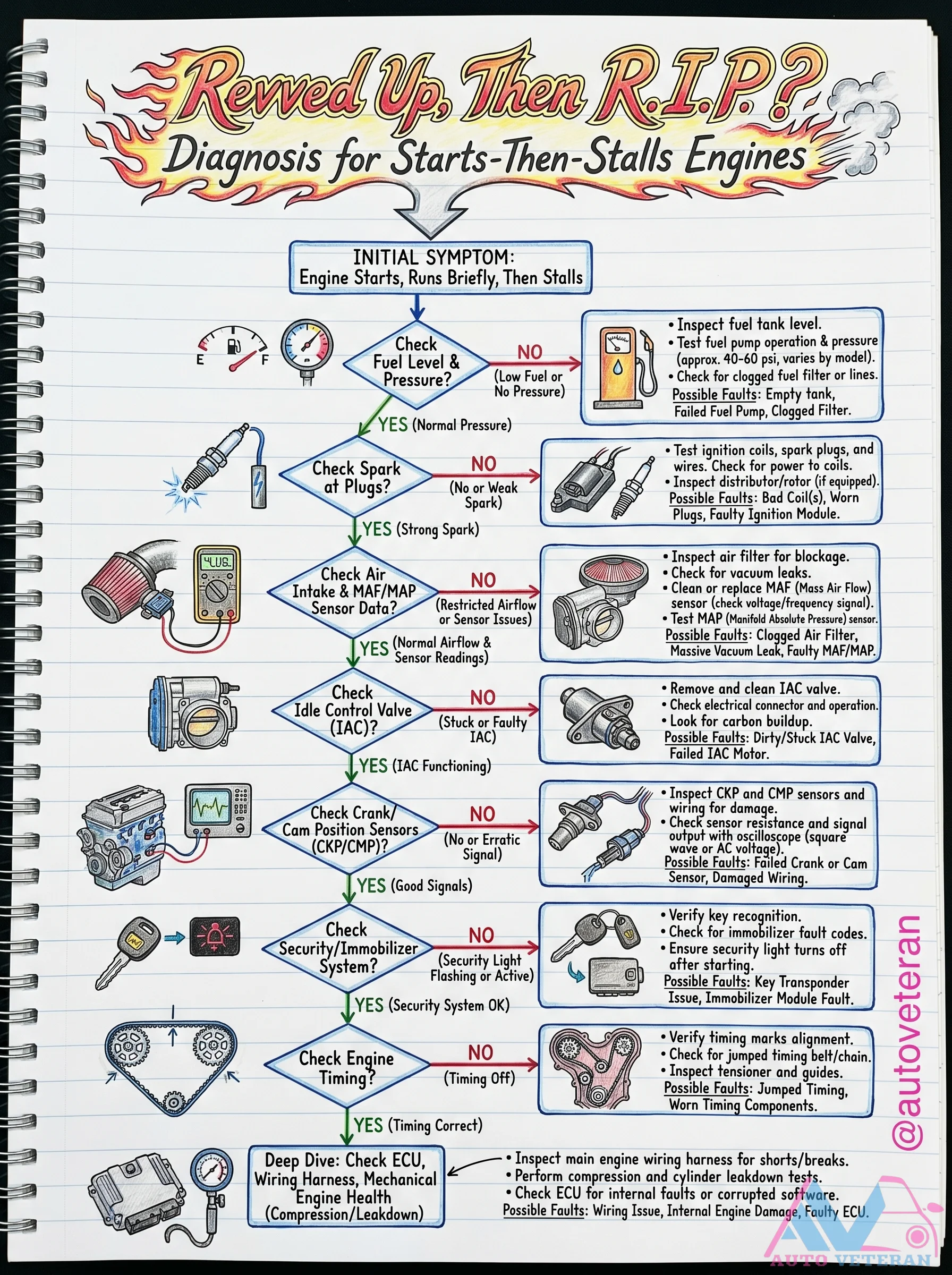
This diagnostic flowchart tackles the frustrating starts then stalls symptom by methodically checking fuel pressure (40 to 60 psi is normal), spark strength, air intake restrictions (MAF/MAP sensors and clogged filter), idle air control valve carbon buildup, crank and cam position sensor signals, security immobilizer status, and engine timing. Each branch leads to common faults like a failed fuel pump, bad ignition coil, stuck IAC, or skipped timing chain, helping you systematically pinpoint the root cause without replacing parts randomly.
Stopping Distance Calculation at 60 mph
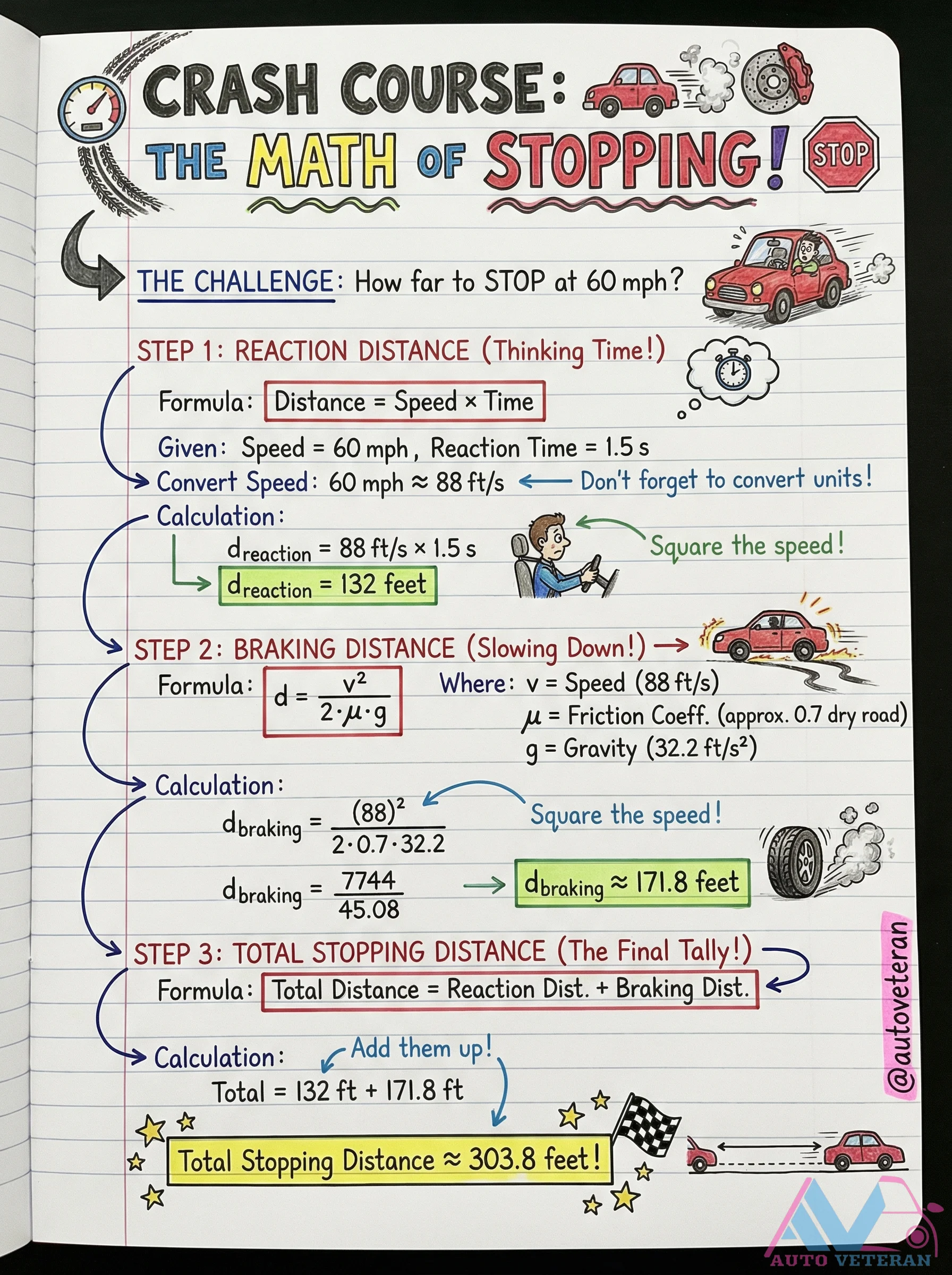
Understanding the physics behind stopping a vehicle involves calculating both reaction distance and braking distance. At 60 mph, with a typical reaction time of 1.5 seconds, the reaction distance is 132 feet after converting speed to 88 ft/s. The braking distance, determined using the formula d = V²/(2μg) with a friction coefficient of 0.7 on dry pavement and gravity at 32.2 ft/s², adds another 171.8 feet. Combined, these calculations reveal a total stopping distance of approximately 303.8 feet, highlighting the critical importance of maintaining safe following distances and accounting for both human reaction time and vehicle physics.
Supercharger Common Failures and Symptoms
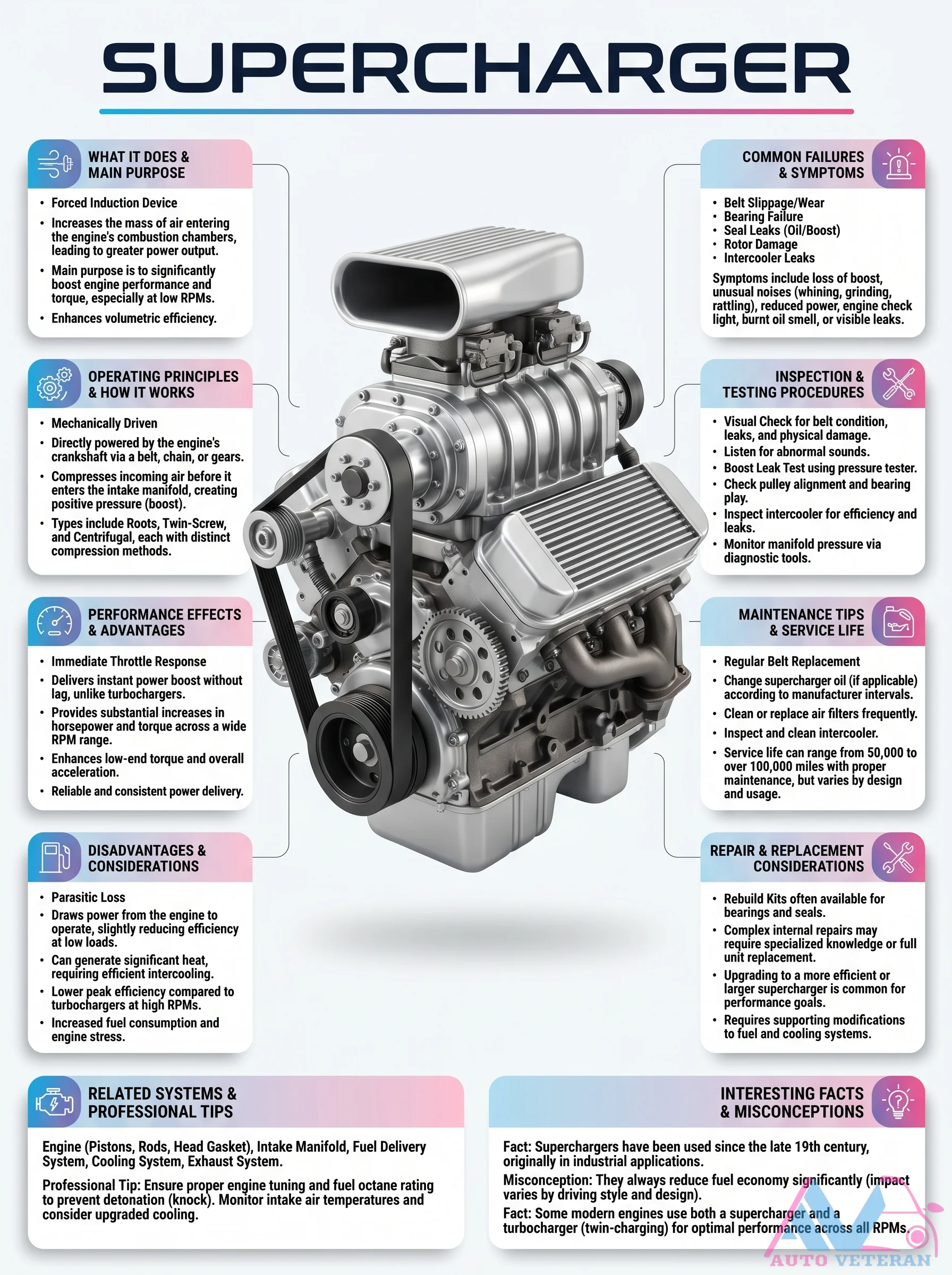
This guide covers the main purpose of a supercharger, which is forced induction to increase air mass entering the engine for greater power output. Common failures include bearing wear, seal leaks, and rotor damage, leading to loss of boost, unusual noises like whining or grinding, reduced power, check engine light, and burnt oil smell. The operating principles involve mechanical drive from the crankshaft via belt or chain, compressing air before the intake manifold. Inspection steps include visual checks for belt condition and leaks, listening for abnormal sounds, boost leak testing with a pressure tester, and checking pulley alignment, bearing play, and intercooler efficiency. Maintenance tips emphasize regular belt and oil changes, frequent air filter replacement, and intercooler inspection. Service life ranges from 50,000 to 100,000 miles with proper care. Related systems include engine pistons, intake manifold, fuel delivery, cooling, and exhaust. Professional tips stress proper tuning and fuel octane to prevent detonation, while misconceptions note that fuel economy impact varies by design and driving style.