Interactive Explorer
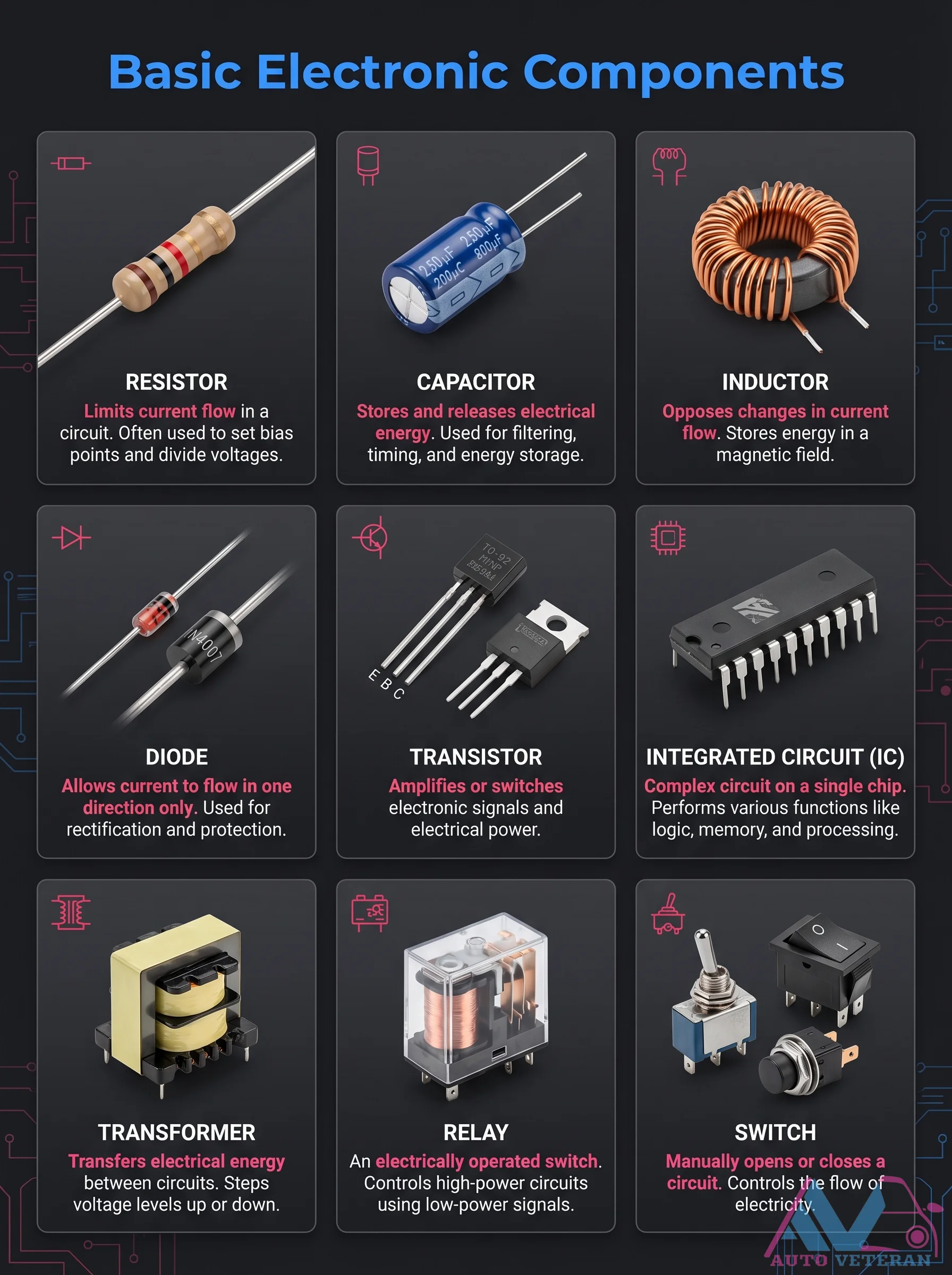
Basic Electronic Components Diagram and Functions
This diagram illustrates the fundamental electronic components essential for automotive systems, including resistors that limit current flow and set bias points, capacitors that store and release electrical energy for filtering, inductors that oppose current changes by storing energy in magnetic fields, diodes for one-way current flow in rectification, transistors that amplify or switch signals and power, integrated circuits performing logic, memory, and processing on a single chip, transformers transferring energy between circuits to adjust voltage levels, relays controlling high-power circuits with low-power signals, and switches manually managing electric flow.
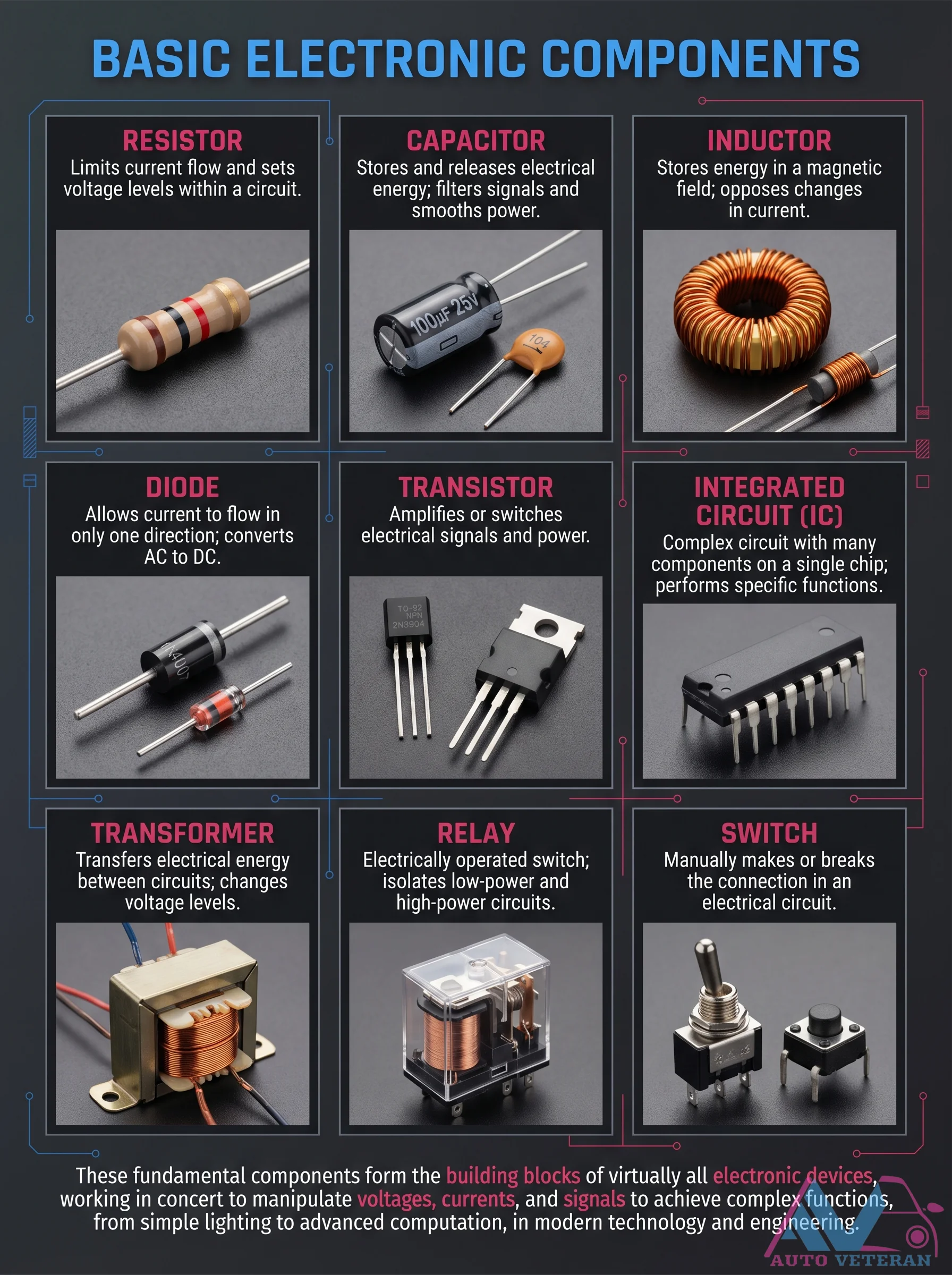
Basic Electronic Components Diagram for Automotive Systems
This diagram illustrates the fundamental electronic components that form the building blocks of automotive systems, including resistors that limit current flow and set voltage levels, capacitors that store and release electrical energy while filtering signals, inductors that store energy in magnetic fields and oppose current changes, diodes that allow current flow in one direction and convert AC to DC, transistors that amplify or switch electrical signals, integrated circuits that perform specific functions on a single chip, transformers that transfer energy between circuits and change voltage levels, relays that electrically isolate low power and power circuits, and switches that manually make or break connections. These components work together to manipulate voltages, currents, and signals, enabling everything from simple lighting to advanced computation in modern automotive technology.
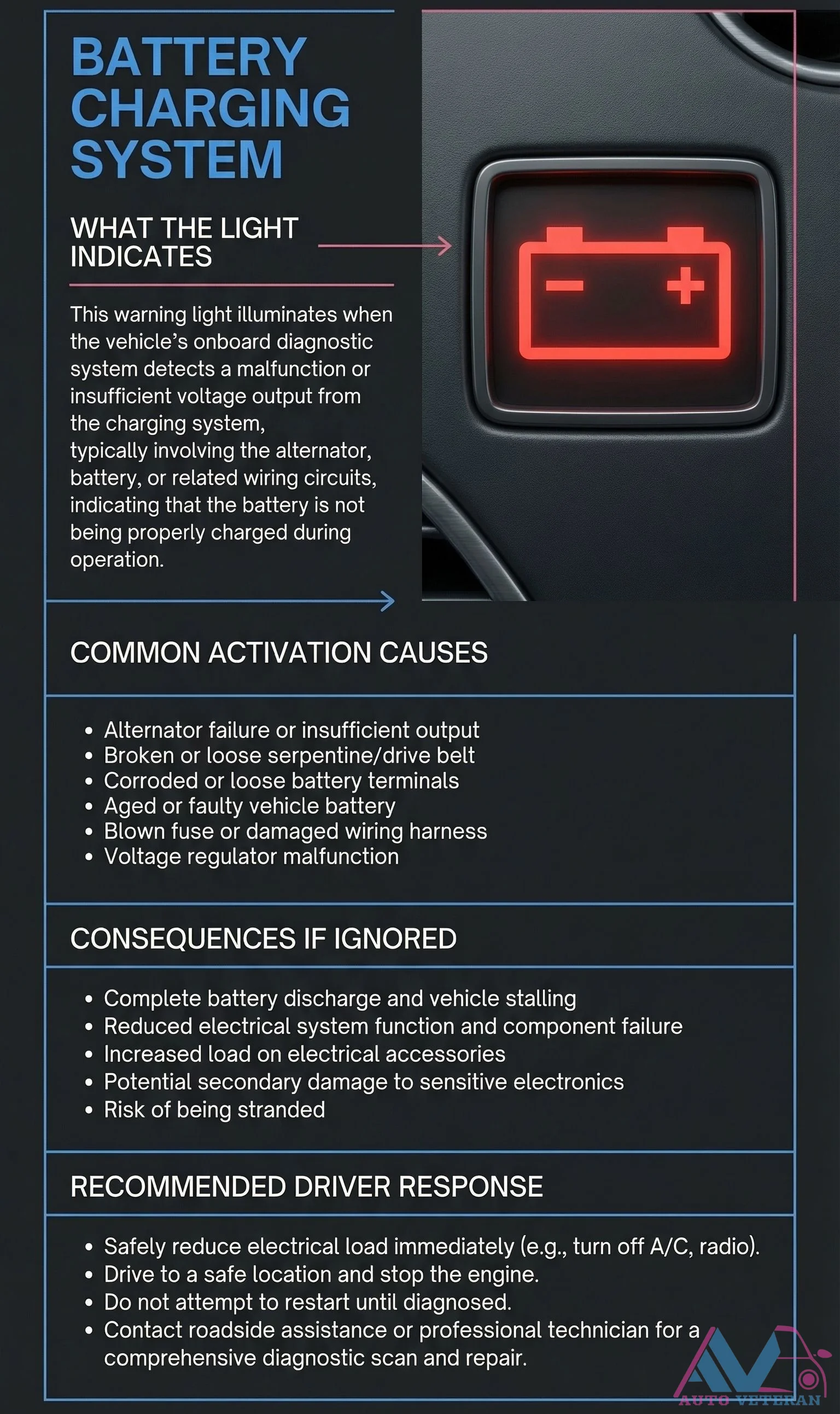
Battery Charging System Warning Light Causes and Response
When the battery charging system warning light illuminates on your dashboard, it signals that your vehicle's onboard diagnostic system has detected insufficient voltage output or a malfunction in the charging circuit. This critical alert typically points to issues with the alternator, battery, or related wiring, indicating that the battery is not receiving proper charge during operation. Common activation causes include alternator failure, a broken serpentine belt, corroded battery terminals, an aged battery, blown fuses, or wiring harness regulator malfunctions. Ignoring this warning can lead to complete battery discharge, vehicle stalling, reduced electrical system function, component failure, increased load on accessories, potential damage to sensitive electronics, and the risk of being stranded. The recommended driver response involves immediately reducing electrical load by turning off nonessential systems like air conditioning and the radio, driving to a safe location, stopping the engine, and not attempting to restart until professionally diagnosed. Contact roadside assistance or a technician for a comprehensive diagnostic scan and repair to address the underlying issue.
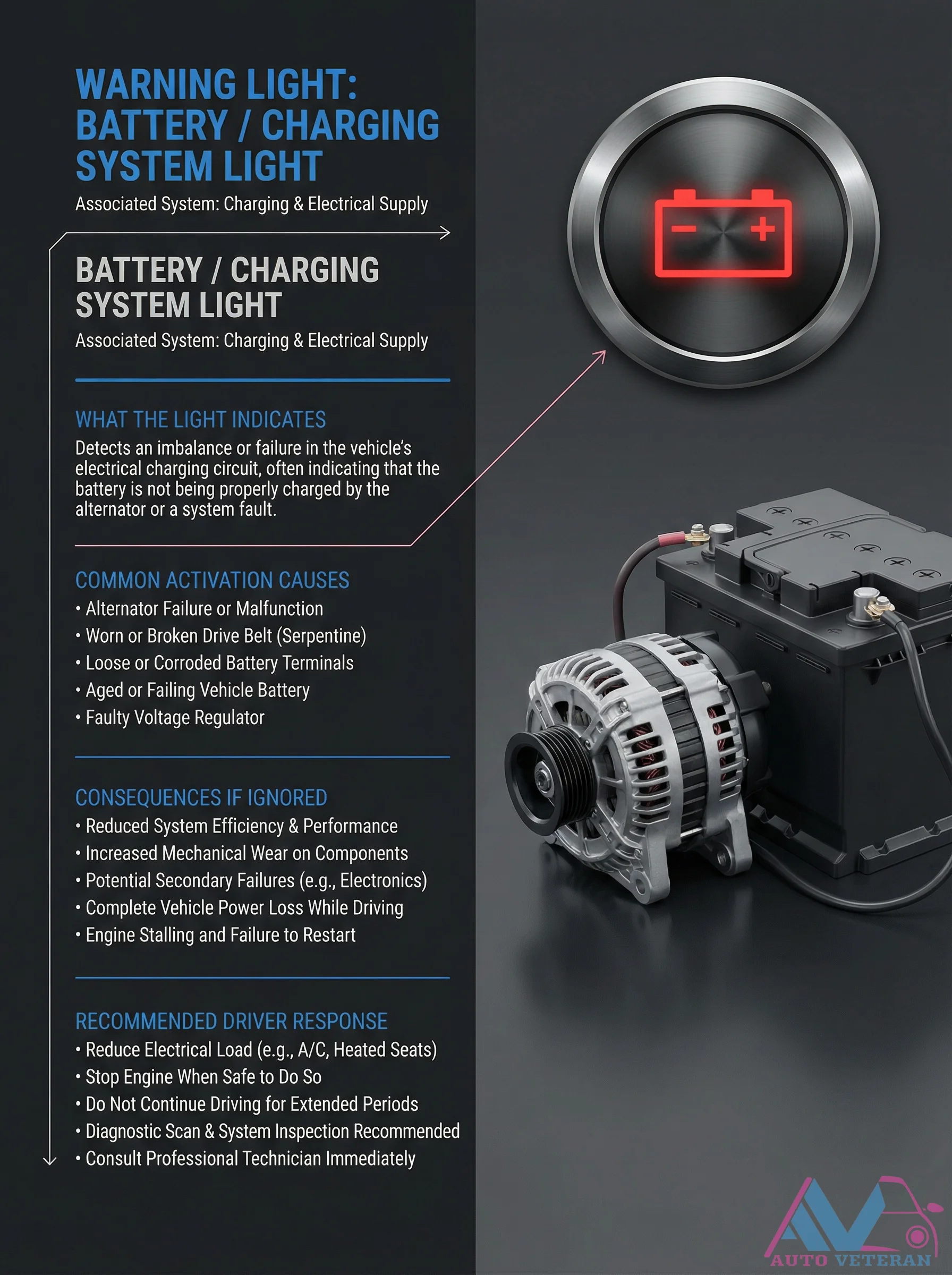
Battery Charging System Warning Light Symptoms and Causes
When the battery charging system warning light illuminates on your dashboard, it signals a critical imbalance or failure in your vehicle's electrical charging circuit. This warning typically indicates the alternator is not properly charging the battery, which can stem from several common issues including alternator failure, worn serpentine belts, loose or corroded battery terminals, aged batteries, or faulty voltage regulators. Ignoring this warning leads to reduced system efficiency, increased mechanical wear, potential electronic failures, complete power loss while driving, engine stalling, and failure to restart. Immediate driver response should include reducing electrical loads like air conditioning and heated seats, stopping the engine safely when possible, avoiding extended driving, and seeking professional diagnostic inspection.
Battery Warning Light Charging System Fault
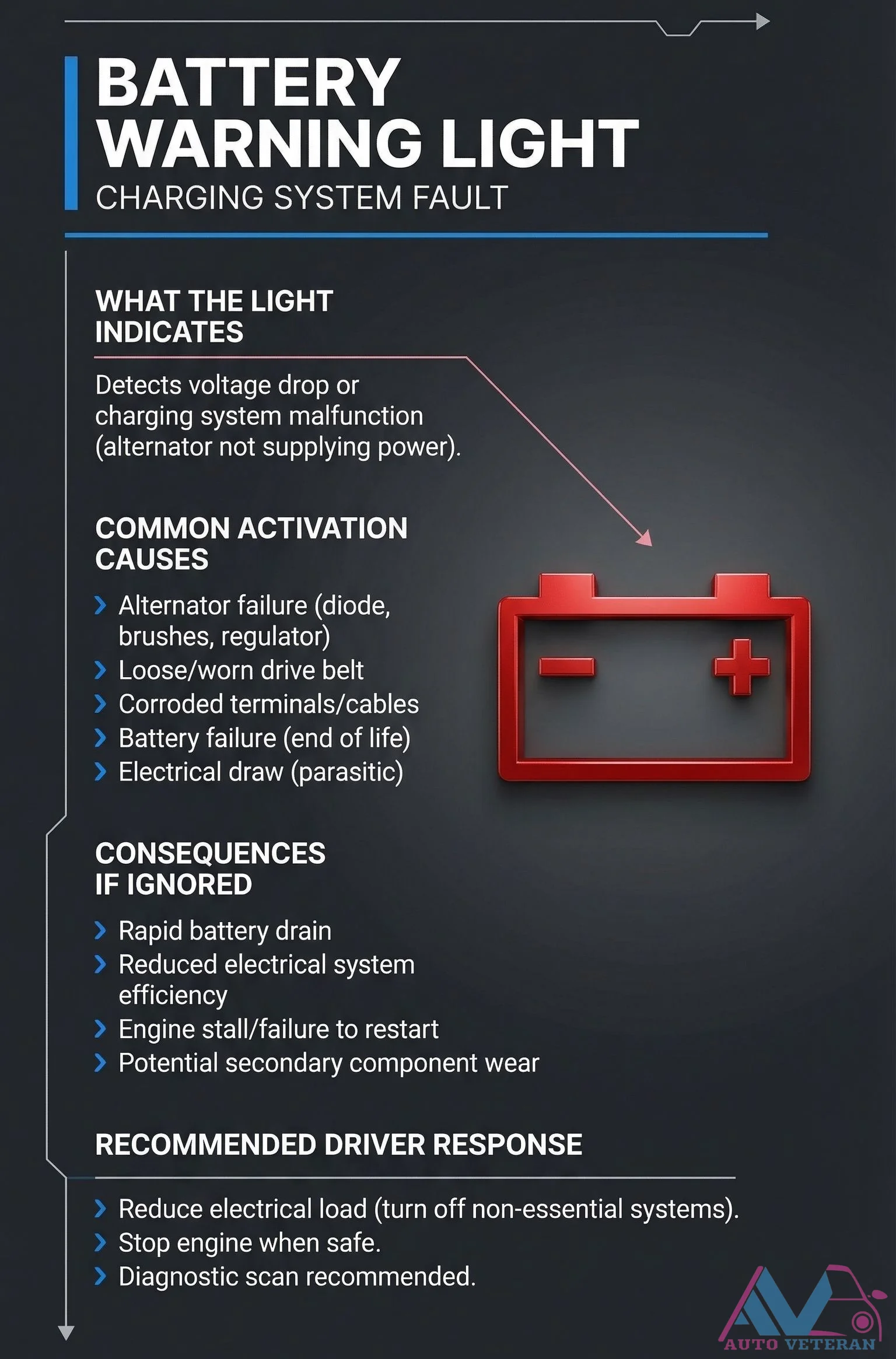
The battery warning light illuminates when your vehicle's charging system detects a voltage drop or malfunction, such as an alternator failing to supply power. Common causes include alternator component failures like diodes, brushes, or regulators, a loose or worn drive belt, corroded terminals or cables, battery end of life, or parasitic electrical draws. Ignoring this warning can lead to rapid battery drain, reduced electrical system efficiency, engine stalling, failure to restart, and potential wear on secondary components. Recommended responses include reducing electrical load by turning off non essential systems, stopping the engine when safe, and performing a diagnostic scan.
Boost Leak Symptoms, Causes, and Diagnosis
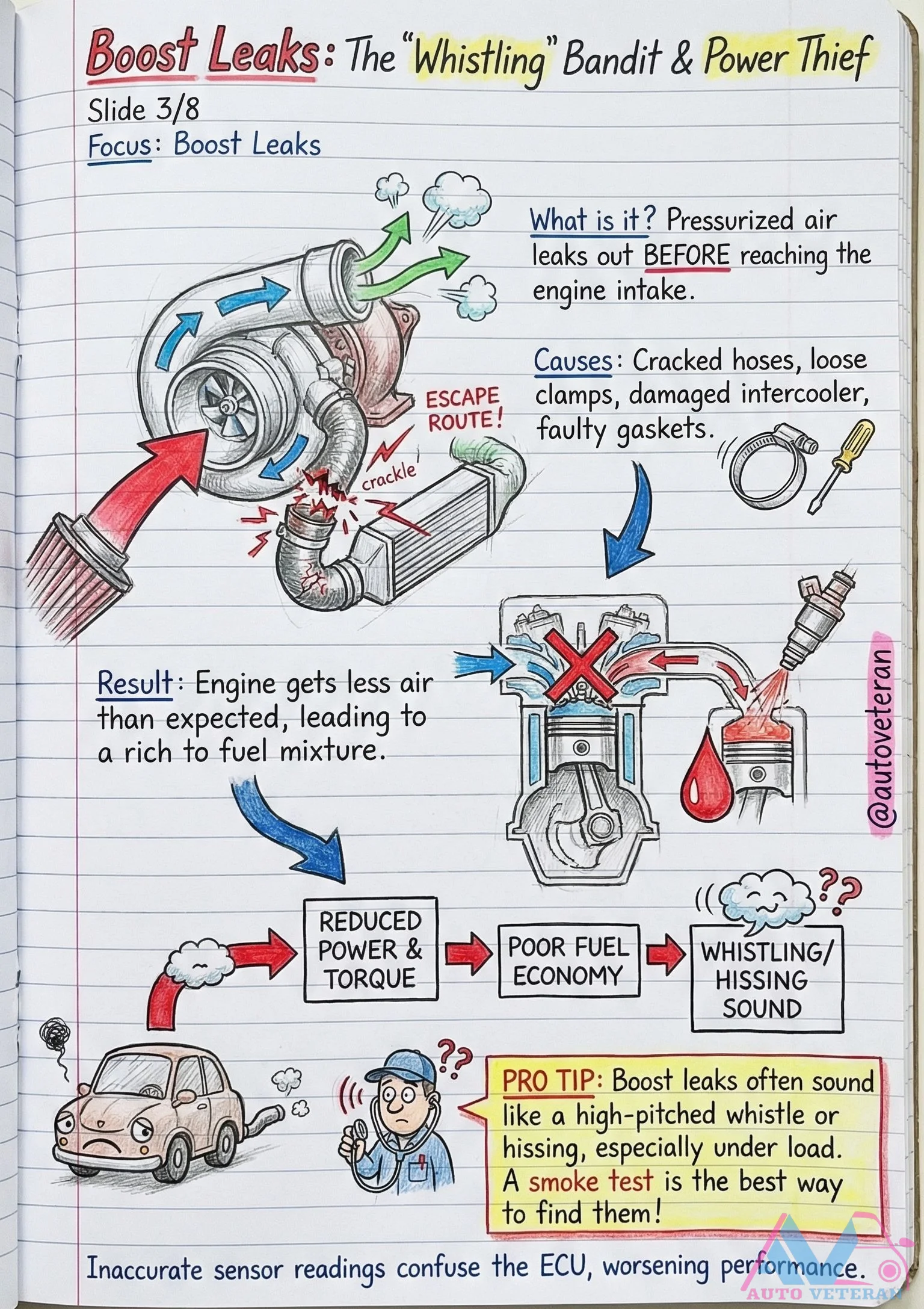
Boost leaks occur when pressurized air escapes from the intake system before reaching the engine, typically through cracked hoses, loose clamps, damaged intercoolers, or faulty gaskets. This causes the engine to receive less air than expected, resulting in a rich fuel mixture that reduces power, decreases torque, and lowers fuel economy. A distinctive high pitched whistling or hissing sound under load often signals a boost leak, while inaccurate sensor readings further confuse the ECU and worsen performance. The most effective diagnostic method is a smoke test to precisely locate these elusive leaks.
Boost Leaks Cause Power Loss in Turbo Cars
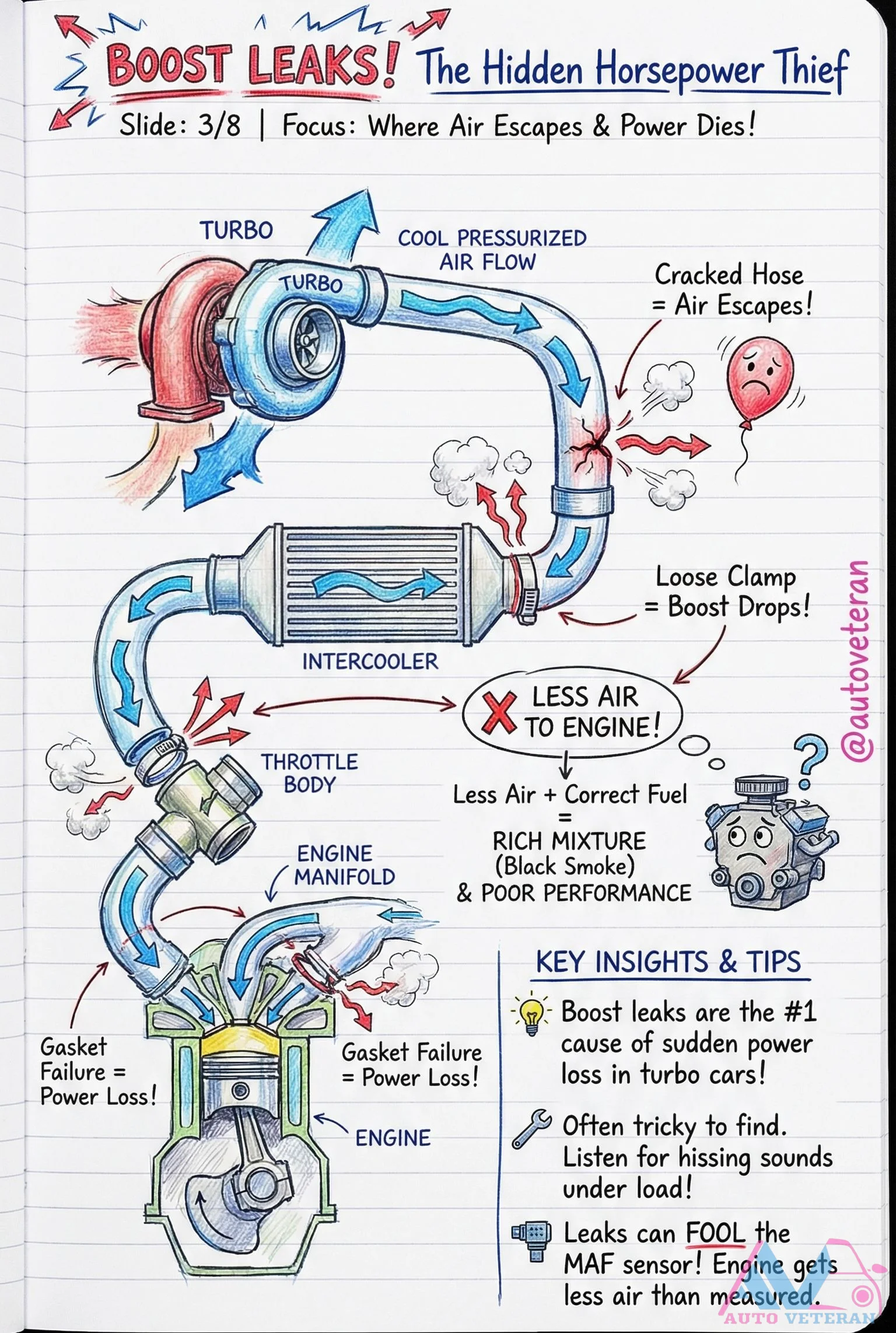
Boost leaks are the number one cause of sudden power loss in turbocharged vehicles, often hidden and tricky to find. Air escapes through cracked hoses, loose clamps, or failed gaskets, reducing pressurized airflow to the engine. This creates a rich fuel mixture, leading to black smoke and poor performance. Listen for hissing sounds under load, as leaks can fool the MAF sensor by delivering less air than measured.
Brake System Warning Light Hydraulic Fault
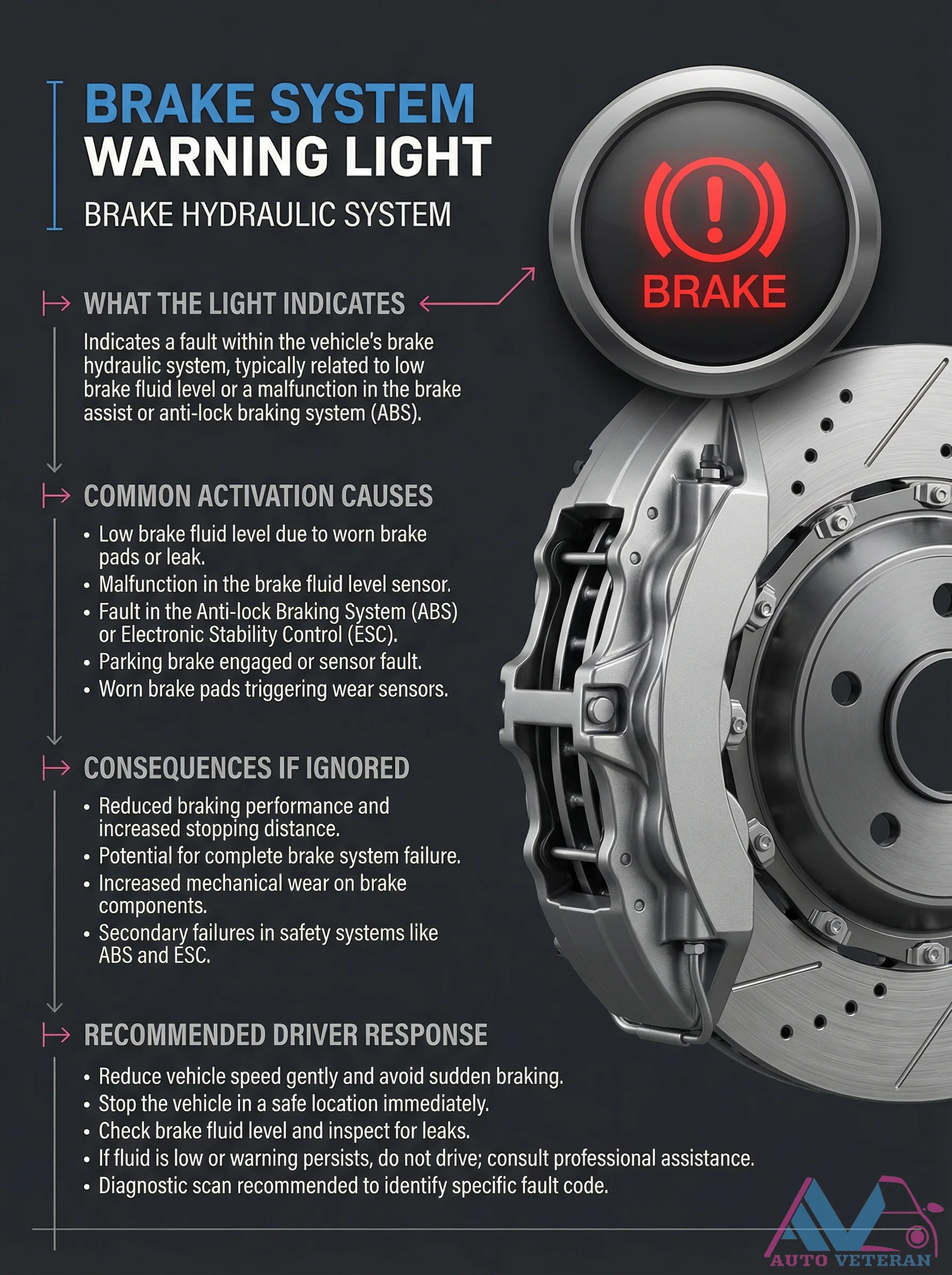
When the brake system warning light illuminates on your dashboard, it signals a critical fault within the vehicle's hydraulic braking system. This alert typically indicates low brake fluid levels from worn pads or leaks, or malfunctions in brake assist, ABS, or ESC systems. Ignoring this warning can lead to dangerously reduced braking performance, increased stopping distances, and potential complete brake failure. The recommended response involves gently reducing speed, avoiding sudden stops, checking fluid levels immediately, and seeking professional diagnostics if the light persists.
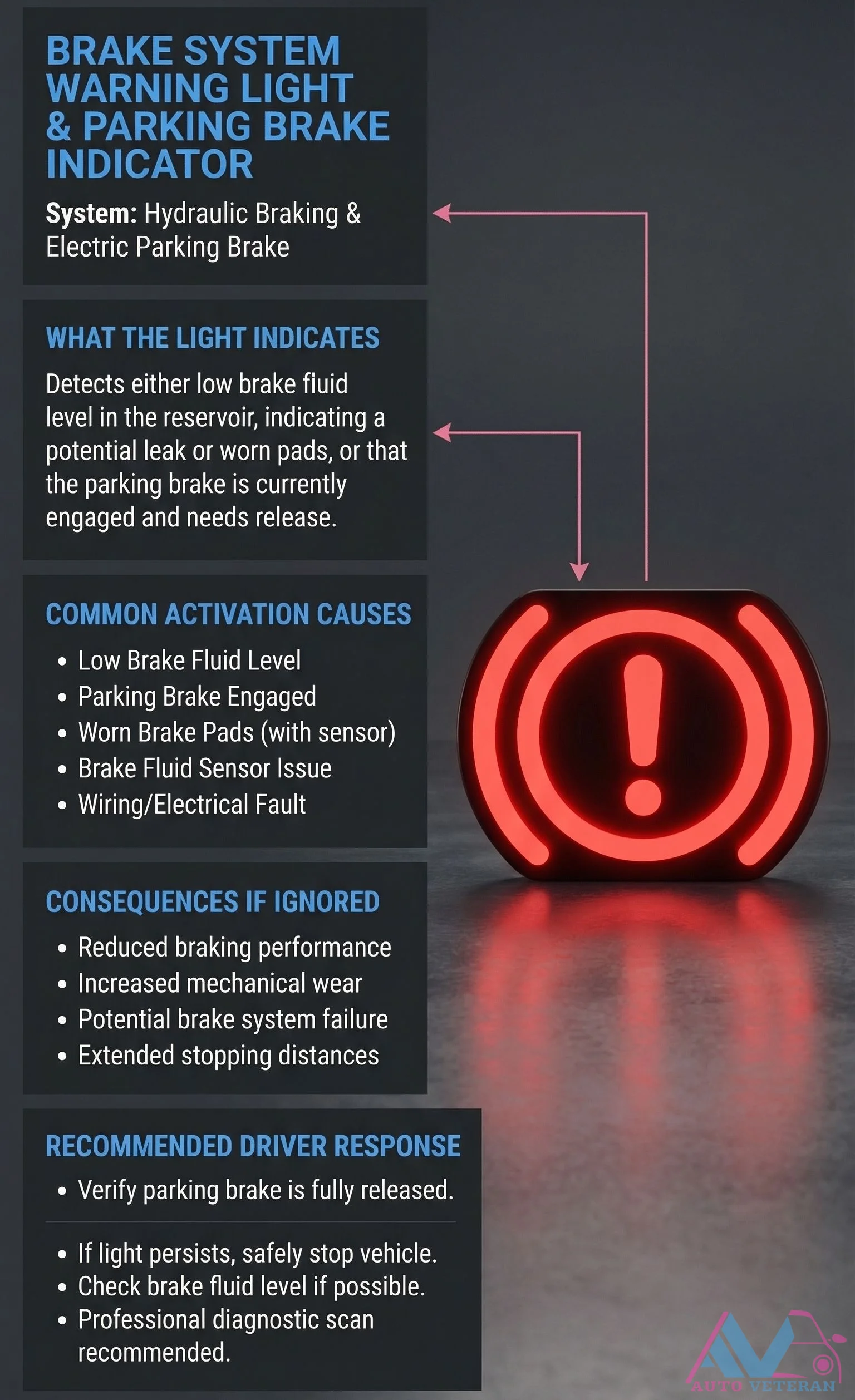
Brake Warning Light Causes and Driver Response
The brake warning light on your dashboard serves a dual purpose, alerting you to either low brake fluid levels or an engaged parking brake. Low fluid often signals potential leaks or worn brake pads, while the parking brake indicator reminds you to release it before driving. Ignoring this warning can lead to reduced braking performance, increased mechanical wear, extended stopping distances, and even potential brake system failure. When the light illuminates, first verify the parking brake is fully released. If the light persists, safely stop the vehicle to check brake fluid levels if possible, then seek professional diagnostic scanning to identify underlying issues like sensor problems or electrical faults.
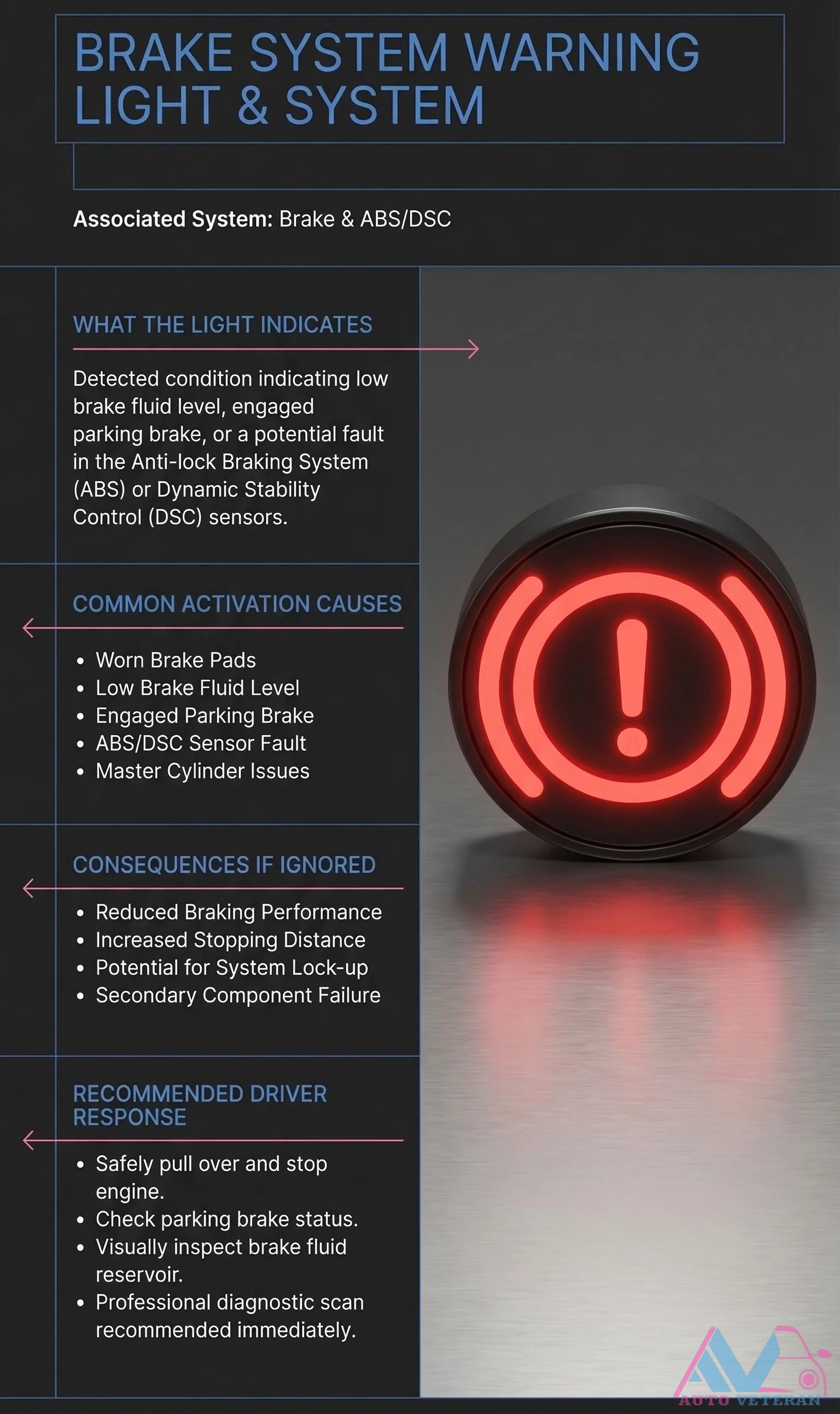
Brake Warning Light Causes, Consequences, and Response
When your brake warning light illuminates, it signals multiple potential issues including low brake fluid, engaged parking brake, or ABS/DSC sensor faults. Ignoring this warning leads to reduced braking performance, increased stopping distances, and potential system lock-up. The proper response involves safely pulling over, checking parking brake status, inspecting brake fluid levels, and seeking immediate professional diagnostics to prevent secondary component failure.
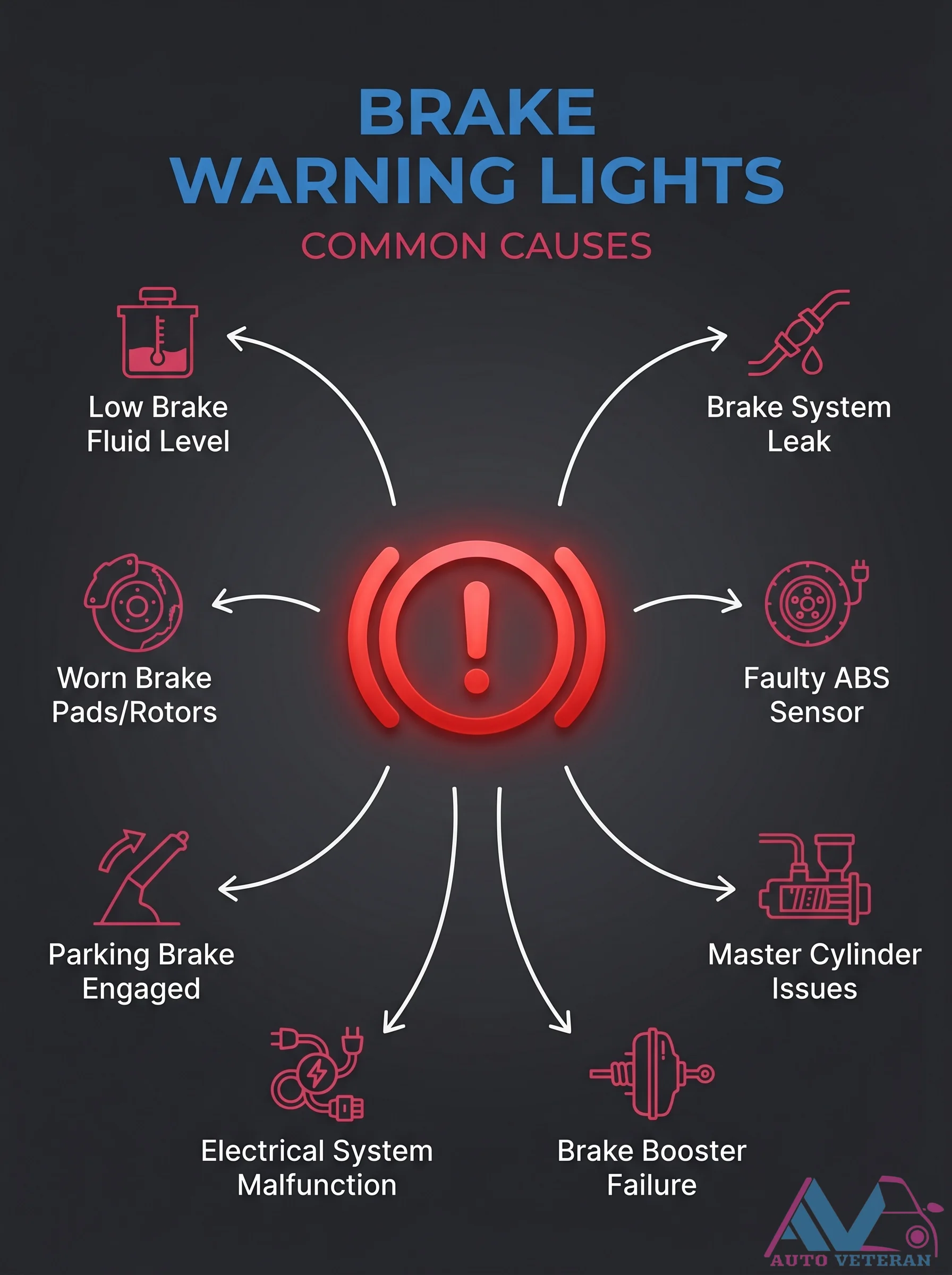
Brake Warning Light Common Causes
When your brake warning light illuminates, it can point to several issues: low brake fluid, a system leak, worn pads or rotors, a faulty ABS sensor, an engaged parking brake, master cylinder problems, electrical malfunctions, or brake booster failure. Diagnosing the specific cause is critical for safe driving.
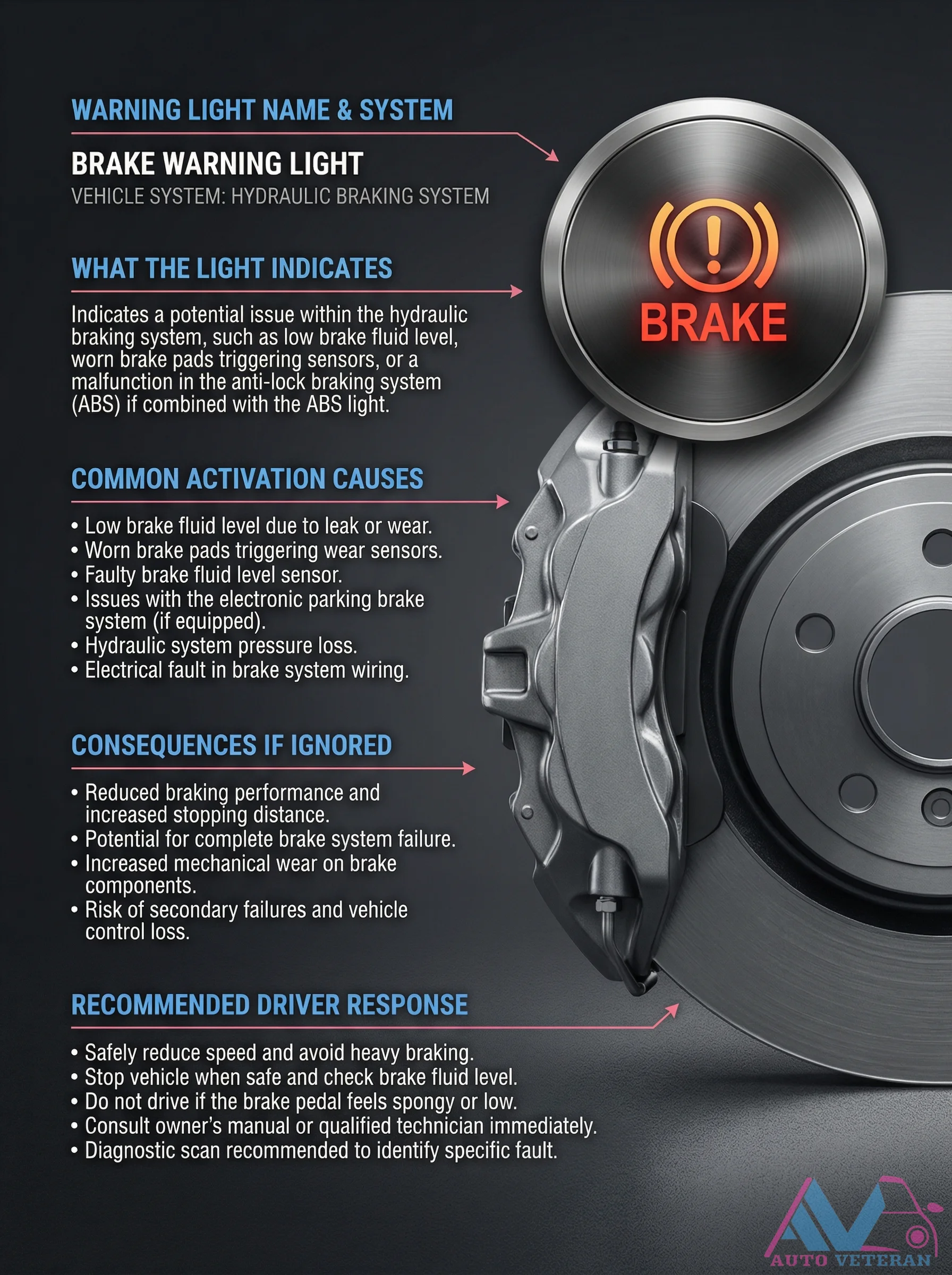
Brake Warning Light Hydraulic System Issues
The brake warning light on your dashboard signals potential problems within the hydraulic braking system; this includes low brake fluid levels from leaks or wear, worn brake pads activating sensors, faulty brake fluid level sensors, electronic parking brake system issues, hydraulic pressure loss, or electrical faults. Ignoring this warning can lead to reduced braking performance with longer stopping distances, complete brake system failure, increased mechanical wear on components, and risk of vehicle control loss. When this light illuminates, safely reduce speed while avoiding heavy braking, stop when possible to check brake fluid levels, avoid driving if the brake pedal feels spongy or low, consult your owner's manual or a qualified technician immediately, and consider a diagnostic scan to pinpoint the specific fault.