Interactive Explorer
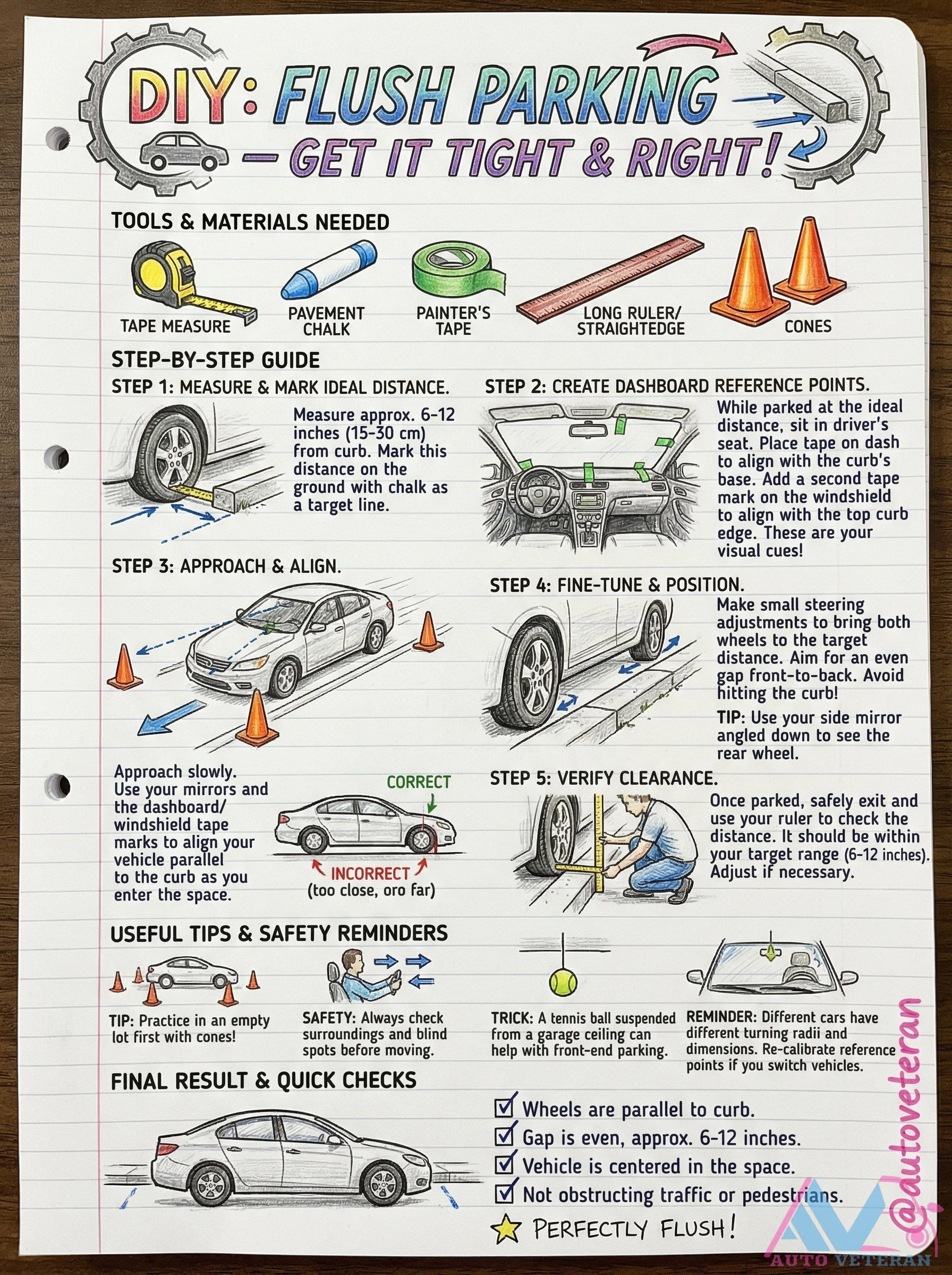
Parallel Parking Flush Curb Technique Guide
Master the precise method for parking your vehicle perfectly parallel to the curb, maintaining an ideal distance of 6 to 12 inches. This technique involves creating dashboard reference points with tape to align with the curb's base and edge, using your side mirror angled down to monitor the rear wheel, and making small steering adjustments to achieve even front-to-back alignment. Practice in an empty lot with cones first, always check your surroundings and blind spots before moving, and remember to recalibrate reference points when switching vehicles due to different turning radii and dimensions.
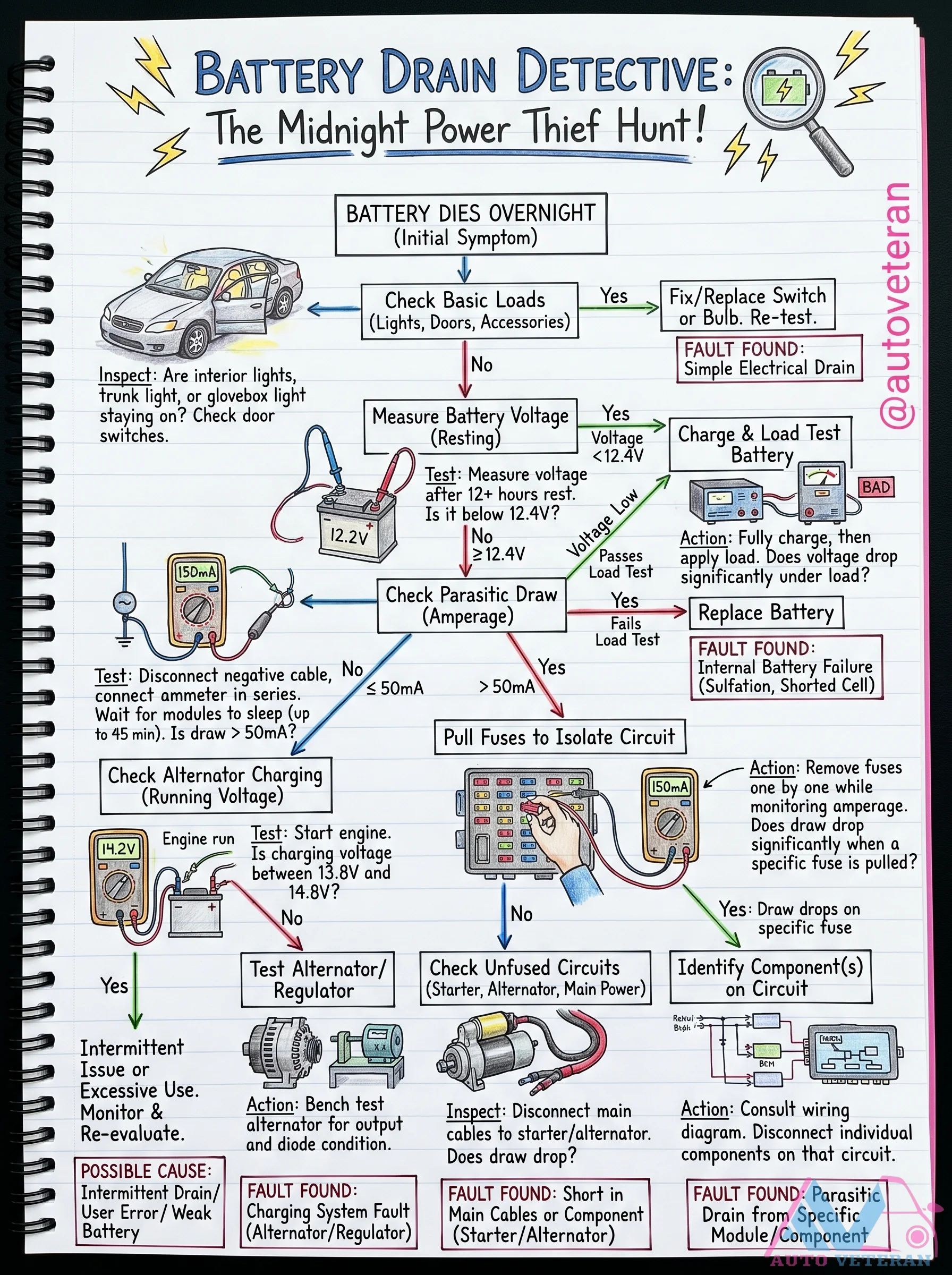
Parasitic Draw Diagnostic Flowchart
A step by step diagnostic tree for tracking down the midnight power thief that drains your battery overnight. It starts with checking interior lights and door switches, moves to a battery voltage test after 12 hours rest (target 12.4V or higher), then a load test. If the battery passes but still drains, you disconnect the negative cable and measure parasitic draw with an ammeter; acceptable draw is under 50mA after modules sleep (up to 45 minutes). If draw exceeds 50mA, pull fuses one by one to isolate the circuit. Common faults include interior lights staying on, faulty door switches, a shorted alternator diode, a bad starter or main cables, or a component that fails to go to sleep. The flowchart also covers checking alternator charging voltage (13.8V to 14.8V) and bench testing the alternator and regulator.
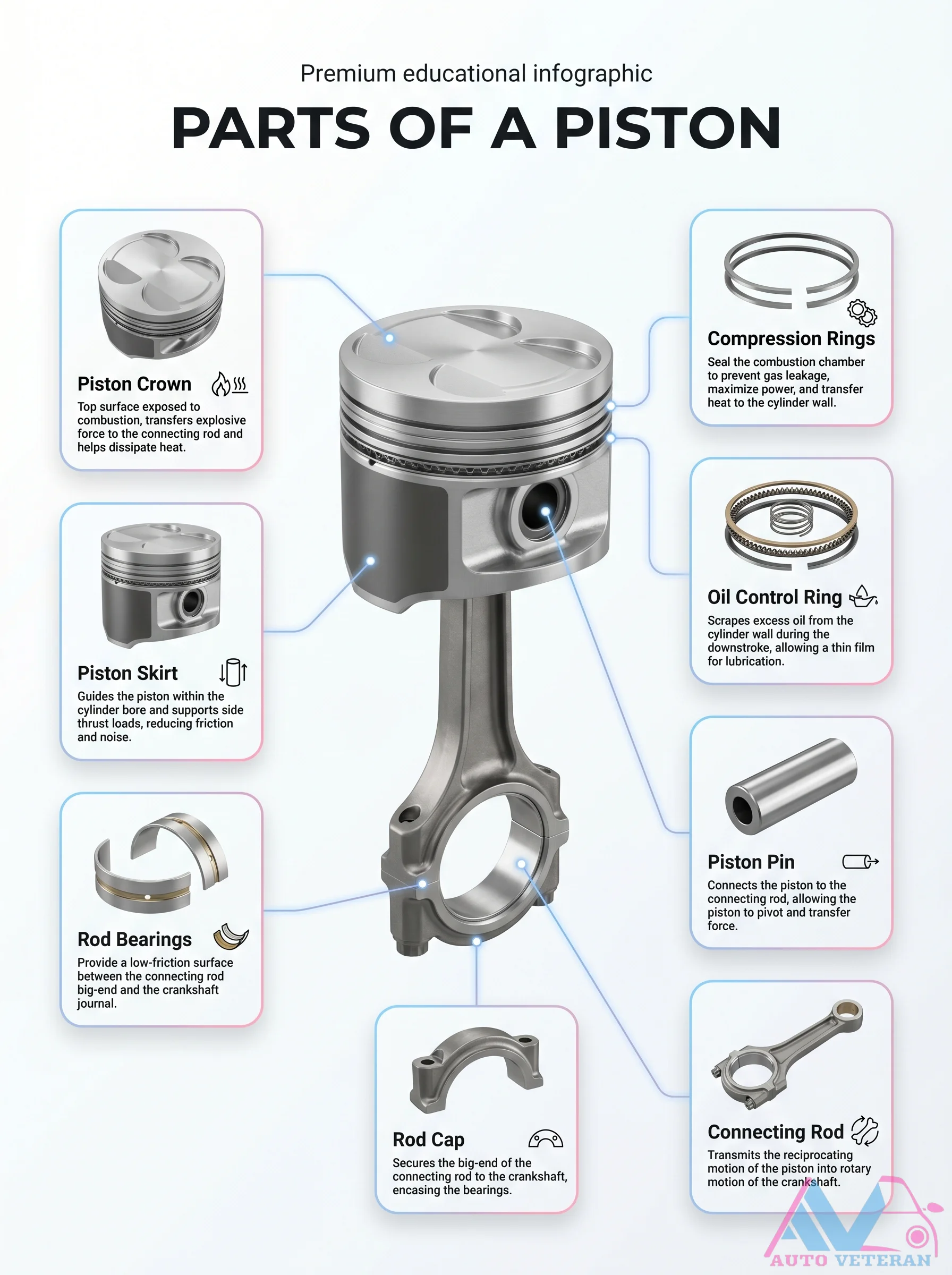
Piston Anatomy with Ring Functions
This educational infographic breaks down the critical components of a piston assembly starting with the compression rings that seal the combustion chamber to prevent gas leakage and maximize power transfer; the piston crown takes the brunt of combustion force and dissipates heat; the oil control ring scrapes excess oil off the cylinder wall during the downstroke while leaving a thin film for lubrication; the piston skirt guides the piston within the bore and reduces friction; the piston pin connects the piston to the connecting rod allowing articulation; and the connecting rod with its bearings and cap transmits reciprocating motion into rotary motion at the crankshaft.
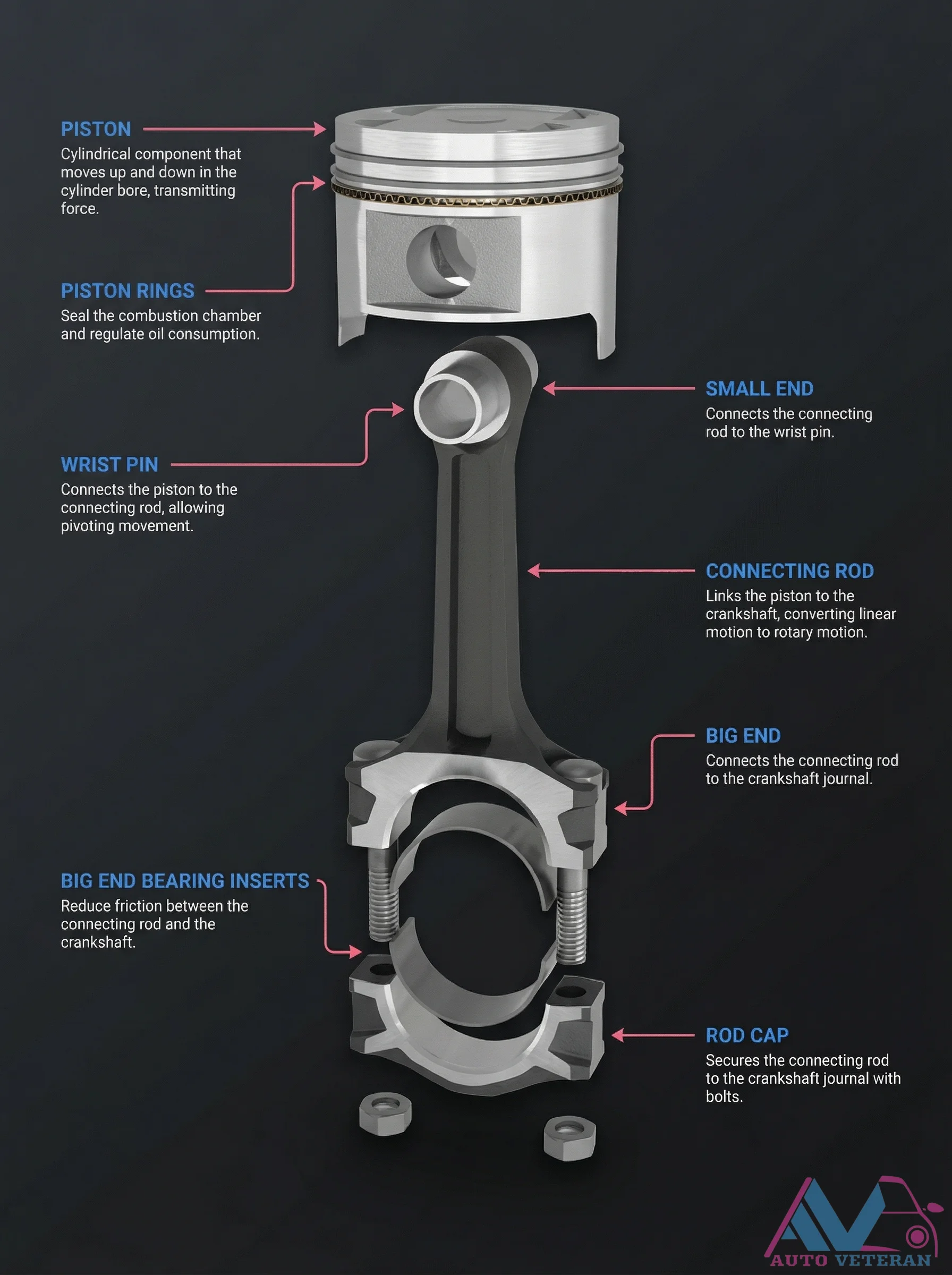
Piston Assembly Components and Functions Diagram
This detailed diagram illustrates the complete piston assembly with labeled components and their specific functions. The piston serves as the cylindrical component moving within the cylinder bore to transmit force. Piston rings create the essential seal for the combustion chamber while regulating oil consumption. The small end connects the connecting rod to the wrist pin, which in turn links the piston to the connecting rod, enabling crucial pivoting movement. The connecting rod itself bridges the piston to the crankshaft, converting linear motion into rotary motion. At the opposite end, the big end attaches to the crankshaft journal, supported by big end bearing inserts that minimize friction. Finally, the rod cap secures this connection with bolts, completing the assembly that drives engine power.
Piston Assembly Failure Symptoms and Service Notes
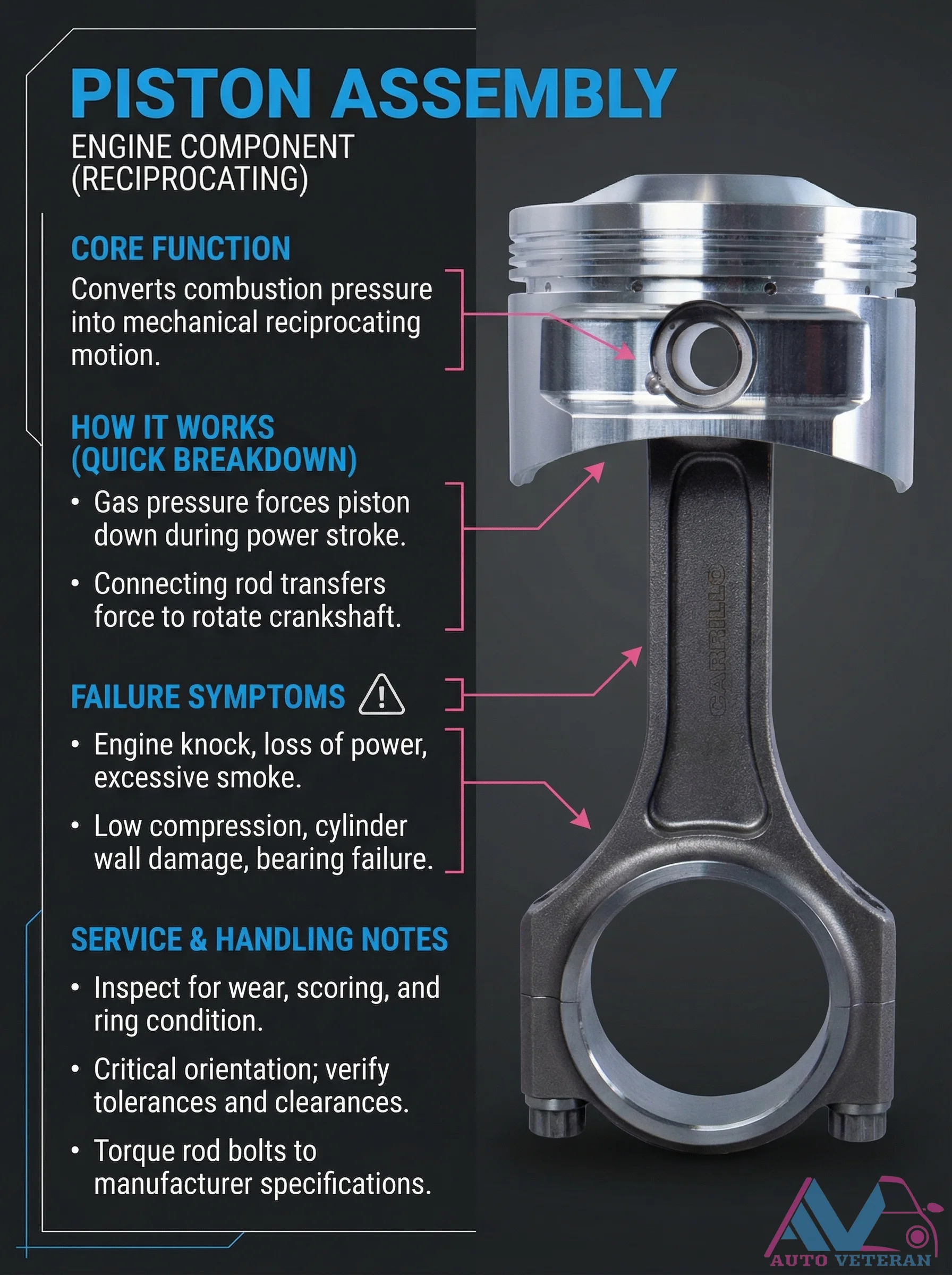
The piston assembly serves as the critical reciprocating engine component that transforms combustion pressure into mechanical motion; during operation, gas pressure drives the piston downward on the power stroke while the connecting rod transmits force to rotate the crankshaft. Common failure symptoms include engine knock, noticeable power loss, excessive exhaust smoke, low compression readings, cylinder wall damage, and bearing failure. Proper service requires inspecting for wear patterns, scoring marks, and ring condition; maintaining critical orientation during installation; verifying all tolerances and clearances; and torquing connecting rod bolts precisely to manufacturer specifications to ensure reliable engine performance.
Piston Basics, Types, Purpose, and Common Problems
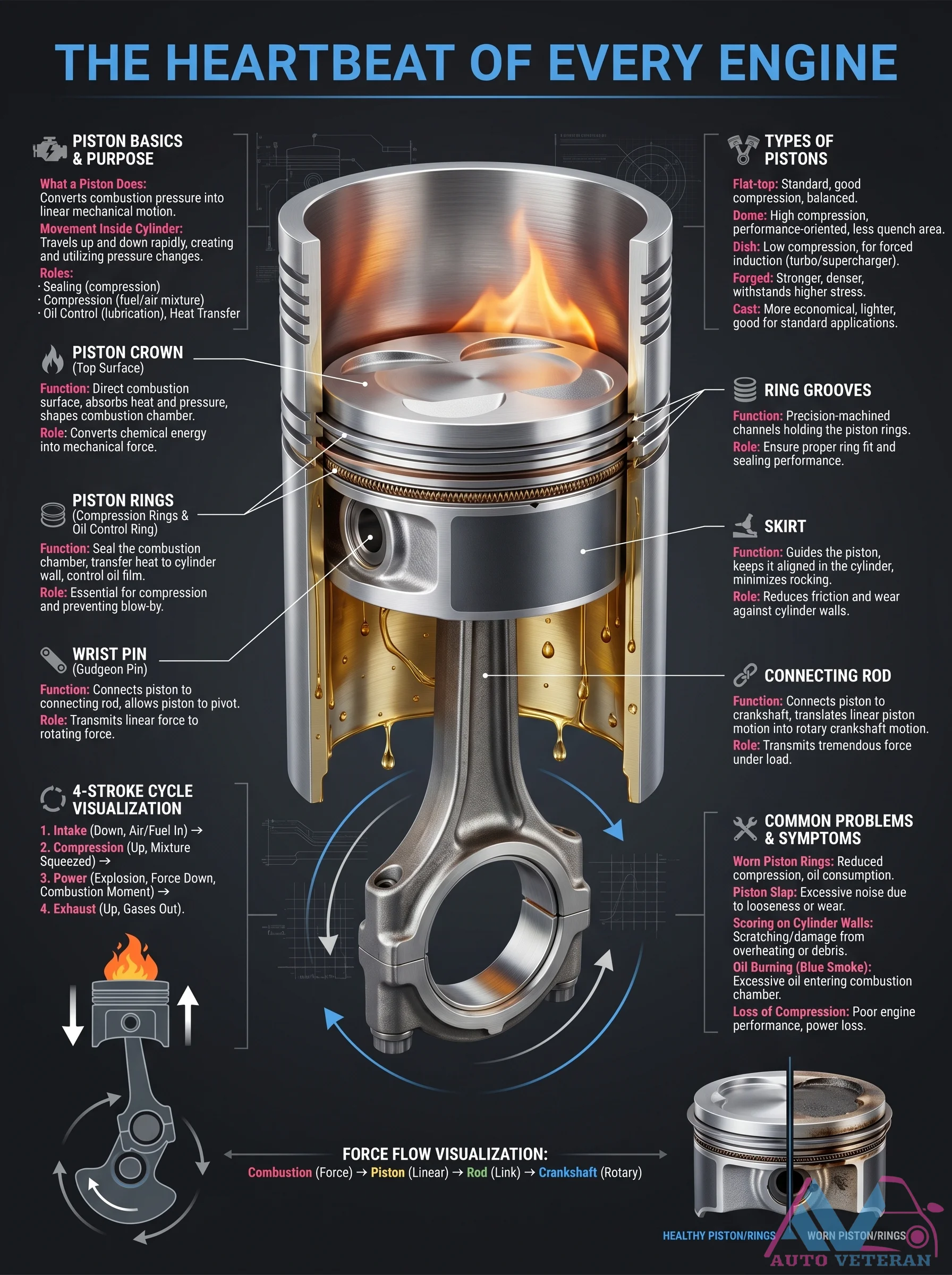
Pistons serve as the heartbeat of every engine, converting combustion pressure into mechanical movement through their up and down motion inside cylinders. Different piston types include flat top for standard applications, dish for forced induction with low compression, and dome for high compression performance. Key components like the piston crown absorb heat and pressure, ring grooves ensure proper sealing, and the skirt minimizes friction. Common problems involve worn piston rings leading to reduced compression and oil consumption, scoring on cylinder walls from debris, and oil burning indicated by blue smoke. The stroke cycle visualization covers intake, compression, combustion, and exhaust phases, while force flow shows how combustion force translates into rotary crankshaft motion.
Piston Combustion Force Transfer and Workflow
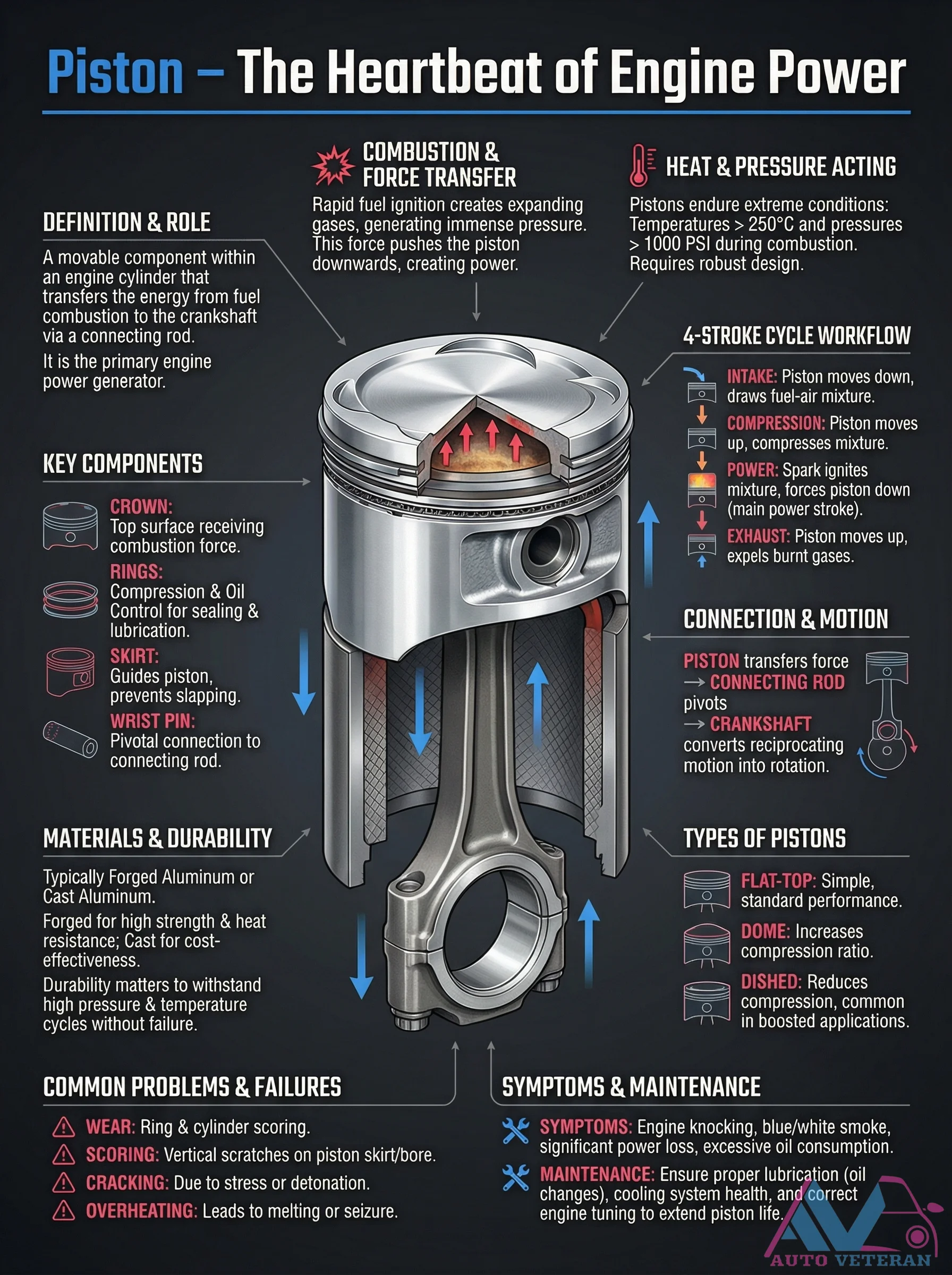
The piston serves as the primary power generator within an engine, transferring energy from rapid fuel combustion to the crankshaft via the connecting rod. During the four stroke cycle, it moves through intake, compression, power, and exhaust phases, enduring extreme temperatures up to 250°C and pressures exceeding 1000 PSI. Key components include the crown receiving combustion force, compression and oil control rings for sealing and lubrication, the skirt for guidance, and the wrist pin for pivotal connection. Common failures like scoring, cracking, and overheating can lead to symptoms such as engine knocking, blue or white smoke, and significant power loss. Proper maintenance through lubrication, cooling system health, and correct engine tuning is essential for durability.
Piston Engine Operation, Structure, and Function
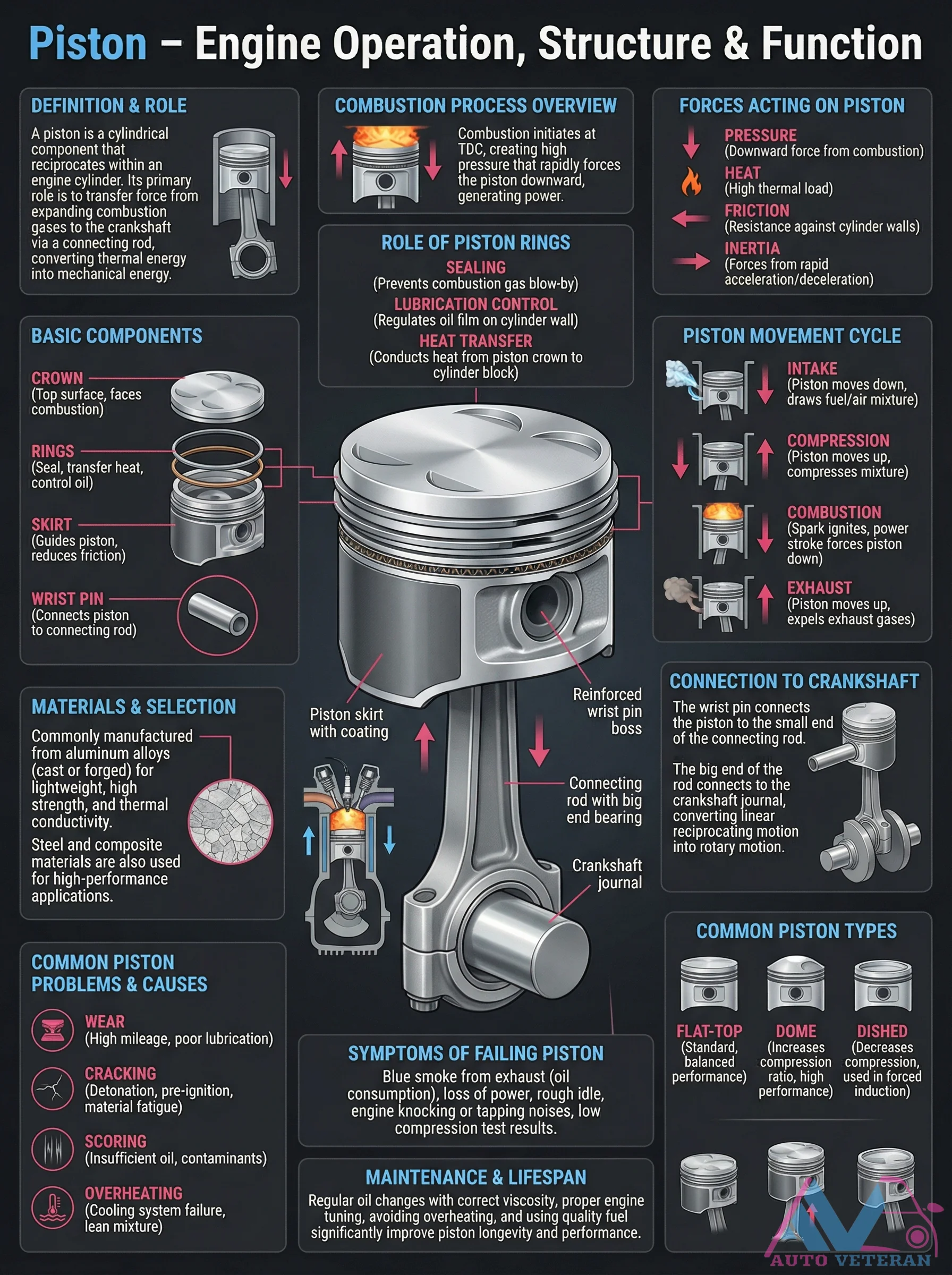
This detailed breakdown covers the fundamental operation of piston engines, explaining how cylindrical pistons reciprocate within engine cylinders to convert thermal energy from combustion into mechanical energy. The content explores the combustion process that initiates at Top Dead Center, generating high pressure that forces the piston downward through the connecting rod to the crankshaft. Key components like the piston crown, compression rings, skirt, and wrist pin are examined for their roles in sealing, heat transfer, lubrication, and motion conversion. Various forces acting on pistons are detailed, including combustion pressure, heat, friction, and inertia. Common piston types such as flat top, dome, and dished designs are compared for different compression ratios and performance applications. Materials selection focuses on aluminum alloys for lightweight strength and thermal conductivity, with steel and composites for high performance applications. The guide also covers maintenance practices for optimal piston lifespan, including proper oil viscosity, engine tuning, and overheating prevention.
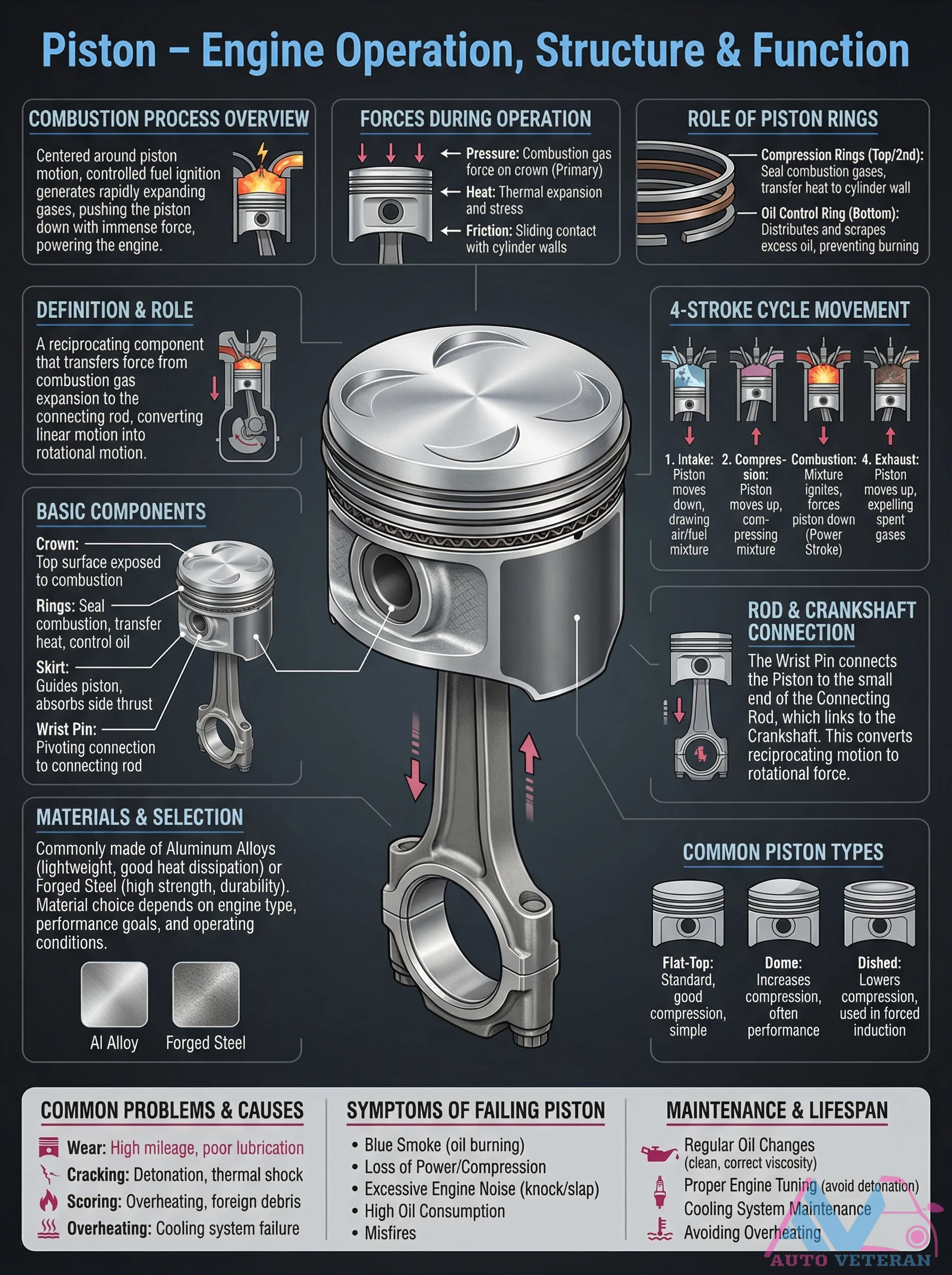
Piston Engine Operation, Structure, and Function Overview
This detailed explanation covers the fundamental aspects of piston engine mechanics, including the combustion process that generates power through rapidly expanding gases pushing the piston downward. It describes the piston's role as a reciprocating component that transfers force from combustion to the connecting rod, converting linear motion into rotational motion. The four-stroke cycle is outlined with intake, compression, combustion, and exhaust phases. Key components like the crown exposed to combustion, rings that seal gases and control oil, and the skirt that guides the piston are explained. Materials selection between aluminum alloys for lightweight heat dissipation and forged steel for strength is discussed, along with common piston types such as flat-top, dome, and dished designs. The overview also addresses common problems like wear, cracking, and scoring, with symptoms including blue smoke, power loss, and excessive noise, while emphasizing maintenance through regular oil changes, proper tuning, and cooling system care.
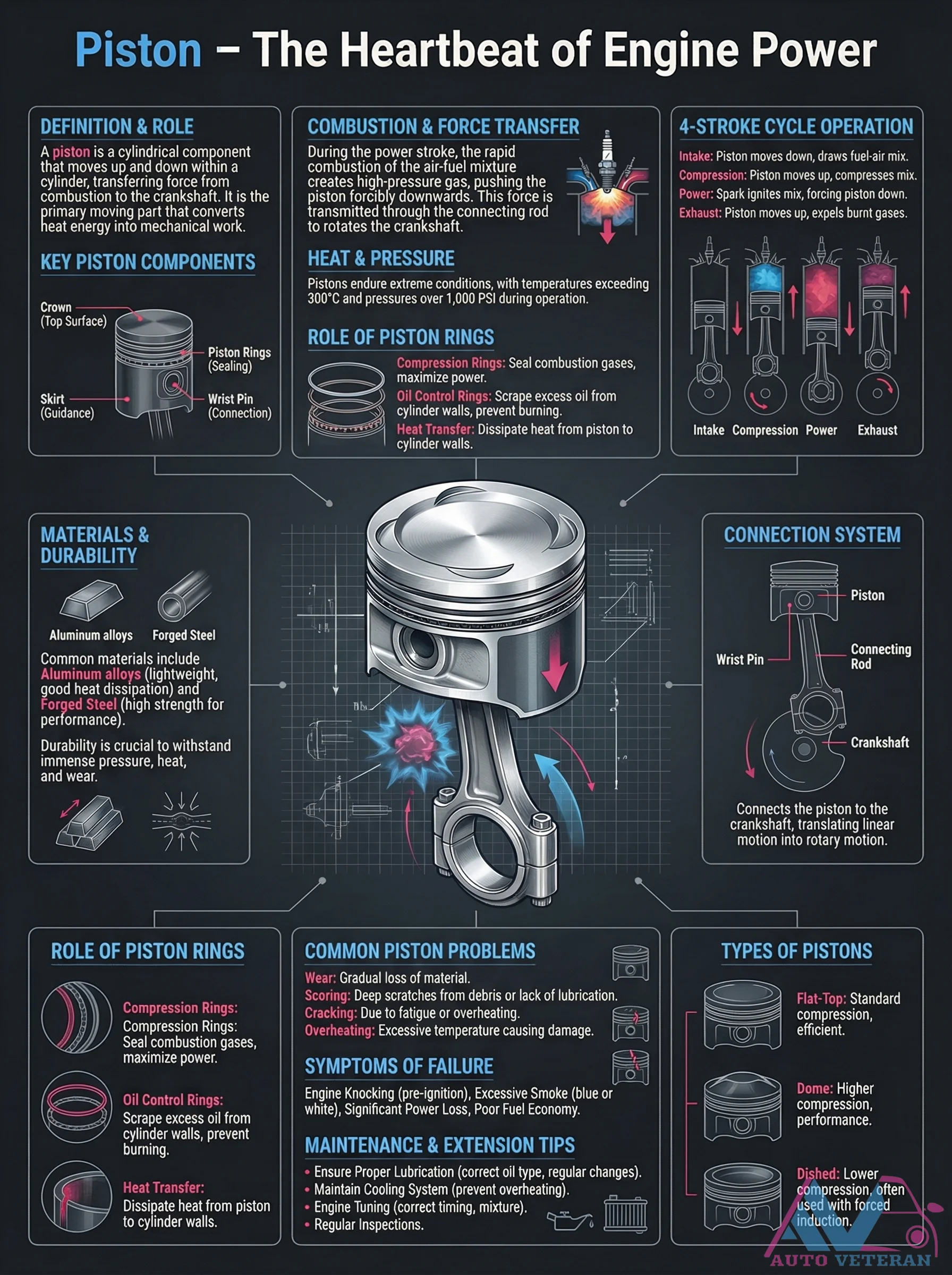
Piston Role in Engine Combustion and Force Transfer
The piston serves as the primary moving part within an engine cylinder, converting heat energy into mechanical work through its up and down motion. During the four stroke cycle, it draws in the air fuel mixture, compresses it, harnesses power from combustion, and expels exhaust gases. This component endures extreme conditions, with temperatures exceeding 300 degrees and pressures over 1000 PSI, necessitating materials like aluminum alloys for lightweight heat dissipation and forged steel for high strength. Key components include compression rings to seal combustion gases and maximize power, oil control rings to scrape excess oil from cylinder walls, and a wrist pin connecting to the rod for translating linear motion into rotary motion via the crankshaft. Common problems such as wear, scoring, cracking, and overheating can lead to symptoms like engine knocking, excessive smoke, power loss, and poor fuel economy. Maintenance tips emphasize proper lubrication, cooling system upkeep, engine tuning, and regular inspections to ensure durability and optimal performance.
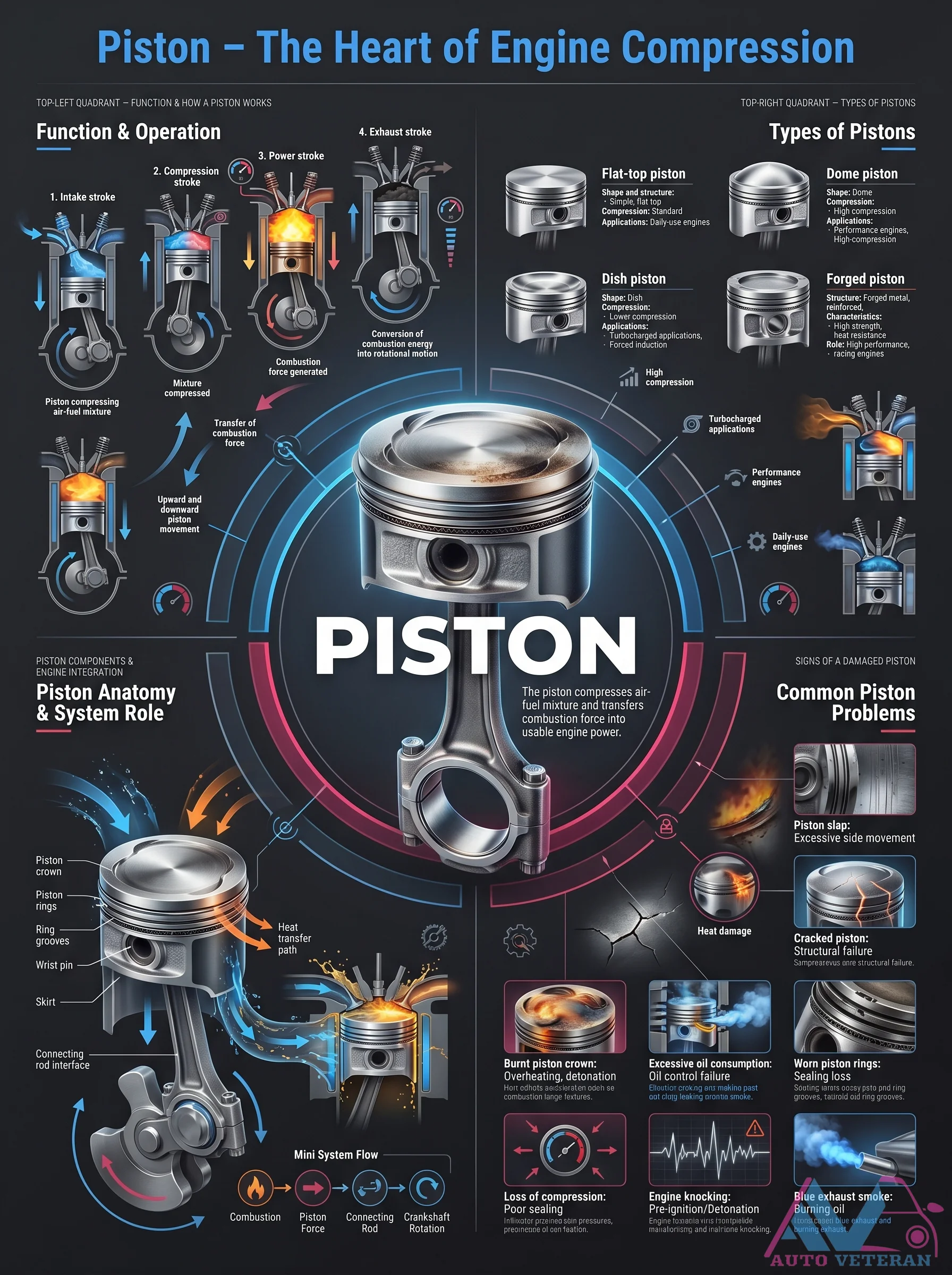
Piston Types & Anatomy Overview
The piston is the heart of engine compression, translating combustion force into rotational power. This diagram details piston anatomy including rings, wrist pin, skirt, and crown, and contrasts flat top, dome, dish, and forged piston designs. It also highlights common failure modes such as piston slap, cracked or burned pistons, worn rings, and engine knocking caused by pre-ignition or detonation. Understanding these elements helps diagnose compression loss, oil consumption, and blue exhaust smoke.
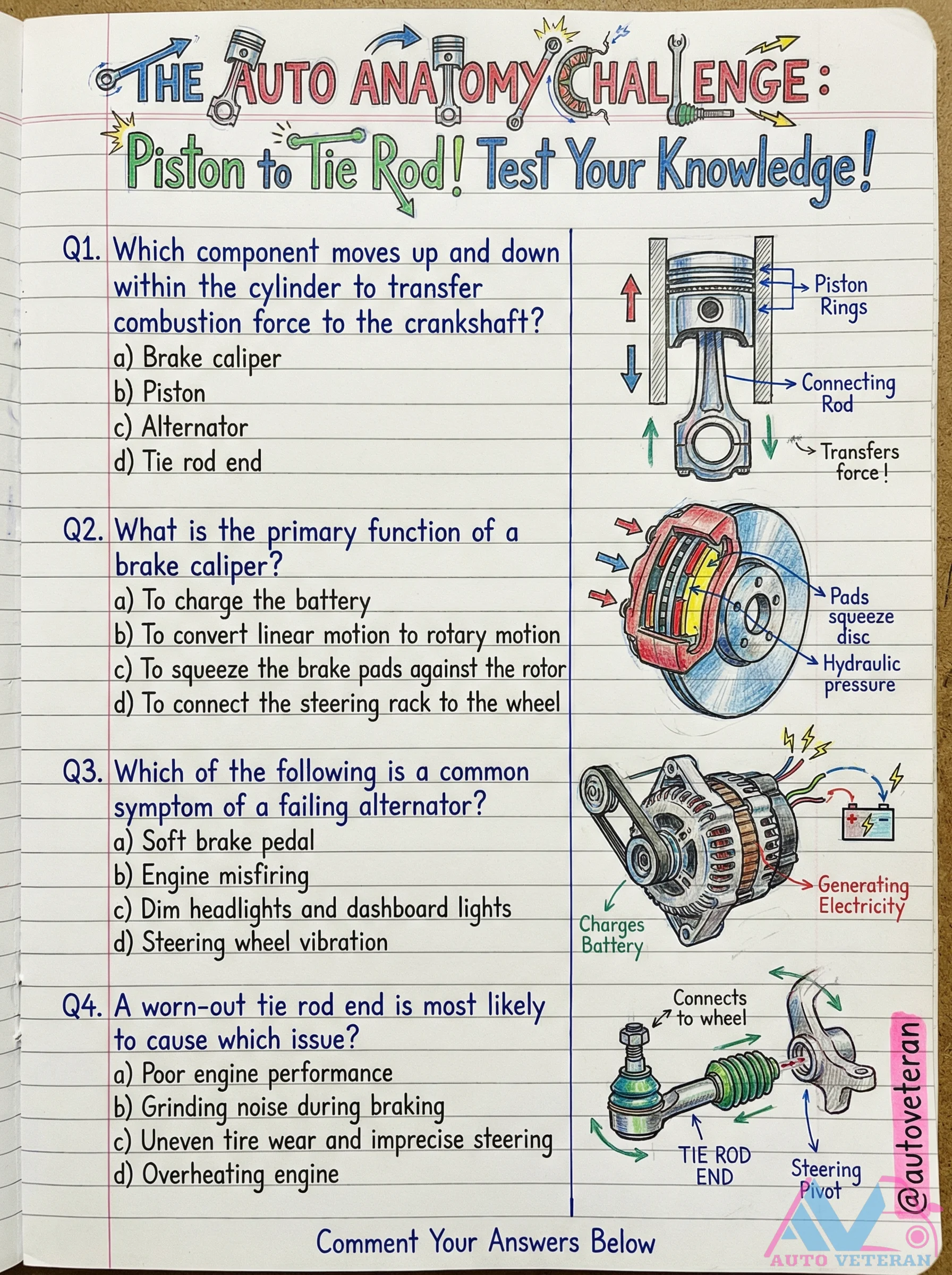
Piston, Brake, Alternator, and Tie Rod Quiz
Test your automotive knowledge with this quiz covering fundamental components: pistons that transfer combustion force via connecting rods, brake calipers that squeeze pads against rotors using hydraulic pressure, alternator failure symptoms like dim lights and battery issues, and worn tie rod ends causing imprecise steering and grinding noises. Identify key functions and common problems to master basic vehicle systems.
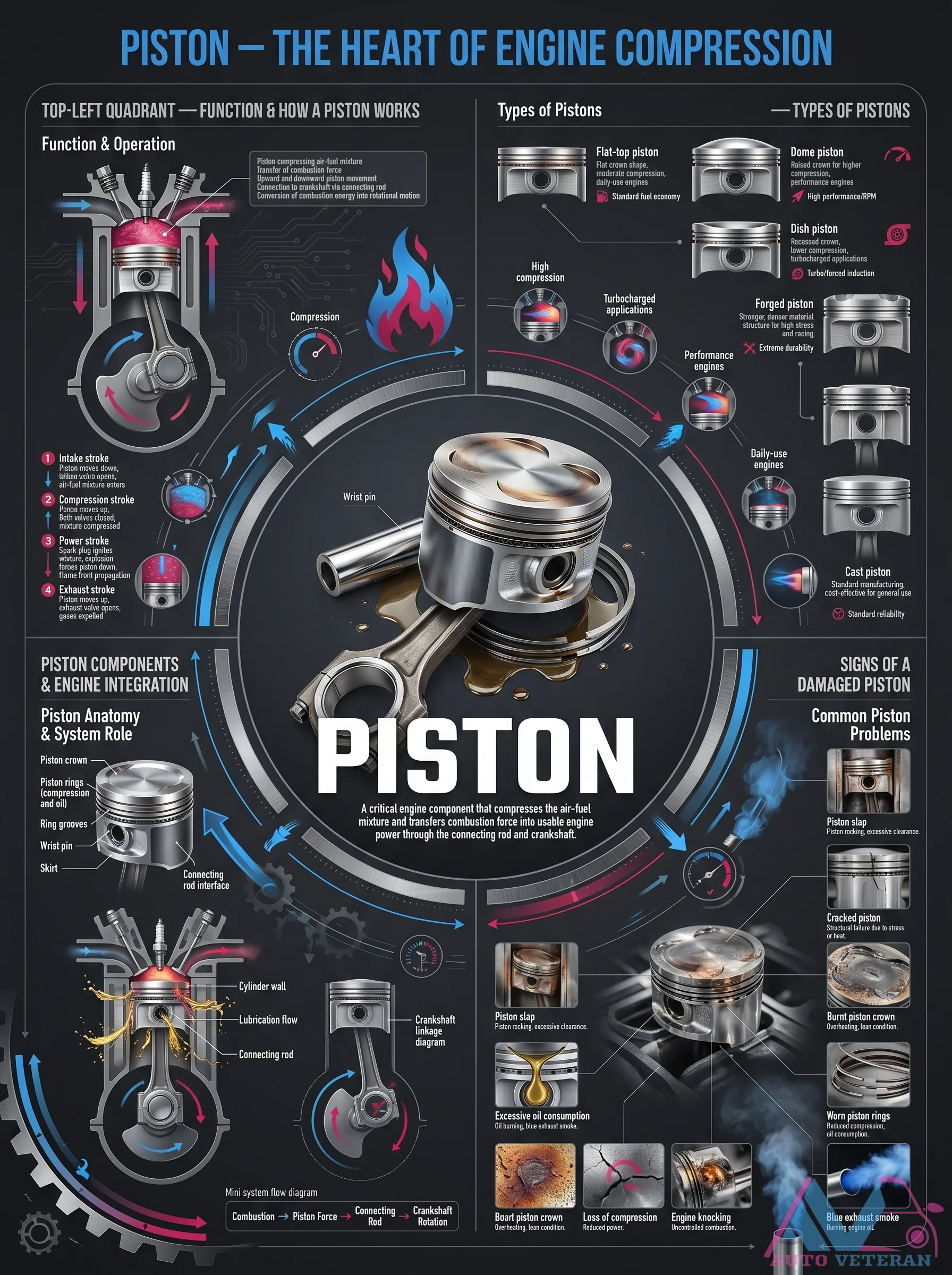
Piston: The Heart of Engine Compression
The piston is the vital component that compresses the air-fuel mixture within the cylinder, converting combustion force into rotational energy through the connecting rod and crankshaft. Different piston types such as flat top, dome, dish, and forged variants serve specific engine needs from high compression to turbocharged applications. Key piston components include the crown, rings, skirt, and wrist pin, each playing a role in sealing, lubrication, and heat transfer. Common signs of a damaged piston include loss of compression, excessive oil consumption, and knocking noises. Proper integration with the cylinder wall, rings, and lubrication system ensures efficient power delivery and engine longevity.
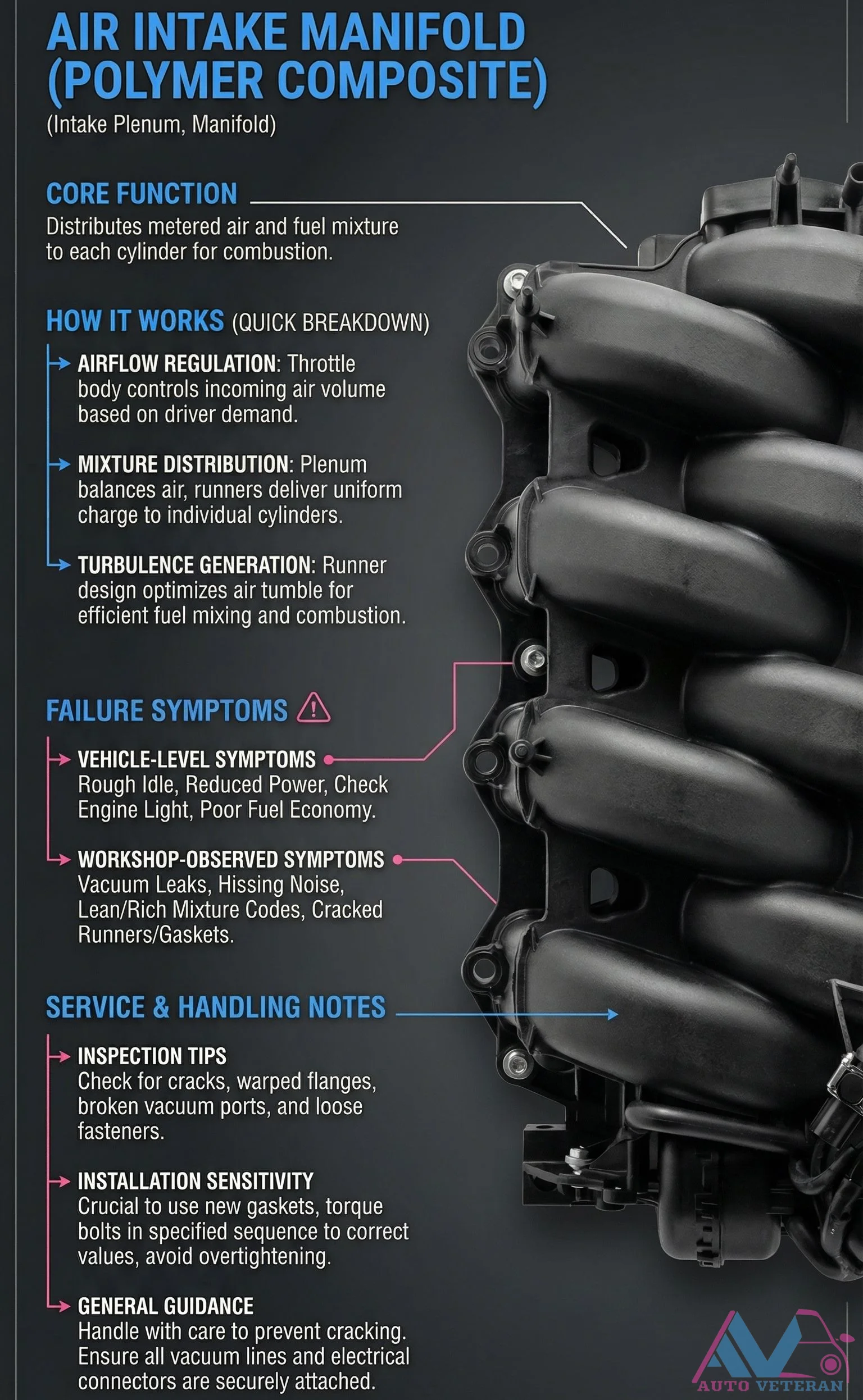
Polymer Composite Intake Manifold Failure Symptoms
When a polymer composite intake manifold develops issues, vehicle level symptoms include rough idle, reduced power, check engine light activation, and poor fuel economy. Workshop observed symptoms reveal vacuum leaks with hissing noises, lean or rich mixture diagnostic trouble codes, and physical damage such as cracked runners or gaskets. Proper inspection involves checking for cracks, warped flanges, broken vacuum ports, and loose fasteners. Installation requires new gaskets, precise torque sequence adherence, and careful handling to prevent cracking while ensuring all vacuum lines and electrical connectors are securely attached.

Popular Volkswagen Models and Their Characteristics
This overview highlights several iconic Volkswagen models, including the Golf and Polo hatchbacks known for their compact design and premium features; the Passat and Jetta sedans offering elegant styling, comfort, and long-distance cruising capabilities; the Tiguan and Touareg SUVs with versatile performance, advanced technology, and connectivity; and the Arteon and Amarok, combining sleek design with powerful performance and utility. Each model showcases Volkswagen's commitment to quality, innovation, and driving experience across different vehicle segments.

Popular Volkswagen Models Overview and Features
Volkswagen offers a diverse lineup of popular models, each with distinct characteristics. The Golf is an iconic hatchback known for its balanced performance and efficiency. The Polo is a compact supermini that delivers surprising agility and practicality. The Passat provides refined comfort as a spacious executive sedan or wagon. The Jetta stands out as a stylish compact sedan with reliability and fuel economy. The Tiguan serves as a versatile compact SUV with a spacious interior. The Touareg is a premium luxury SUV featuring advanced connectivity and technology. The Arteon combines sleek design with dynamic performance in a fastback style. The Amarok is a robust pickup truck offering strong towing capacity and off road prowess.

Porsche Icons Timeline 1977-2013
From the 1977 930 SE Flachbau to the 2013 918, this timeline chronicles Porsche's evolution through legendary models like the 959, 993 GT1, 996 GT1, and Carrera GT; each carving its own place in automotive history with cutting-edge engineering and motorsport DNA.
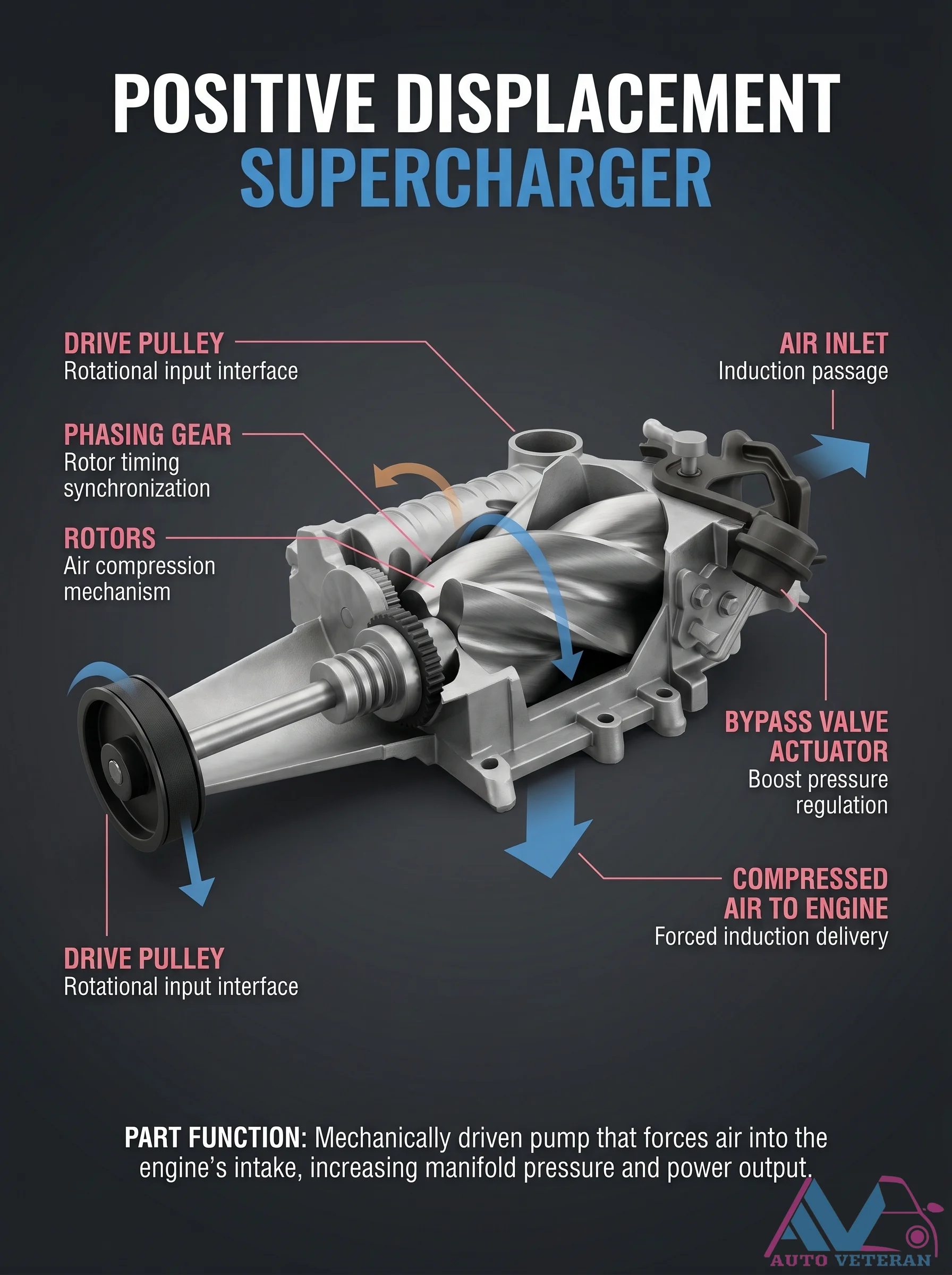
Positive Displacement Supercharger Anatomy
A positive displacement supercharger uses meshing rotors driven by a pulley to trap and compress air, then force it into the engine's intake manifold. Key components include the drive pulley providing rotational input, the air inlet inducting ambient air, phasing gears synchronizing rotor timing, and a bypass valve actuator for regulating boost pressure. The system dramatically increases manifold pressure and power output.
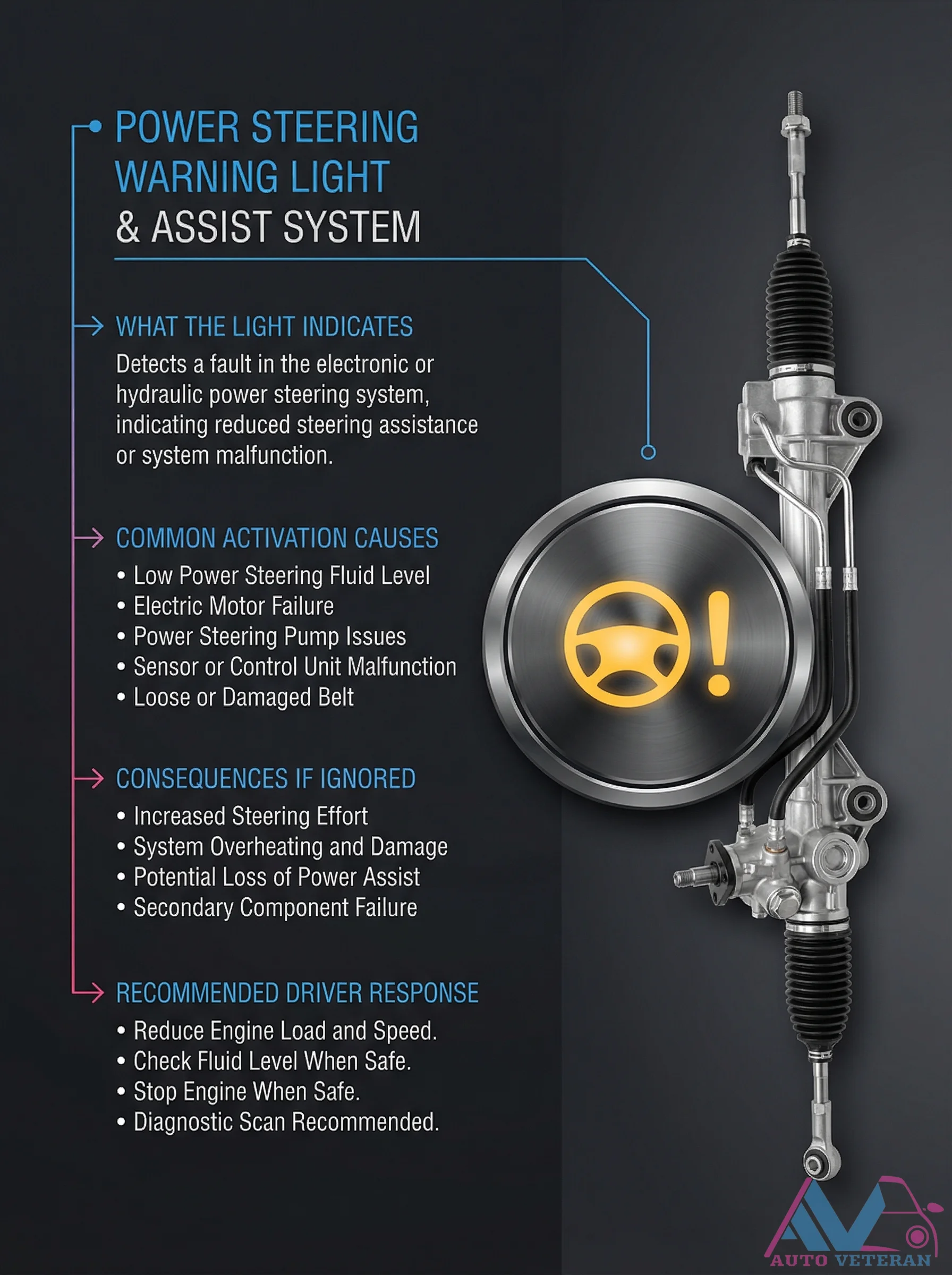
Power Steering Warning Light Causes and Driver Response
When the power steering warning light illuminates on your dashboard, it signals a fault in the electronic or hydraulic power steering system that requires immediate attention. This warning indicates reduced steering assistance or a complete system malfunction, with common activation causes including low power steering fluid level, electric motor failure, power steering pump issues, sensor or control unit malfunctions, and loose or damaged belts. Ignoring this warning can lead to increased steering effort, system overheating and damage, potential loss of power assist, and secondary component failure. The recommended driver response involves reducing engine load and speed, checking fluid levels when safe, stopping the engine when safe, and obtaining a diagnostic scan to identify the specific issue.
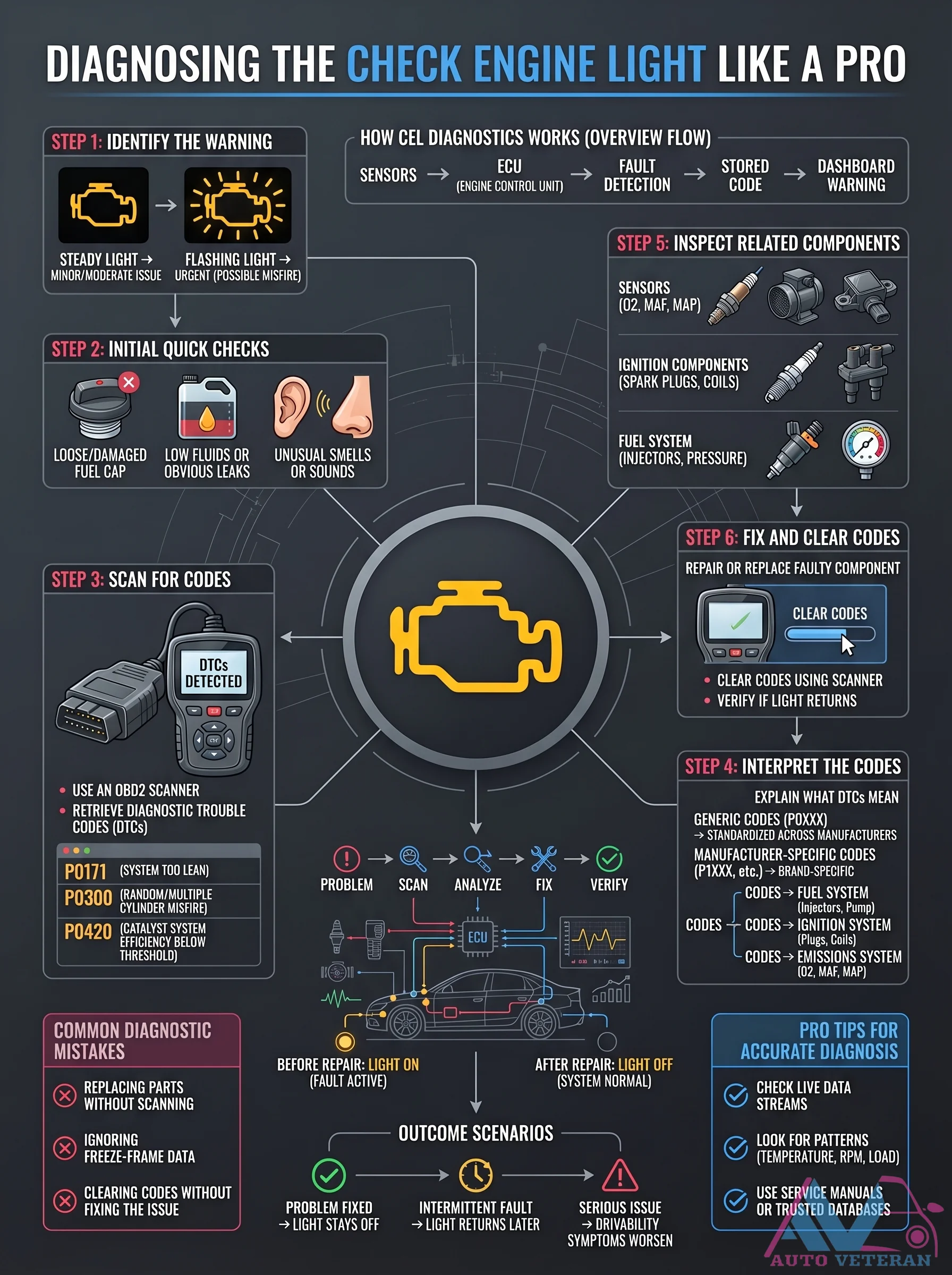
Pro Steps for Diagnosing Check Engine Light Issues
Master the systematic approach to diagnosing check engine light problems like a professional technician. Start by identifying whether the light is steady or flashing, which indicates minor or urgent issues like possible misfires. Perform initial quick checks on ignition components such as spark plugs and coils, inspect the fuel system including injectors and pressure, and look for obvious leaks or unusual smells. Use an OBD2 scanner to retrieve diagnostic trouble codes, distinguishing between generic codes like P0171 for system too lean and manufacturer-specific codes. Interpret these codes to pinpoint problems in systems like fuel, ignition, or emissions, with examples such as P0300 for random misfire or P0420 for catalyst efficiency below threshold. Inspect related components based on code analysis, then repair or replace faulty parts. Clear codes using the scanner and verify if the light returns, ensuring the issue is resolved. Avoid common mistakes like replacing parts without scanning, ignoring live data streams, or clearing codes without fixing the problem. Utilize service manuals and trusted databases for accurate diagnosis, and monitor outcomes to confirm the system returns to normal.