Interactive Explorer
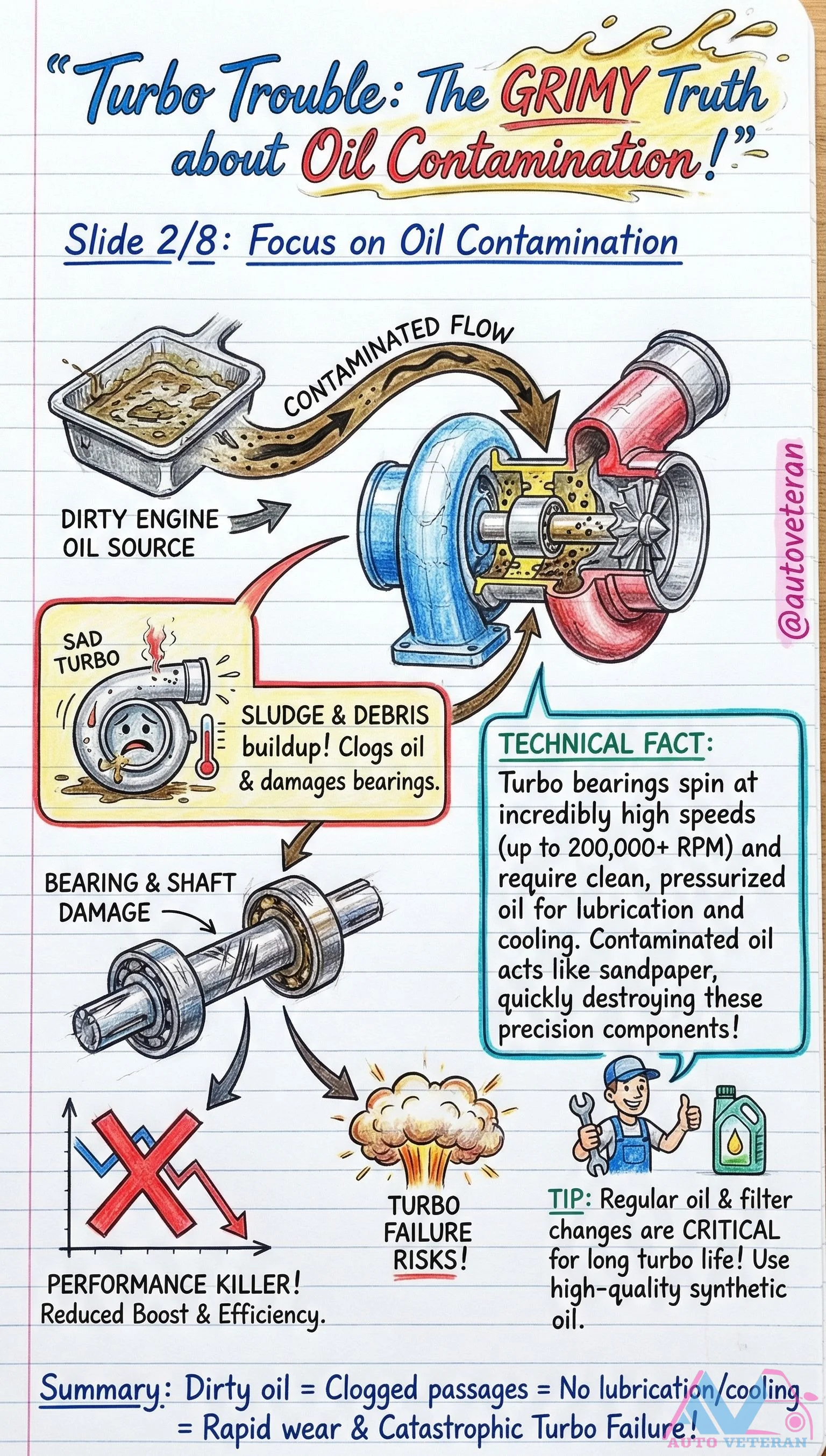
How Contaminated Oil Destroys Turbo Bearings
Dirty engine oil with sludge and debris buildup acts like sandpaper on turbo bearings, which spin at over 200,000 RPM; this contamination clogs oil passages, eliminates lubrication and cooling, and leads to rapid wear, reduced boost efficiency, and catastrophic turbo failure. Regular oil and filter changes with high-quality synthetic oil are critical to prevent this performance killer.
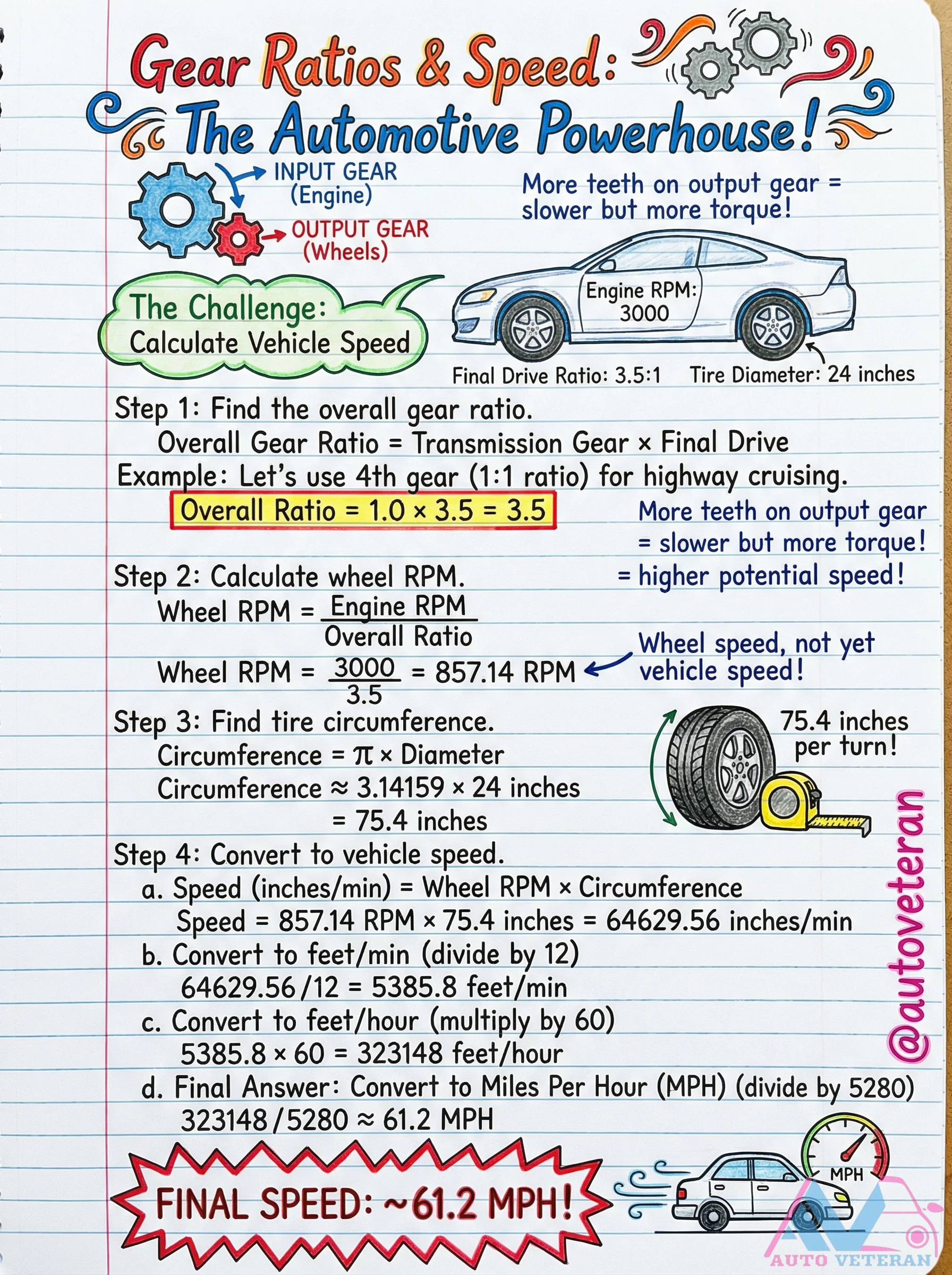
How to Calculate Vehicle Speed Using Gear Ratios
This practical guide demonstrates the step-by-step calculation of vehicle speed based on engine RPM, gear ratios, and tire dimensions. Starting with a 3000 RPM engine speed, a 1:1 transmission gear ratio, and a 3.5:1 final drive ratio, the process calculates wheel RPM, tire circumference for 24-inch tires, and converts the result to miles per hour. The final speed of approximately 61.2 MPH illustrates how gear ratios and tire size directly impact cruising performance, providing a clear example for automotive enthusiasts and DIY mechanics to understand powertrain dynamics.
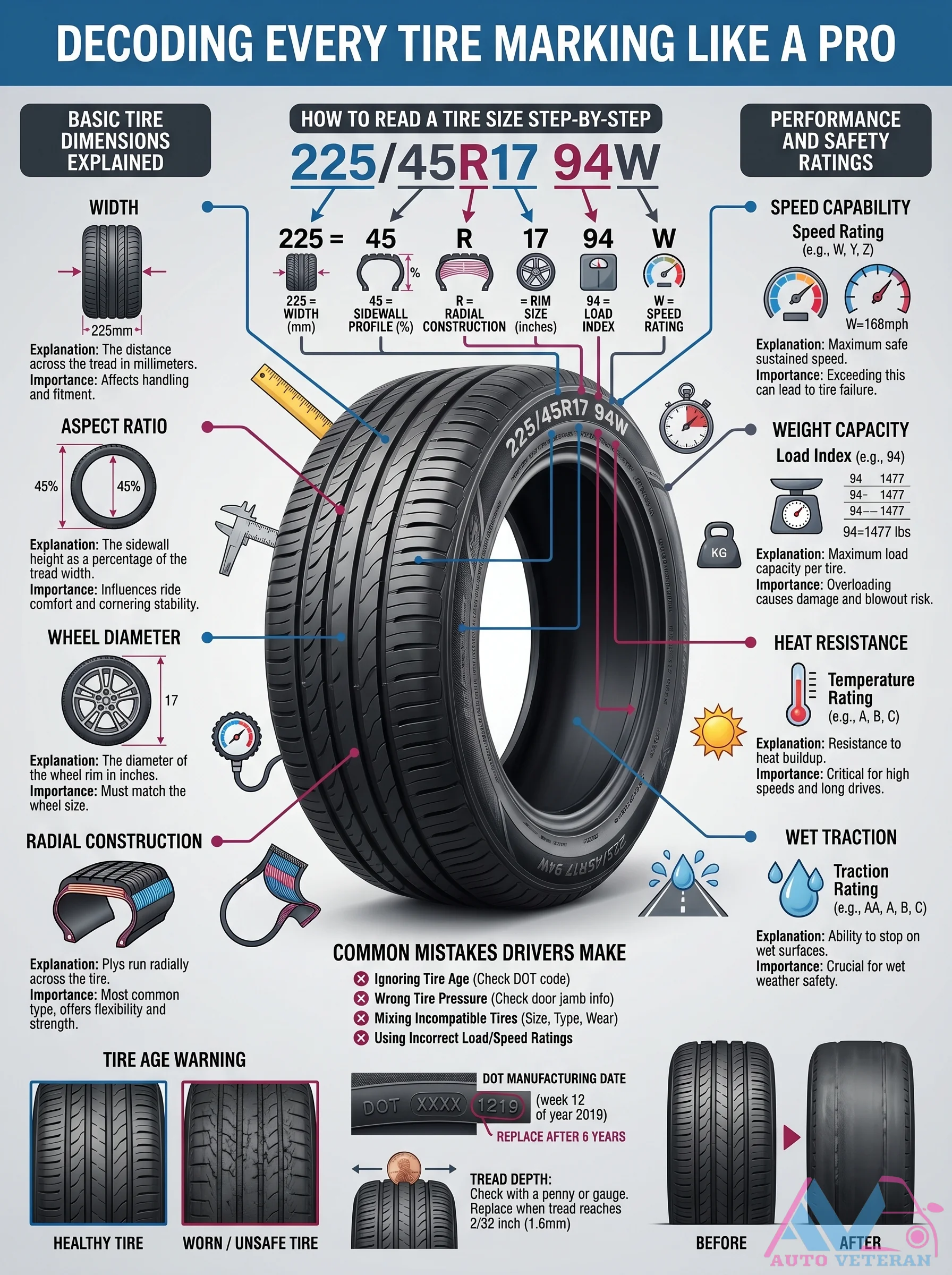
How to Read Tire Size: Step-by-Step Guide
Master the art of decoding every marking on your tire sidewall. This guide breaks down the 225/45R17 94W size, explaining each element: tread width in millimeters, aspect ratio as a percentage of width, radial construction, wheel diameter in inches, load index, and speed rating. It covers performance dimensions like profile height, safety factors including load capacity and temperature rating, and wet traction grades. Also includes common driver mistakes such as ignoring tire age (check DOT code, replace after 6 years), wrong tire pressure, mixing incompatible tires, and incorrect load or speed ratings. Tread depth checks with a penny or gauge are explained, noting replacement when tread reaches 2/32 inch.
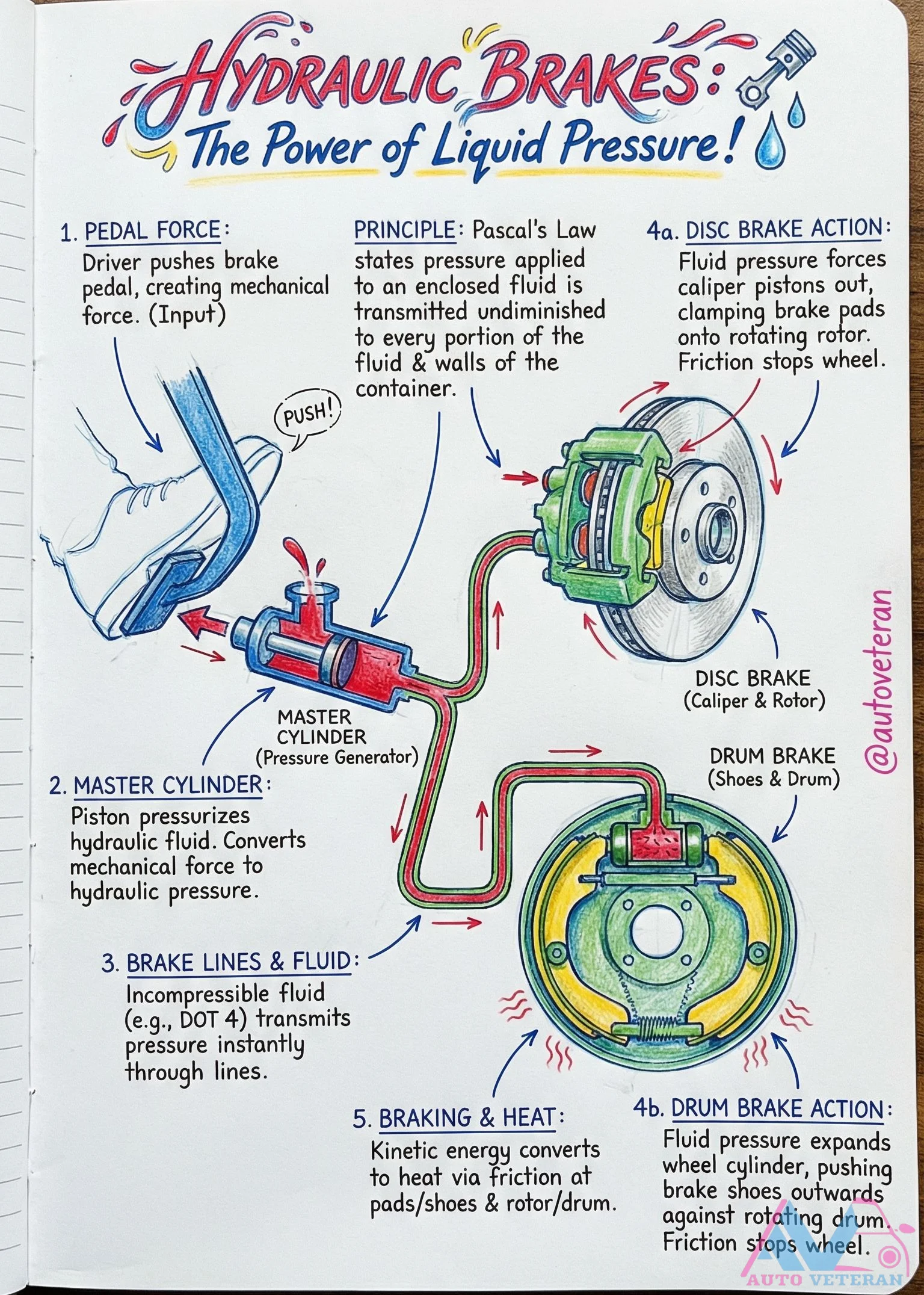
Hydraulic Brake System Pascal's Law Principle
The hydraulic brake system operates on Pascal's Law, where pedal force applied to an enclosed fluid creates pressure transmitted undiminished throughout the system; this pressure activates master cylinder pistons that convert mechanical force into hydraulic pressure, sending incompressible DOT 4 fluid through brake lines to expand caliper pistons in disc brakes or wheel cylinders in drum brakes, forcing friction materials against rotating components to convert kinetic energy into heat and stop the vehicle.
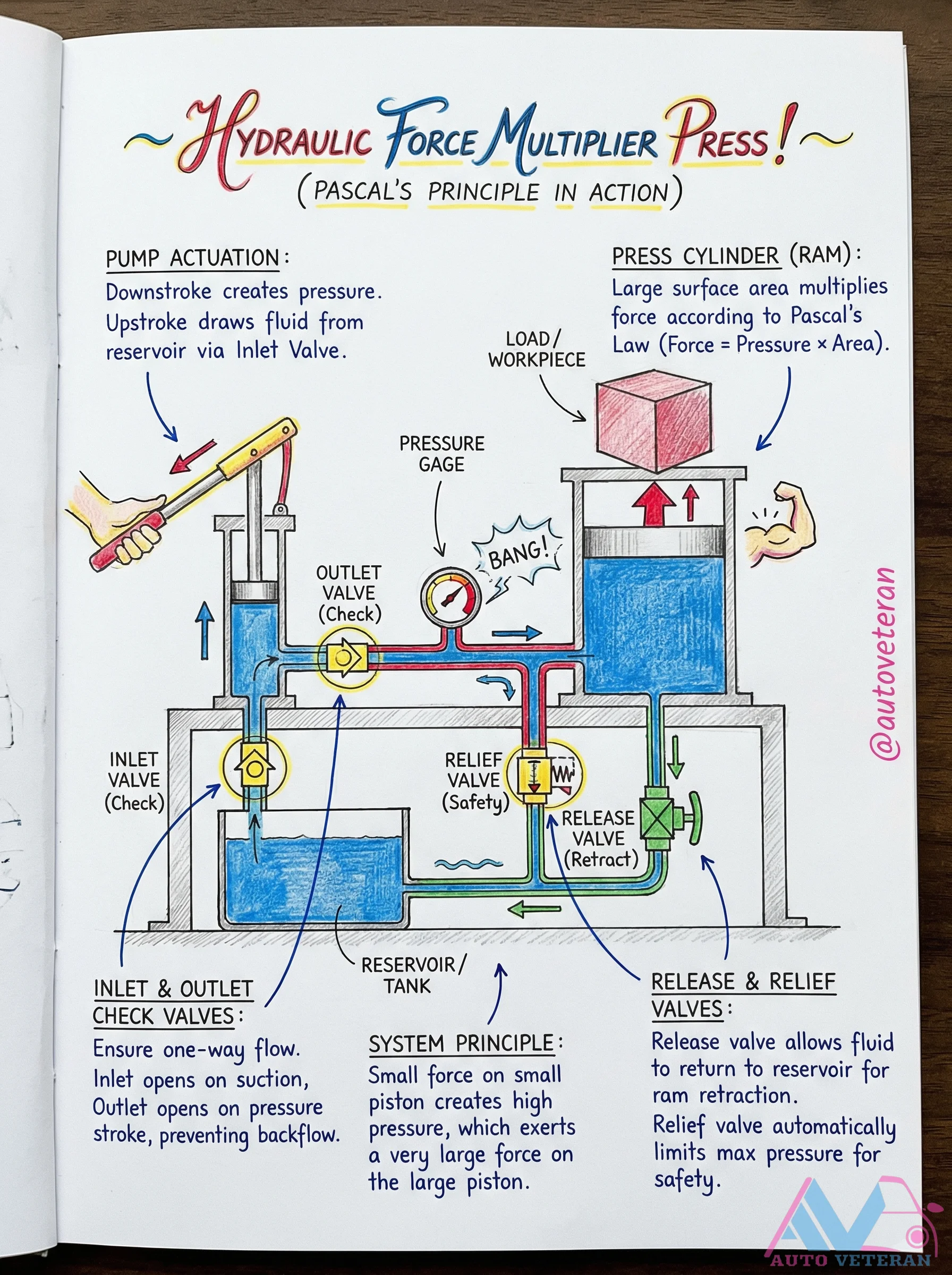
Hydraulic Pump Actuation via Pascal's Principle
A hydraulic system demonstrates Pascal's principle in action, where a small force applied to a small piston creates high pressure that multiplies force on a large ram cylinder. The downstroke generates pressure to move a load, while the upstroke draws fluid from the reservoir through an inlet check valve. Key components include pressure gauges, outlet check valves, safety relief valves, and release valves for retraction, ensuring controlled one-way flow and system safety.