Interactive Explorer
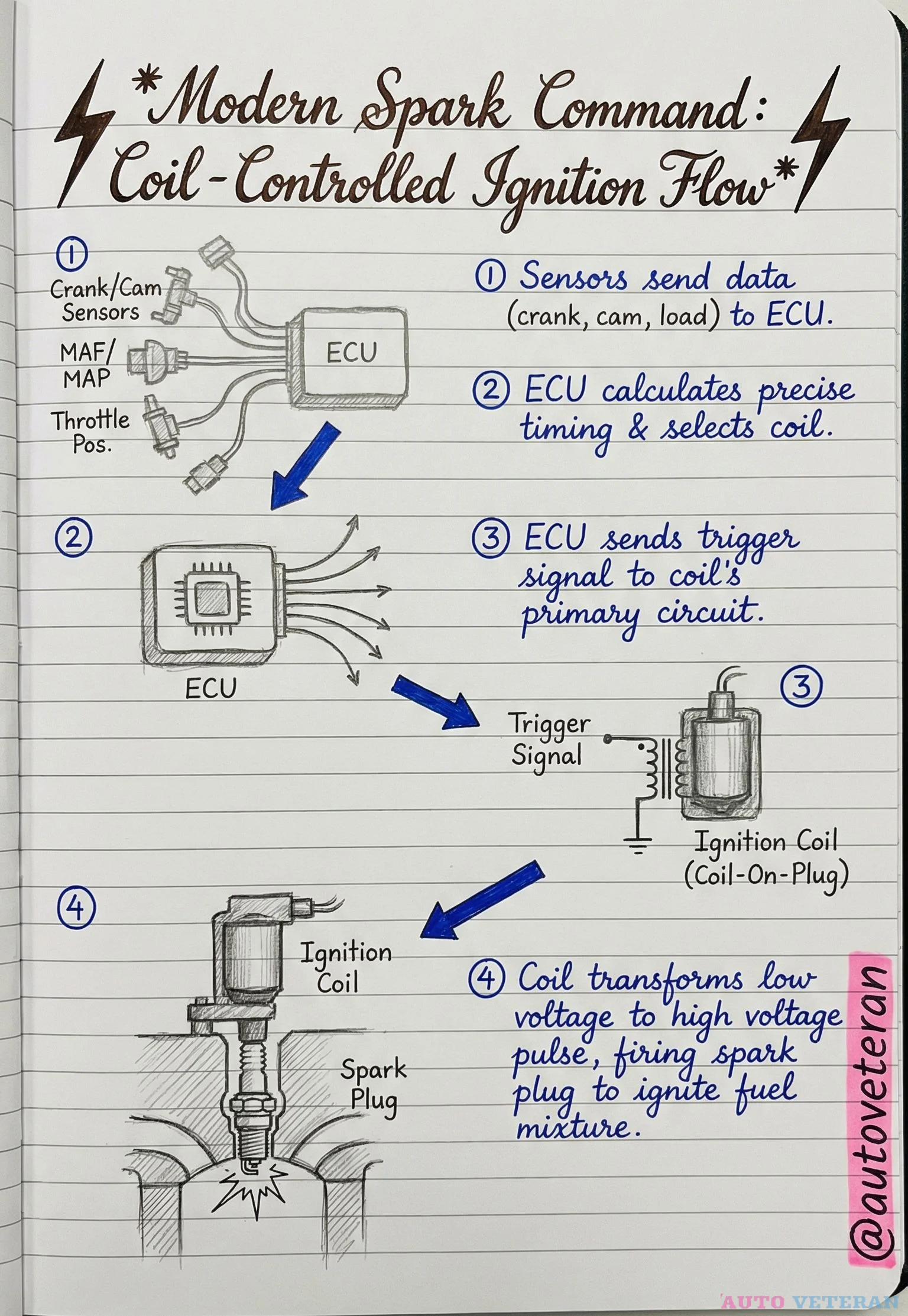
Modern Coil-on-Plug Ignition System Flow Diagram
This diagram illustrates the precise electronic flow of a modern coil-on-plug ignition system, where crank and cam sensors send data to the ECU, which calculates timing and triggers the coil to transform low voltage into a high voltage spark at the plug.
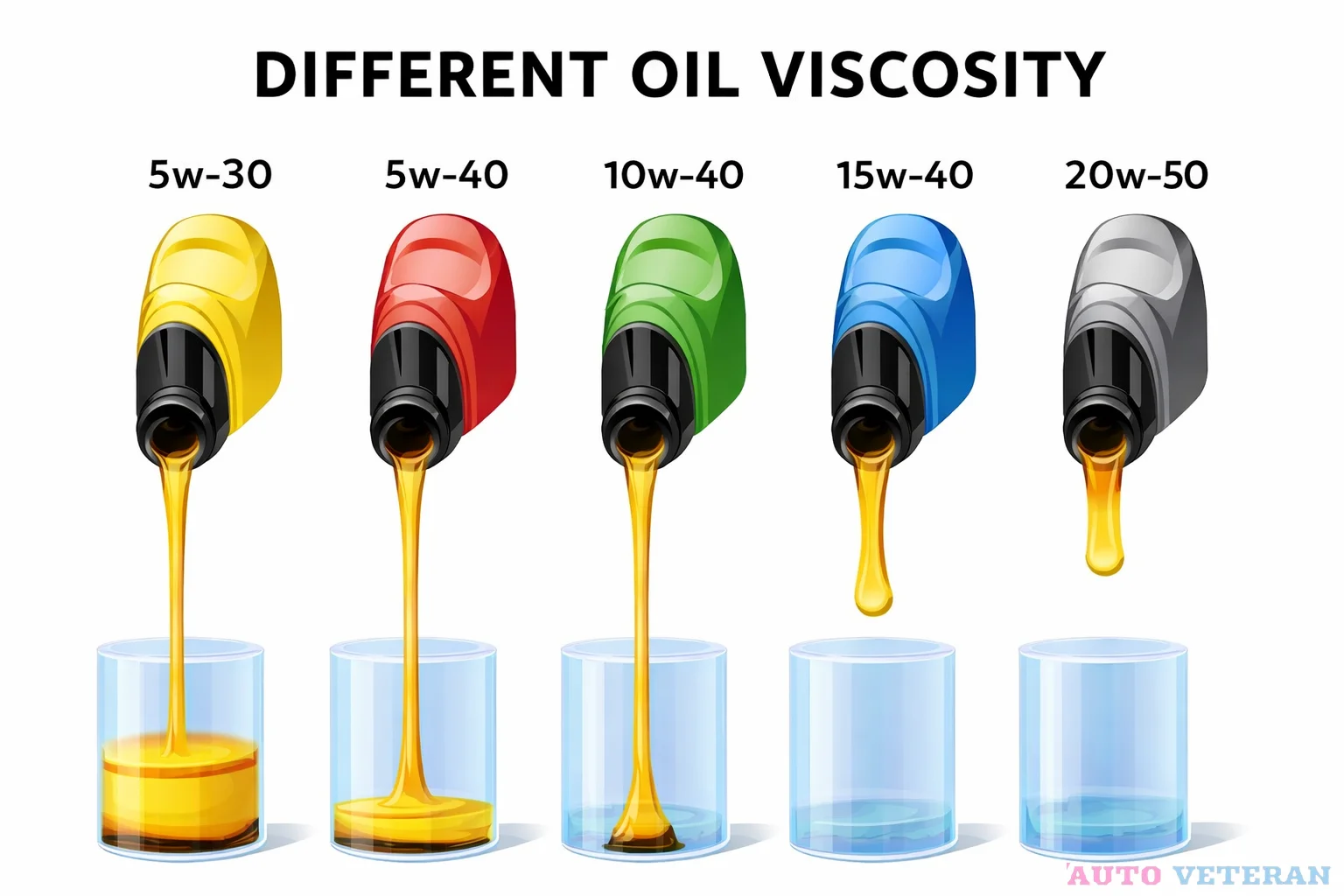
Motor Oil Viscosity Grades Chart
Understanding motor oil viscosity grades is crucial for engine protection; this chart illustrates common SAE ratings like 5W-30, 5W-40, 10W-40, 15W-40, and 20W-50, showing how these numbers indicate oil flow characteristics at cold and hot temperatures to help you select the right oil for your vehicle's operating conditions.
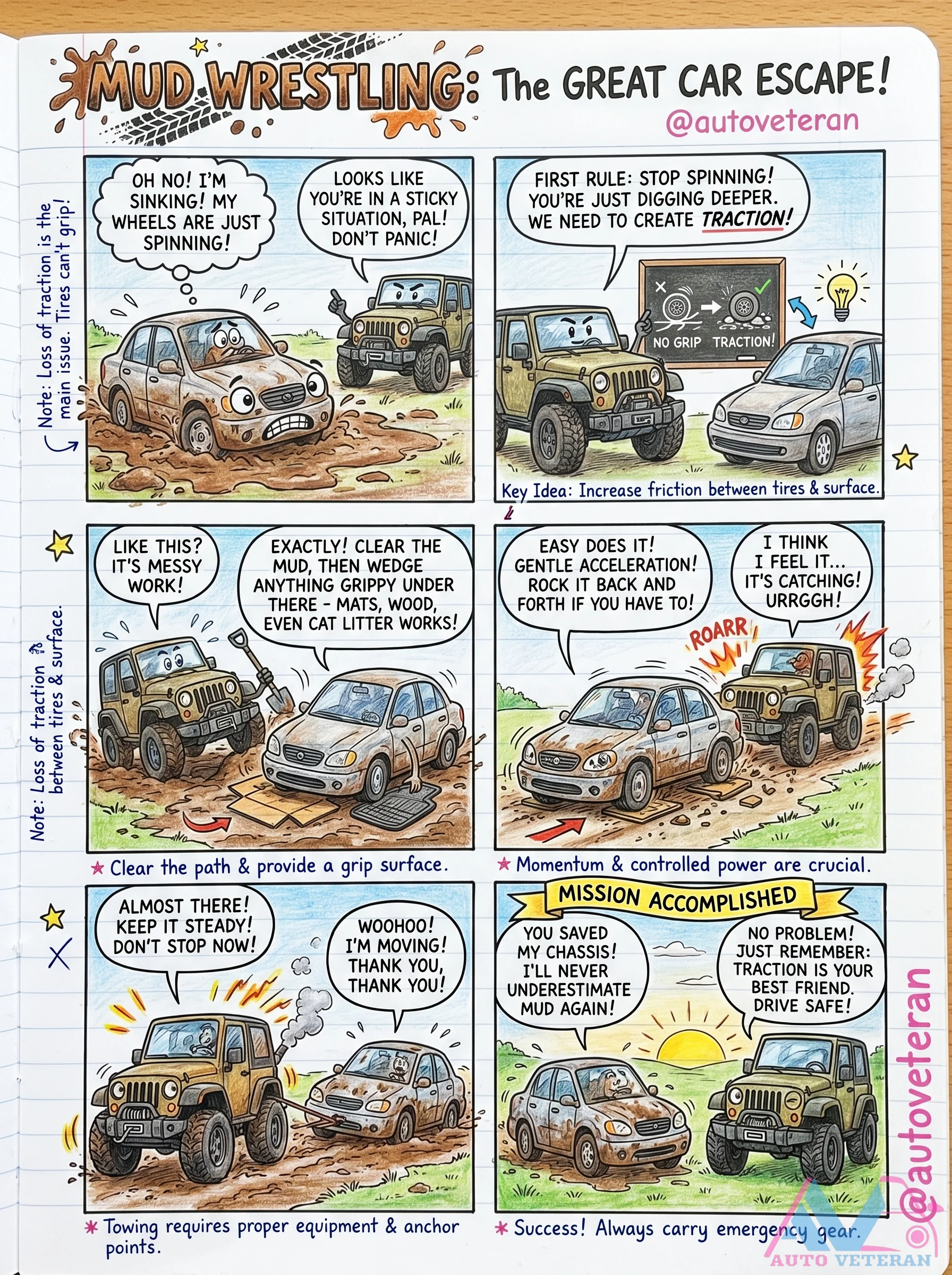
Mud Traction Recovery Guide
When your wheels are spinning in slick mud, stop gunning it. You are just digging deeper. The first rule is to stop spinning. You need to create traction not panic. Clear the mess from your tires and wedge something grippy underneath: mats, wood, or even cat litter. Rock the vehicle back and forth with gentle acceleration. Once you feel it catch, keep steady momentum until you are free. Remember that traction is your best friend. Always carry recovery gear and never underestimate mud.
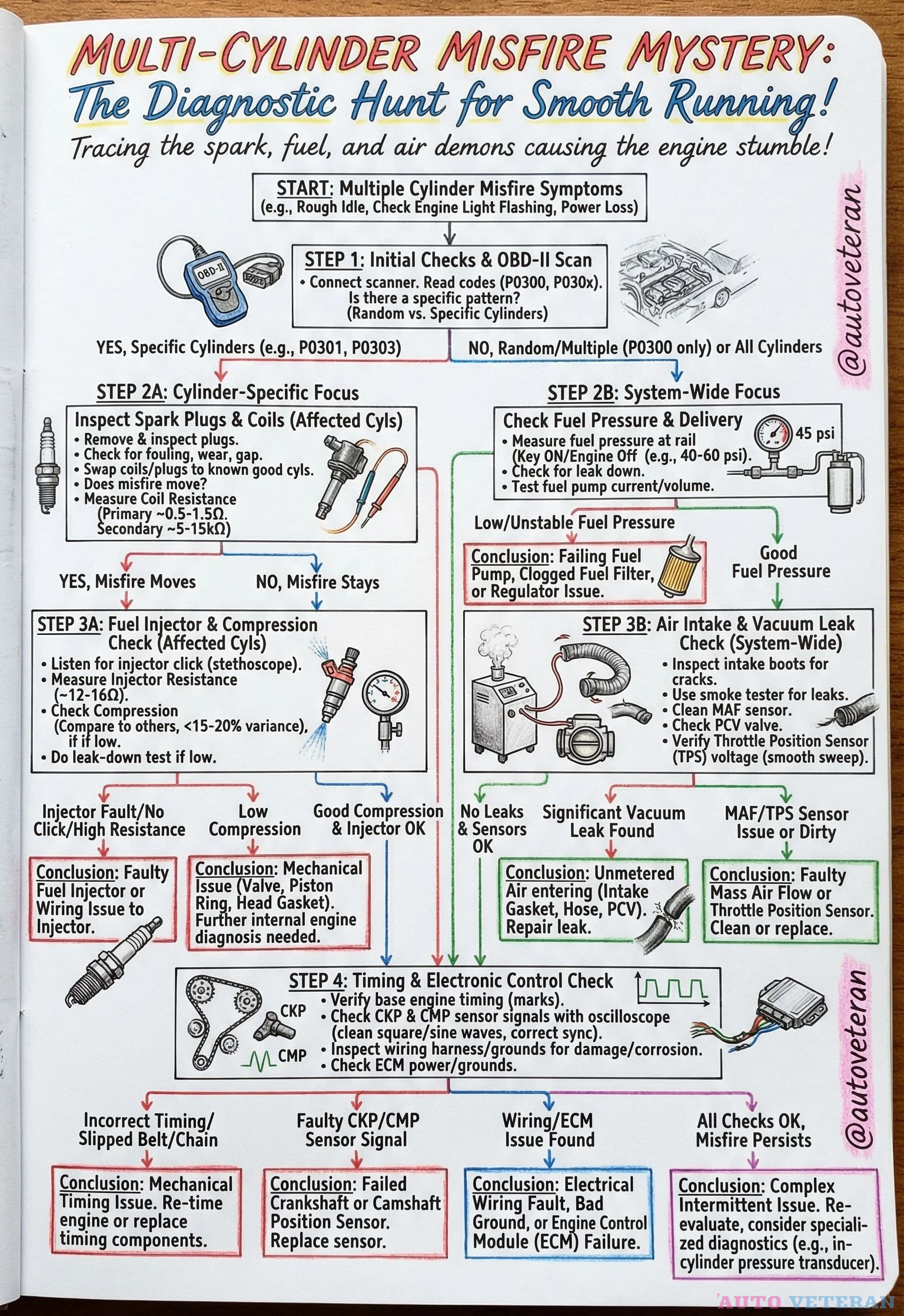
Multiple Cylinder Misfire Diagnostic Flowchart
This comprehensive diagnostic flowchart systematically guides mechanics through the complex process of identifying the root cause of multiple cylinder misfires. It begins with initial symptom recognition, including rough idle, flashing check engine lights, and power loss, then proceeds through OBD-II code interpretation to distinguish between random misfires and specific cylinder issues. The chart branches into detailed testing procedures for spark systems, fuel delivery, compression, air intake leaks, and sensor verification, culminating in timing and electronic control system checks for persistent cases. Each decision point leads to specific conclusions about failing components such as fuel pumps, injectors, intake gaskets, or crankshaft position sensors, providing a structured approach to resolving this common but challenging engine performance problem.
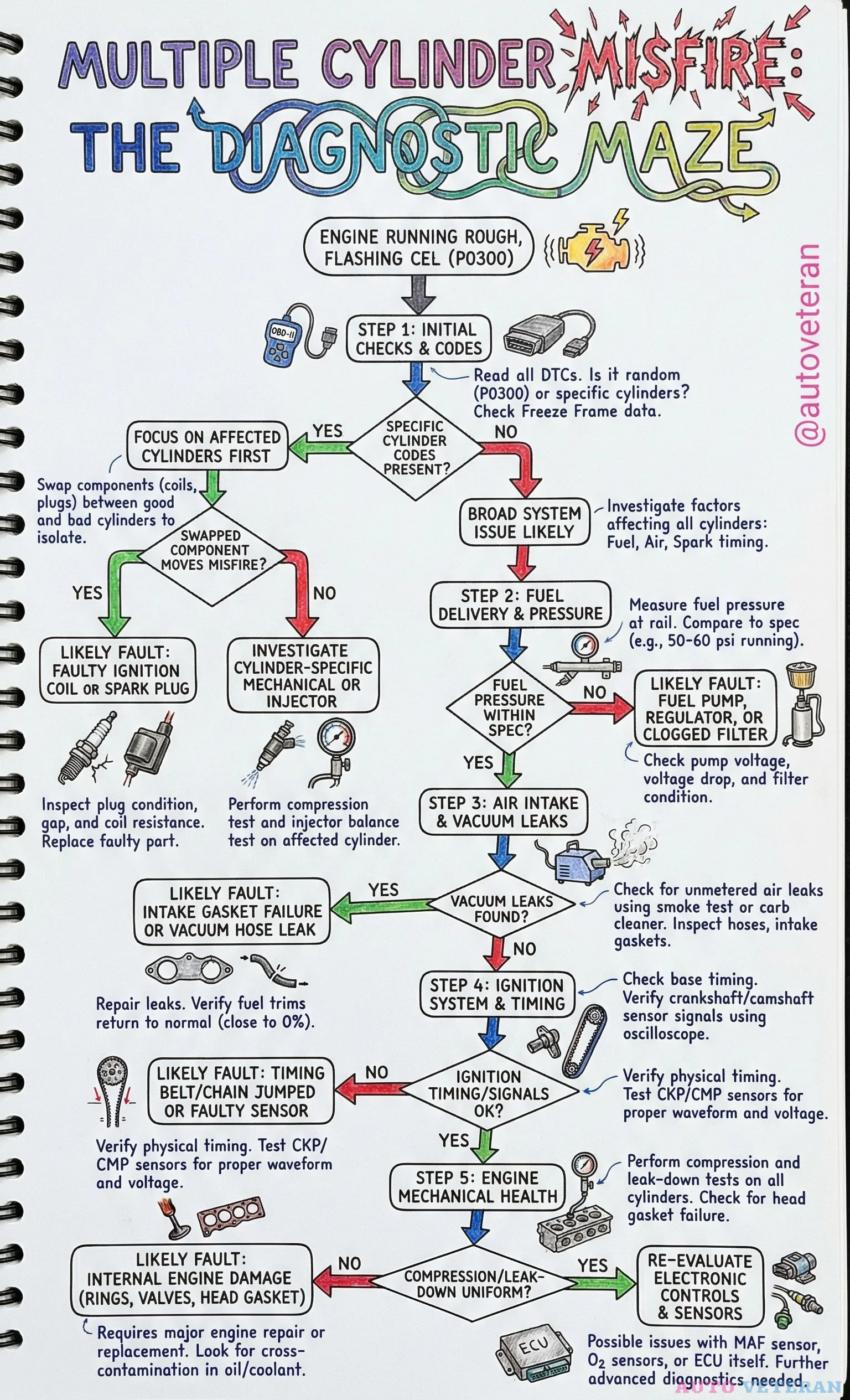
Multiple Cylinder Misfire Diagnostic Flowchart Steps
When your engine runs rough with a flashing Check Engine Light and P0300 code, this systematic diagnostic flowchart guides you through isolating the root cause. Begin by checking all diagnostic trouble codes and freeze frame data to determine if misfires are random or specific to certain cylinders. If codes are present, focus first on affected cylinders by swapping ignition components like coils and spark plugs between cylinders to see if the misfire moves. If no specific cylinder codes exist, investigate broader system issues affecting all cylinders, including fuel delivery by measuring rail pressure against specifications, checking for air intake vacuum leaks using smoke tests, verifying ignition system timing with an oscilloscope, and performing mechanical health checks like compression and leak-down tests. The flowchart helps identify likely faults such as faulty ignition components, fuel pump or regulator issues, intake gasket failures, timing chain jumps, or internal engine damage, leading to targeted repairs instead of guesswork.