Interactive Explorer
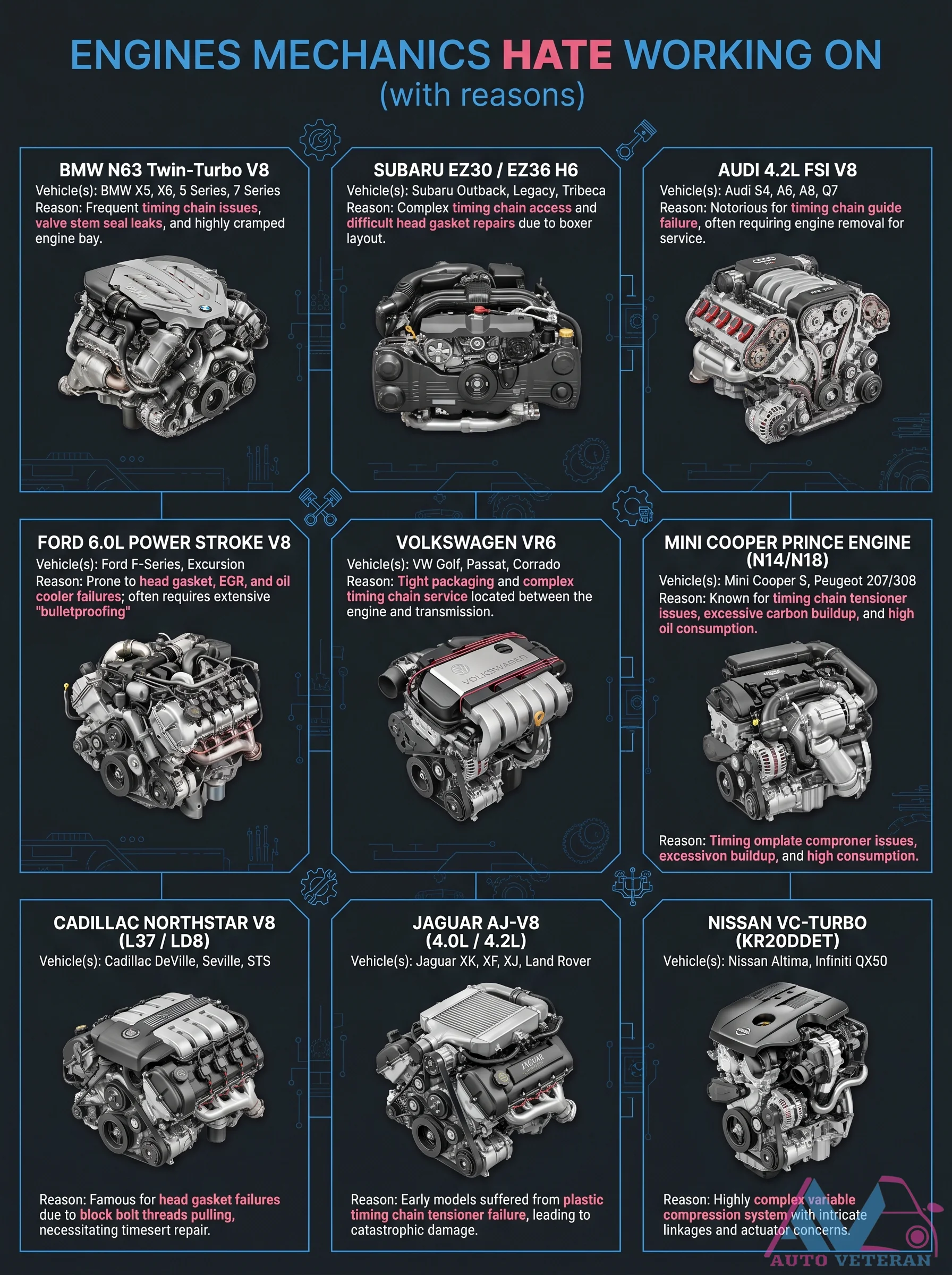
Engines Mechanics Hate Working On
This list details specific engines that automotive professionals frequently avoid due to notorious design flaws and repair complexities. The BMW N63 Twin-Turbo V8 is highlighted for frequent timing chain issues and valve stem seal leaks in cramped engine bays. The Subaru EZ30/EZ36 H6 boxer engines are noted for complex timing chain access and head gasket repairs often requiring engine removal. The Audi 4.2L FSI V8 is mentioned for timing chain guide failures. Other problematic engines include the Ford 6.0L Power Stroke V8 with head gasket and EGR failures, Volkswagen VR6 with tight packaging and complex timing chain service, Mini Cooper Prince engine with timing chain tensioner issues and excessive carbon buildup, Cadillac Northstar V8 with head gasket failures and bolt thread pulling, Jaguar AJ-V8 with plastic timing chain tensioner failure, and Nissan VC-Turbo with intricate variable compression system linkages and actuator concerns.
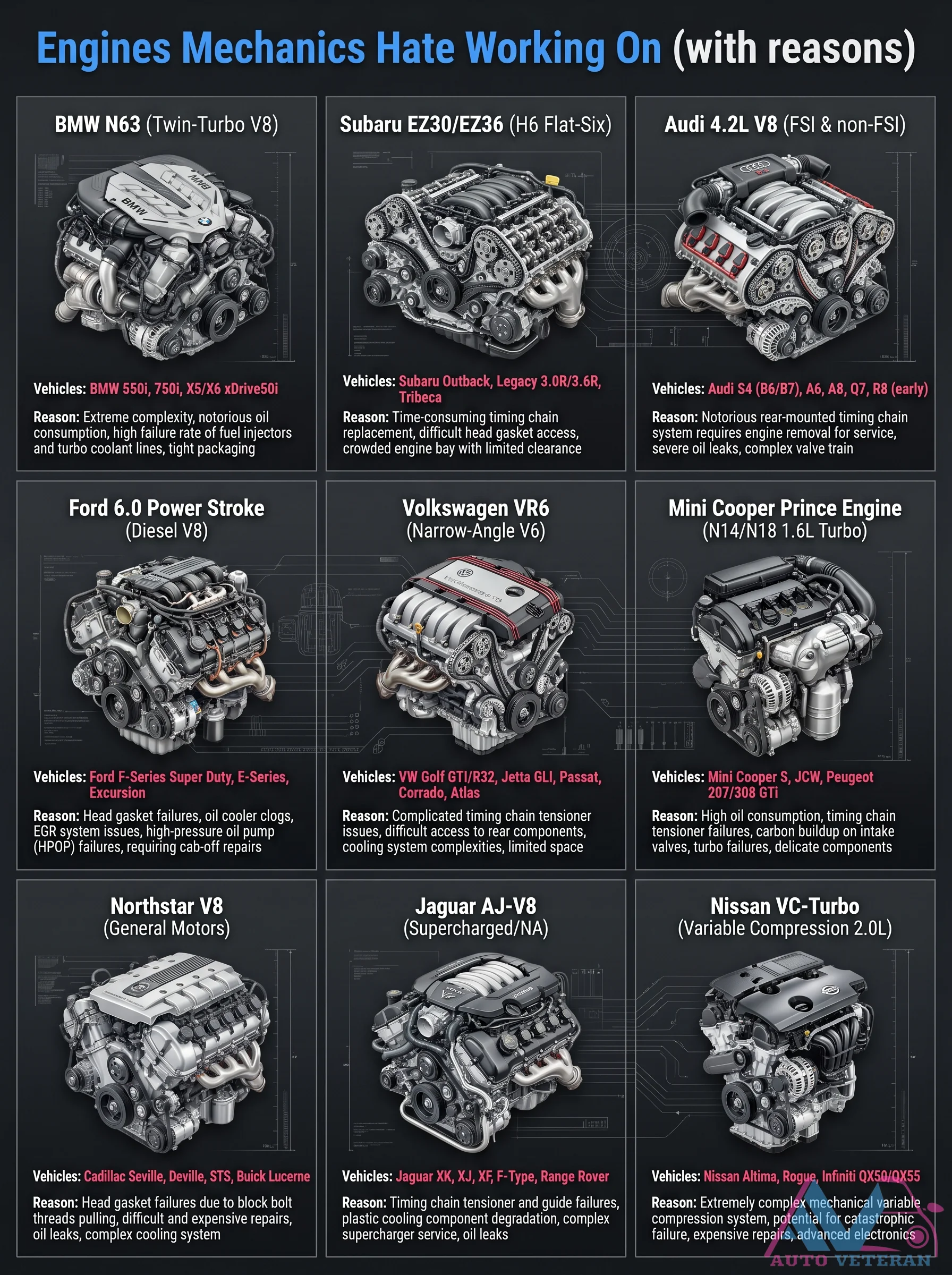
Engines Mechanics Hate Working On with Reasons
This list details specific engines that automotive technicians often avoid due to their notorious design flaws and repair complexities. The BMW N63 twin-turbo V8 is highlighted for extreme complexity, notorious oil consumption, and high fuel injector failure rates. The Subaru EZ30/EZ36 H6 flat-six requires time-consuming timing chain replacements with difficult head gasket access. The Audi 4.2L V8 features a rear-mounted timing chain system that necessitates engine removal for service, alongside turbo coolant leaks and a crowded engine bay. Other problematic engines include the Ford 6.0 Power Stroke diesel with head gasket failures and high-pressure oil pump issues, the Volkswagen VR6 with complicated timing chain tensioner problems, and the Mini Cooper Prince engine known for high oil consumption and timing chain tensioner failures. The Northstar V8 suffers from head failures due to block bolt thread issues, the Jaguar AJ-V8 has timing chain and cooling component degradation, and the Nissan VC-Turbo presents risks with its mechanical variable compression system. Each entry provides the specific vehicles affected and the primary reasons mechanics dread these repairs.
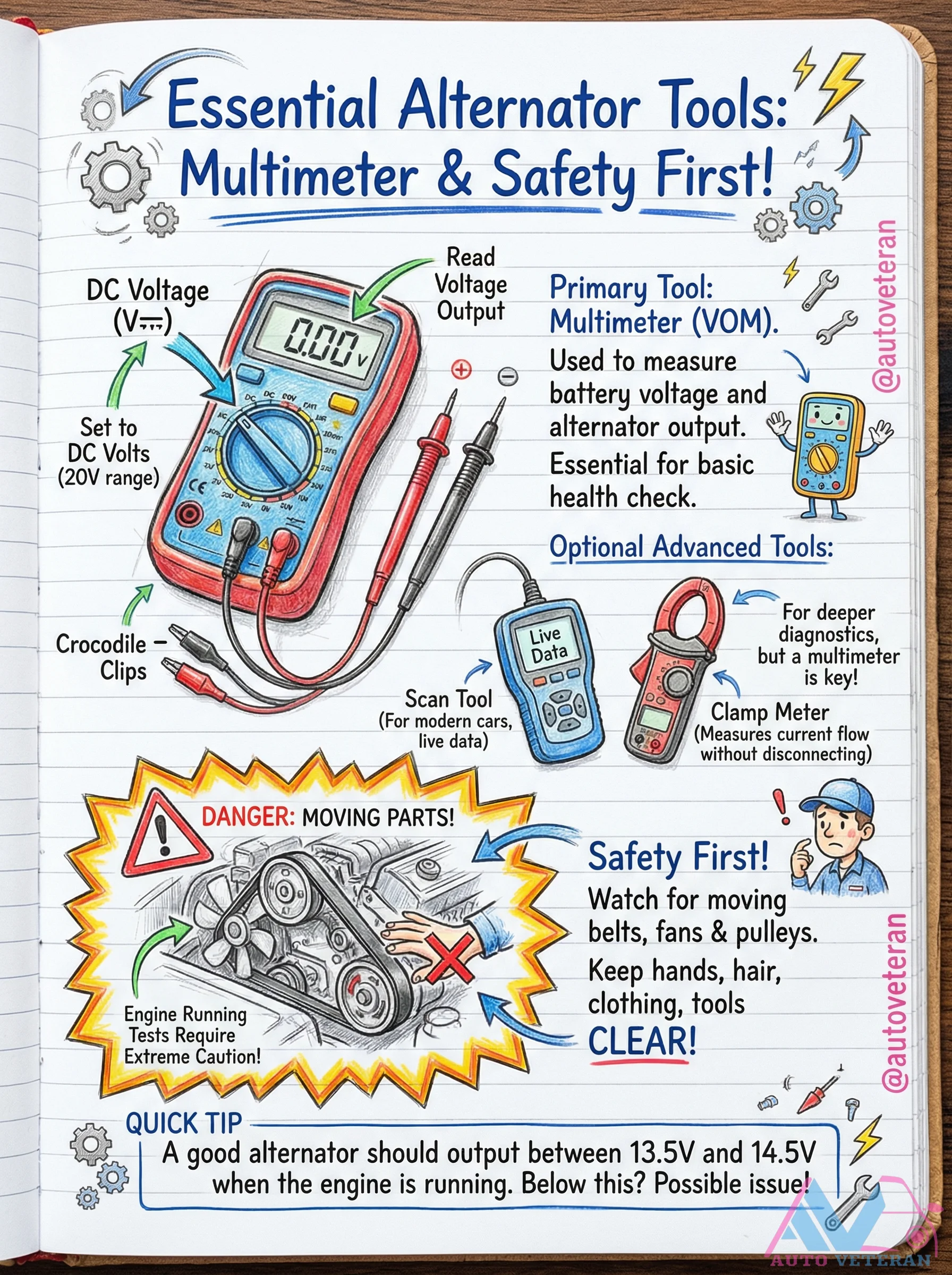
Essential Alternator Testing Tools and Safety Procedure
Testing your alternator requires specific tools and strict safety protocols. The primary tool is a multimeter set to DC volts in the 20V range to measure alternator output, which should read between 13.5V and 14.5V with the engine running. Optional advanced tools include scan tools for modern vehicles and clamp meters for measuring current flow without disconnection. Critical safety precautions involve avoiding moving belts, fans, and pulleys while keeping hands, hair, clothing, and tools clear of the engine compartment. Always prioritize safety when working around live electrical components and rotating machinery.
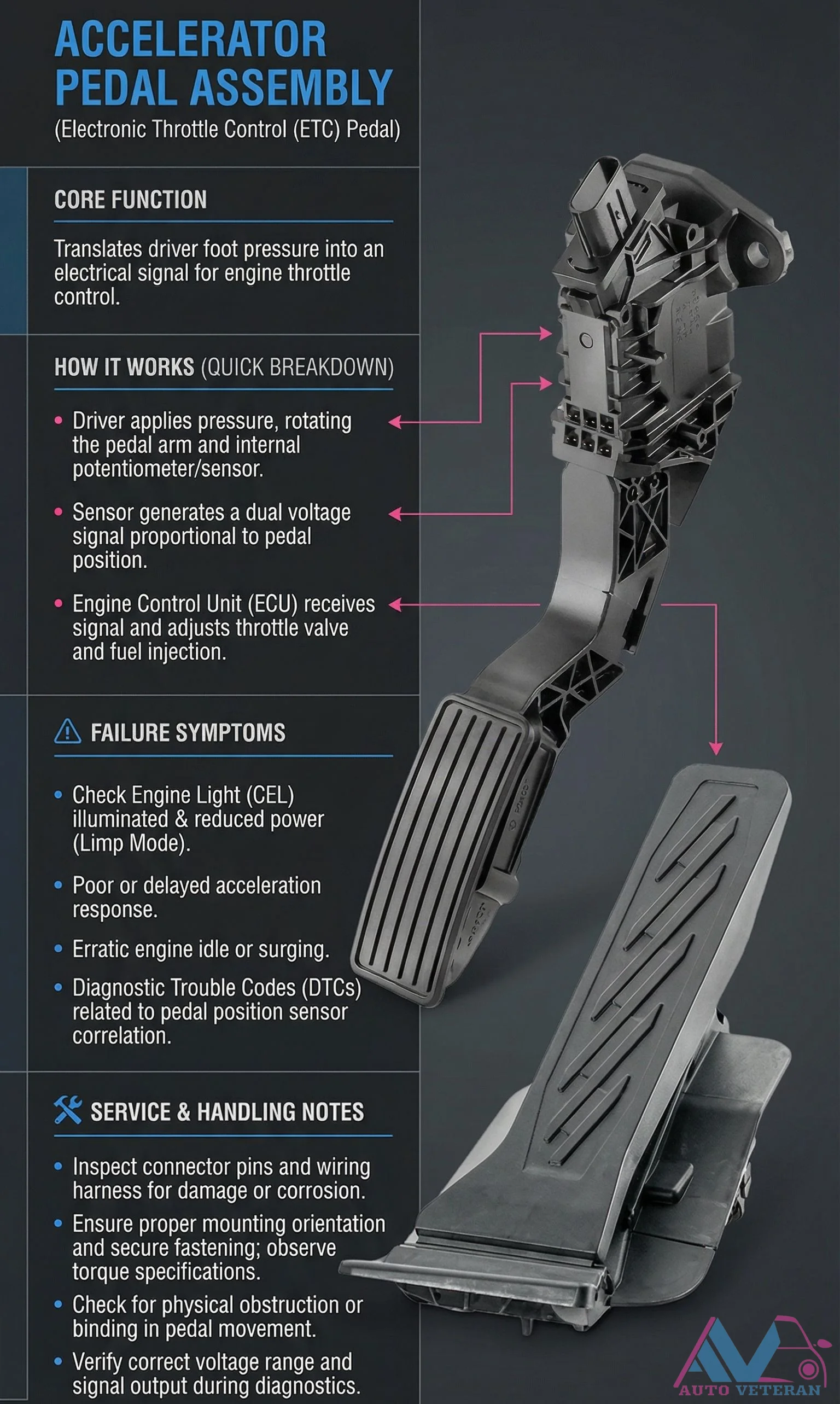
ETC Accelerator Pedal Failure Symptoms and Diagnostics
When the electronic throttle control accelerator pedal assembly malfunctions, it triggers specific symptoms that alert drivers to potential issues; these include an illuminated check engine light, reduced power or limp mode activation, poor or delayed acceleration response, and erratic engine idle or surging. The system generates diagnostic trouble codes related to pedal position sensor correlation, which technicians can verify by checking voltage range and signal output during diagnostics. Proper service requires inspecting connector pins and wiring harness for damage or corrosion, ensuring correct mounting orientation with secure fastening, and checking for physical obstructions in pedal movement.
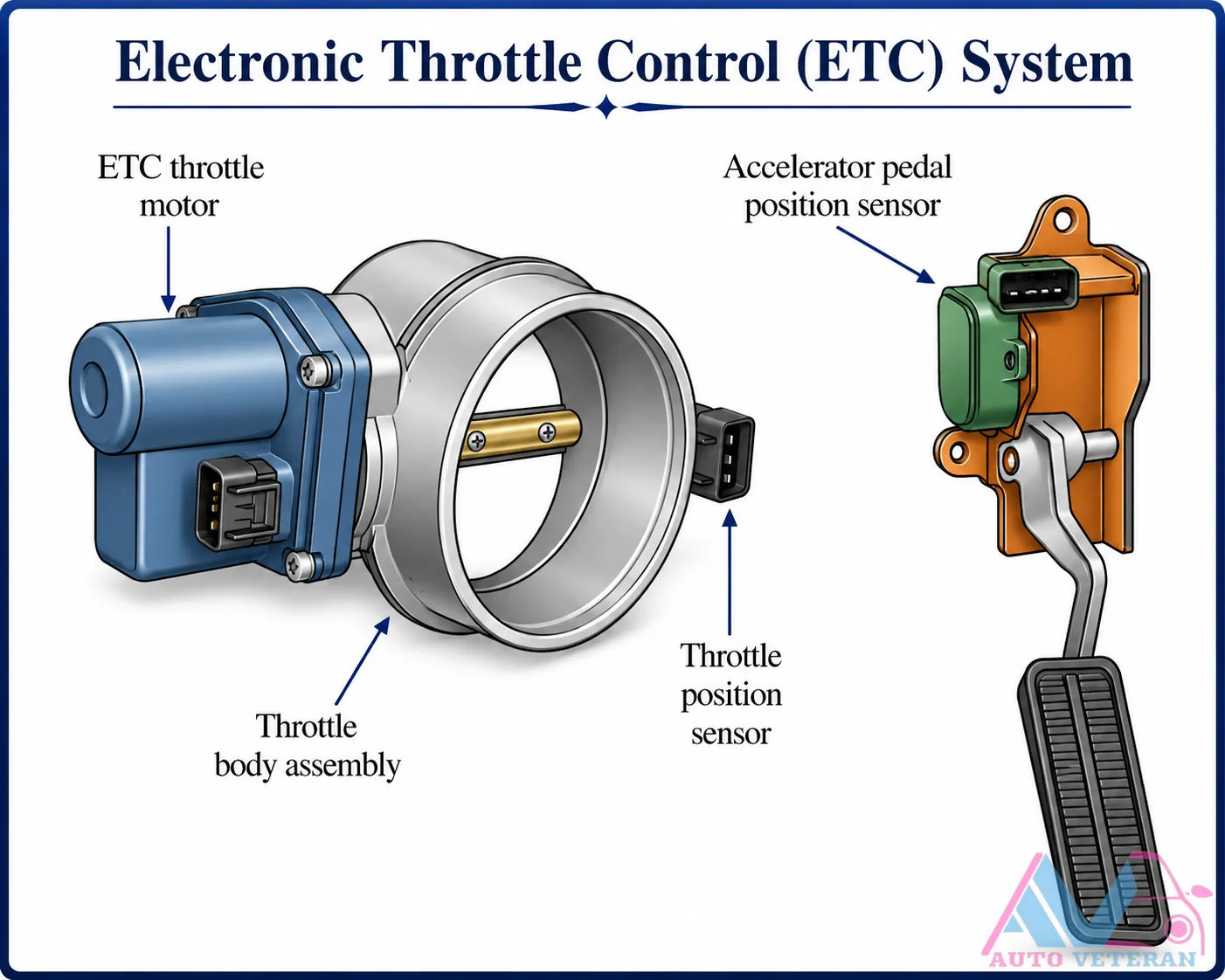
ETC System Components Overview
The Electronic Throttle Control system integrates the accelerator pedal position sensor, throttle body, throttle position sensor, and electric motor. When the driver pushes the pedal, the sensor sends a signal to the ECU, which commands the motor to open the throttle plate. The throttle position sensor then provides feedback to ensure precise air intake control. This image breaks down the key elements of the ETC setup from pedal to throttle body, showing how they work together for drive-by-wire operation.
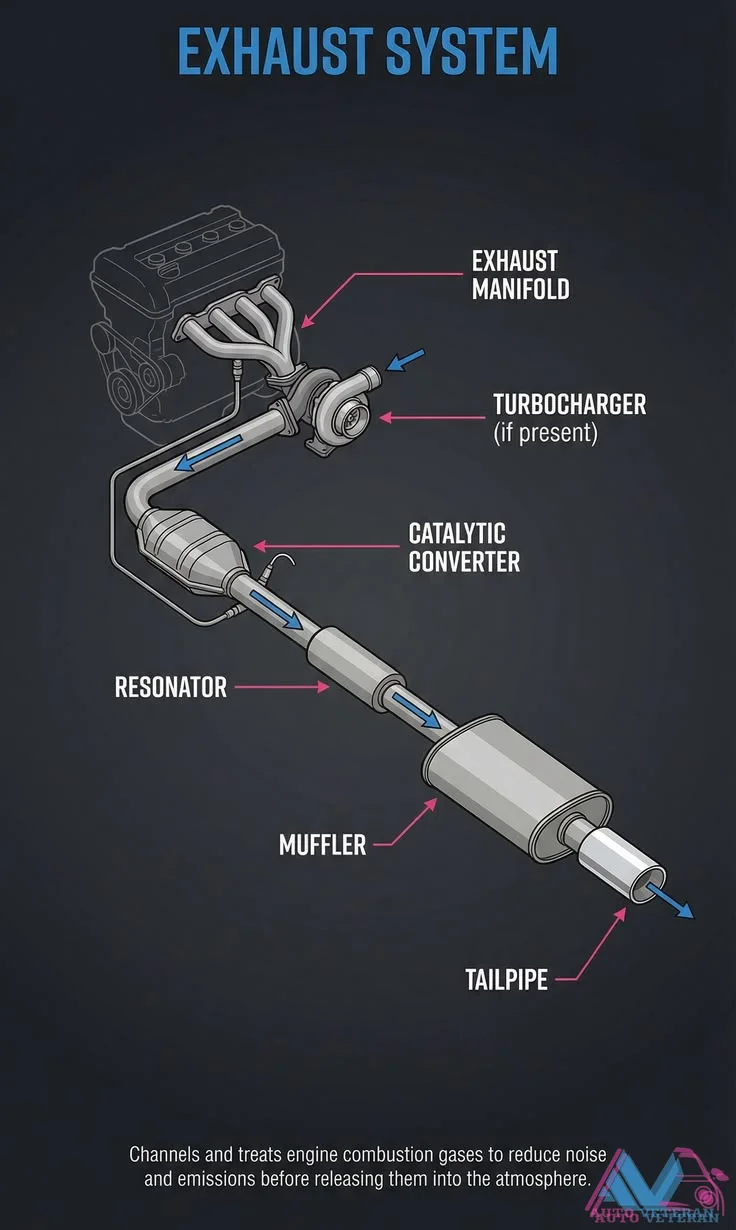
Exhaust System Components and Functions
The exhaust system channels and treats engine combustion gases to reduce noise and emissions before releasing them into the atmosphere. Key components include the exhaust manifold, turbocharger if present, catalytic converter, resonator, muffler, and tailpipe. Each part plays a crucial role in managing gas flow and environmental impact.